Are AI IPOs the next dot-com bubble? OpenAI, xAI and Anthropic chase trillion-dollar valuations

&imwidth=600&imheight=450&format=webp&quality=medium "Are AI IPOs the next dot-com bubble? OpenAI, xAI and Anthropic chase trillion-dollar valuations")
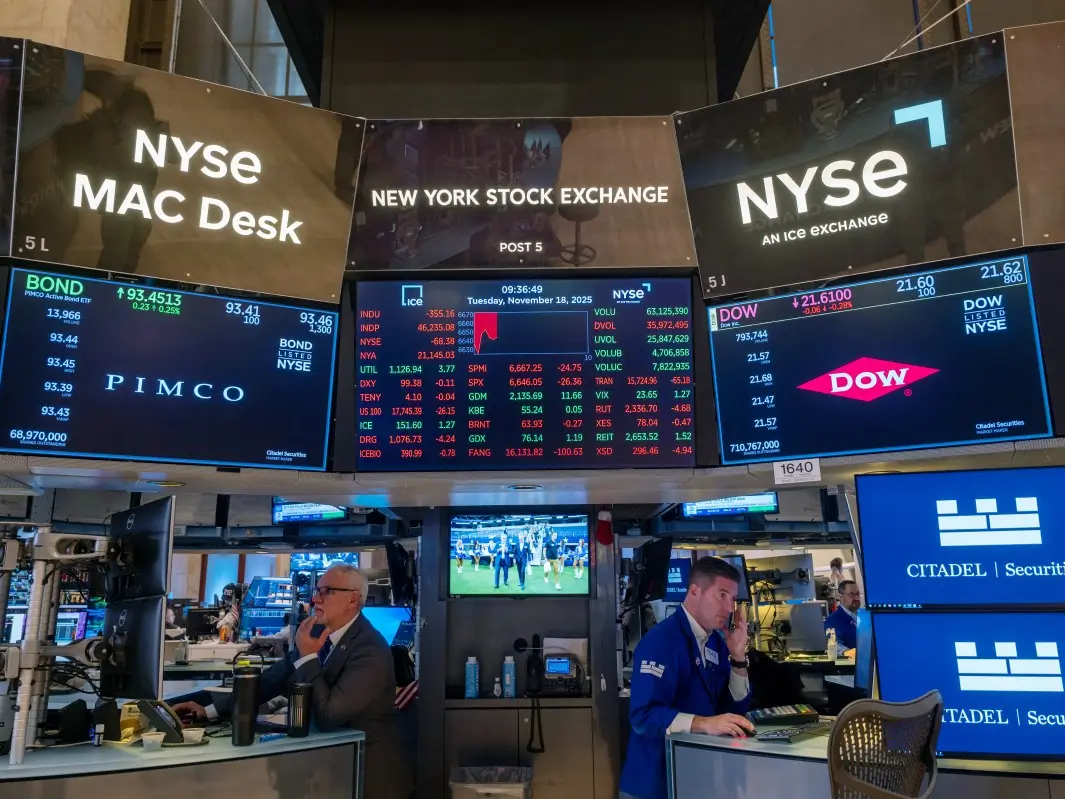
Traders work as the market opens on the floor of the New York Stock Exchange (NYSE) Photograph: (AFP)
A wave of massive AI IPOs led by OpenAI, xAI and Anthropic is raising fears of a speculative tech bubble as firms seek trillion-dollar valuations despite massive losses and rising infrastructure costs.
One of the major financial stories of 2026 is happening now: a wave of massive AI IPO is building, and the question of whether sky-high valuations signal a bubble peak is very much driving the market sentiment. There is a massive trillion-dollar gap in the economy, driven by top executives making decisions that are, in turn, driven by a speculative capital supercycle with bubble-like characteristics for chatbots that have a questionable profit model, and in the worst-case scenario, it could result in a crash.
What is happening with the AI giants?
OpenAI is targeting a listing as early as Q4 2026. Its most recent venture capital funding round puts its value at $852 billion, and it will be exploring a valuation of $1 trillion while going public. Elon Musk has combined SpaceX with xAI for its public debut at an astounding 10-figure amount, north of $1.75 trillion. It's also targeting mid-2026, possibly in June. Similarly, Anthropic is planning for its IPO in June 2026 and seeking a valuation of over $1 trillion. Other AI-driven startups like Anduril Industries, Databricks, Cerbras are also calling themself IPO ready and planning to hit the market.
Also Read: US sanctions 10 individuals, companies across 5 countries over Iran missile and drone program
Why is the math worrying for these AI giants?
OpenAI has raised $180 billion in total across 13 rounds from 70 investors, according to Tracxn. The latest was in a single round of $122 billion driven by investments from Amazon, Nvidia and SoftBank. They have generated $13.1 billion in revenue in 2025, according to CFO Sarah Friar. HSBC projects the cumulative loss at $115 billion through 2029 and $76 billion per annum by 2030. Similarly, according to Crunchbase, Anthropic has raised over $64 billion, and the majority of the money was burnt at compute, and as of March 2025, it raised $30 billion in revenue. Meanwhile, xAI generated only $250 million in revenue over its last six reported months and lost $2.5 billion in the process. The noticeable trend here is that all of these giants are spending huge amounts of money to remain operational while incurring huge losses.
Trending Stories
)
)
)
)
)
)
)
)
)
)
)
)
)
)
)
)
)
)
)
)
)
&im=FitAndFill=(700,400))
)
)
)
)
)
)
&im=FitAndFill=(700,400))
)
)
)
)
)
)
)
)
)
According to SEC filings and secondary sources like Bloomberg, Crunchbase and Fortune, all of these companies have raised an estimated $320 billion and are seeking a combined valuation of approximately $4 trillion. Altogether, they burn over $100 billion in operational costs each year, and incur roughly 62 per cent loss. To put it in perspective, every $1 they earn, they spend $1.62, US GDP is $29 trillion, the most valuable and liquid company, Apple, has a public worth of $3 trillion, and that has been built over 48 years. Now they are asking for a comparable valuation, without being profitable.
Why could these IPOs potentially crush the stock market?
There is a hidden flaw in the accounting that no one wants to discuss, even though everyone knows. All of these companies are seeking at least 30 to 40 times their revenue in public valuation. It's like a tech gold rush, but it's more and more appearing like a ticking time bomb which could explode anytime, burn portfolios, and create chaos on Wall Street. It only works if they have a sort of monopoly over the global market and zero operating costs. But that's not the case; each of these is competing with the other and has massive operating costs. Every prompt in any AI tool requires real resources, power chips, and cooling, turning growth into a cost multiplier, even before it reaches profitability and scalability. There is no solid foundation; every floor is built upon perception and private valuation. Notably, there is only a finite amount of wealth in Wall Street, irrespective of paper valuation, and to fund massive IPOs, institutional money could be pulled out of companies like Apple, Microsoft, and Nvidia, triggering selling pressure across the S&P 500. Going public would shed light on the true cost of the financial reality of AI infrastructure. It could shed light on the controversial cloud deals, revealing whether AI revenue streams are truly sustainable. Historically, when tech companies rush to cash out on the private valuation, it means the window of maximum hype is closing in, the narrative could collapse, and the biggest tech revolution could turn into a massive delusion.