America's stunning Syria U-turn: From terror list to US partner | Gravitas

&imwidth=600&imheight=450&format=webp&quality=medium "America's stunning Syria U-turn: From terror list to US partner | Gravitas")
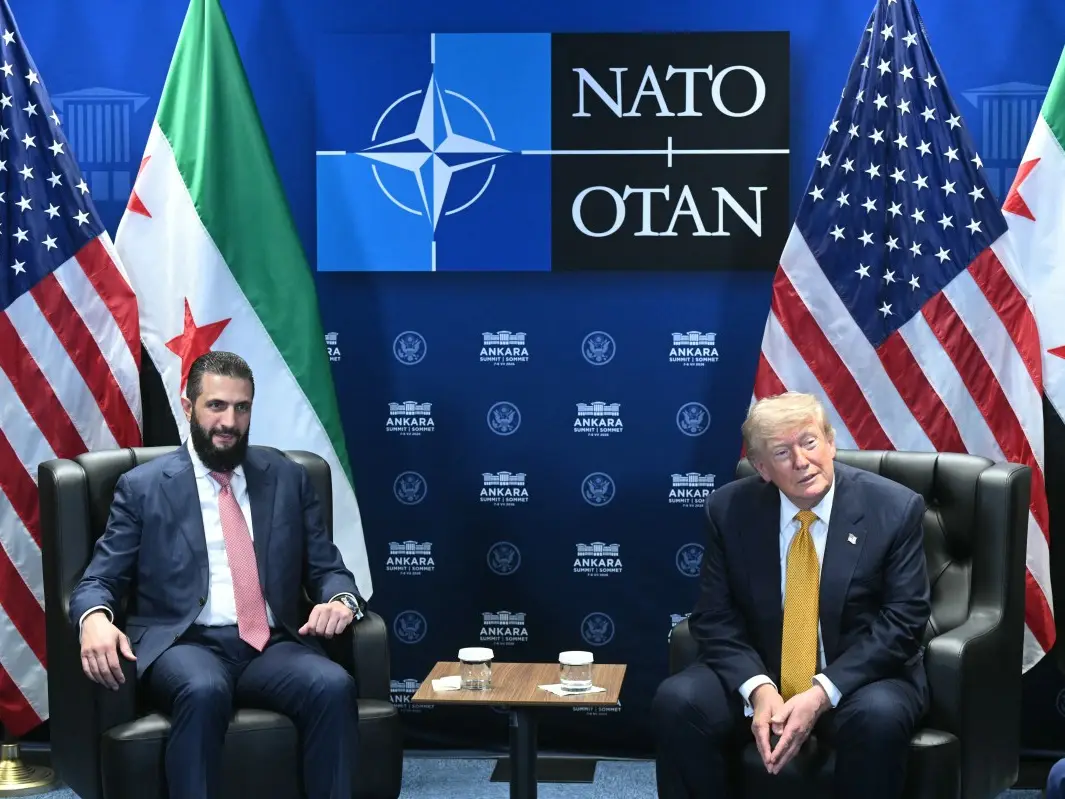
US President Donald Trump meets Syrian President Ahmed al-Sharaa (L) on the sidelines of the NATO Summit at Bestepe Presidential Compound in Ankara, on July 8, 2026. Photograph: (AFP)
The US has removed Syria from its State Sponsors of Terrorism list. Here's how Ahmed al-Sharaa's rise and Syria's diplomatic shift changed ties with Washington.
Until December 2024, Ahmed al-Sharaa was one of the most wanted terrorists for America, with a bounty of $10 million.
In a dramatic reversal of fortunes, the US now not only values al-Sharaa as a cherished partner but has also delisted Syria as a state sponsor of terrorism.
Making this announcement, US Secretary of State Marco Rubio said, and I quote, “This action unlocks new potential for Syria's economic revitalisation and progress.”
Now, what was the trigger for this US move?
Rubio linked it to the al-Sharaa-led government's counter-terrorism efforts against ISIS, al-Qaeda, Hezbollah and other Iran-aligned groups.
Thus, only Iran, Cuba and North Korea remain on the State Sponsors of Terrorism list.
Trending Stories
&imwidth=280&imheight=210&format=webp&quality=medium)
&im=FitAndFill=(700,400)&imwidth=280&imheight=210&format=webp&quality=medium)
&imwidth=280&imheight=210&format=webp&quality=medium)
&imwidth=280&imheight=210&format=webp&quality=medium)
&imwidth=280&imheight=210&format=webp&quality=medium)
&imwidth=280&imheight=210&format=webp&quality=medium)
&imwidth=280&imheight=210&format=webp&quality=medium)
&imwidth=280&imheight=210&format=webp&quality=medium)
&imwidth=280&imheight=210&format=webp&quality=medium)
&imwidth=280&imheight=210&format=webp&quality=medium)
&im=FitAndFill=(700,400)&imwidth=280&imheight=210&format=webp&quality=medium)
&imwidth=280&imheight=210&format=webp&quality=medium)
&imwidth=280&imheight=210&format=webp&quality=medium)
&imwidth=280&imheight=210&format=webp&quality=medium)
&imwidth=280&imheight=210&format=webp&quality=medium)
&imwidth=280&imheight=210&format=webp&quality=medium)
&imwidth=280&imheight=210&format=webp&quality=medium)
&imwidth=280&imheight=210&format=webp&quality=medium)
&imwidth=280&imheight=210&format=webp&quality=medium)
&imwidth=280&imheight=210&format=webp&quality=medium)
&imwidth=280&imheight=210&format=webp&quality=medium)
&im=FitAndFill=(700,400)&imwidth=280&imheight=210&format=webp&quality=medium)
&imwidth=280&imheight=210&format=webp&quality=medium)
&imwidth=280&imheight=210&format=webp&quality=medium)
&imwidth=280&imheight=210&format=webp&quality=medium)
&imwidth=280&imheight=210&format=webp&quality=medium)
&imwidth=280&imheight=210&format=webp&quality=medium)
&imwidth=280&imheight=210&format=webp&quality=medium)
&imwidth=280&imheight=210&format=webp&quality=medium)
&imwidth=280&imheight=210&format=webp&quality=medium)
&imwidth=280&imheight=210&format=webp&quality=medium)
&imwidth=280&imheight=210&format=webp&quality=medium)
Emphasising the significance of this move, al-Sharaa stated that Syria has torn away a painful chapter of its past. He also thanked US President Donald Trump and other friendly nations for the removal of sanctions.
This assumes significance as Syria has been seeking billions of dollars in investment to rebuild after a long civil war.
Why was this so crucial for Syria?
The country had been on the list since 1979, when Washington accused the government led by then-President Hafez al-Assad of supporting militant groups.
While Trump removed major sanctions on Syria in July last year, the State Sponsor of Terrorism tag remained a major deterrent for banks and investors.
According to the country's finance minister, this would help Syria reconnect to the global economic system and boost investment.
Now, the delisting followed months of negotiations between Damascus and Washington over Syria's economic and foreign policy.
According to Reuters, Syria agreed to drastically reduce imports of Russian oil in exchange for removing its terror designation.
Meanwhile, the mood on the streets was positive, with people hoping that it will help improve the current state of affairs.
This also raises a key question: Can Syria regain its lost glory?
It is an ancient land with a rich history and has been home to diverse cultures, ethnicities and religions.
During the Umayyad Caliphate, Damascus was considered the capital of the Islamic world.
At present, though, Syria is perceived as a Balkanised country.
Its geographical location also plays a key role.
The latest move by the US might bolster Syria, which has been demanding an end to strikes and incursions by its western neighbour, Israel.
Israel controls the Golan Heights, which it captured from Syria in 1967.
While the UN created a 400-square-kilometre area of separation between the Golan Heights and Syria after the 1973 war, Israeli forces entered the demilitarised zone in 2024 following the fall of Bashar al-Assad's government.
The other key player is Türkiye, which controls close to 5% of Syrian territory in the north.
With Türkiye emerging as one of al-Sharaa's main allies, helping train its army and rebuild its state institutions and infrastructure, Israel has become increasingly wary of its influence.
The situation escalated last week when Israel carried out strikes on the Abu al-Duhur base in Syria near the Turkish border.
This drew condemnation even from the US envoy to Syria, who called the attack an “unnecessary escalation”.
Subsequently, Syria and Israel held high-level, US-mediated talks in Jordan to revive negotiations for a security agreement.
As far as Trump is concerned, al-Sharaa's elevation has been critical, as the US has gained a key ally in West Asia.
The Assad dynasty, which ruled Syria for over five decades, shared very close ties with Iran and played a crucial role in empowering Hezbollah.
In contrast, the al-Sharaa government has disrupted arms supply routes through Syria to Hezbollah in Lebanon.
Additionally, it has arrested members of several Syria-based cells linked to Iranian-backed groups in Iraq and Lebanon.
With Syria finally getting rid of the terror tag, it remains to be seen whether al-Sharaa can translate this diplomatic breakthrough into lasting economic recovery, political stability and greater regional influence.