
&imwidth=800&imheight=600&format=webp&quality=medium "A single B-52 can mine an entire shipping lane from the sky, carrying 51 sea mines at once")
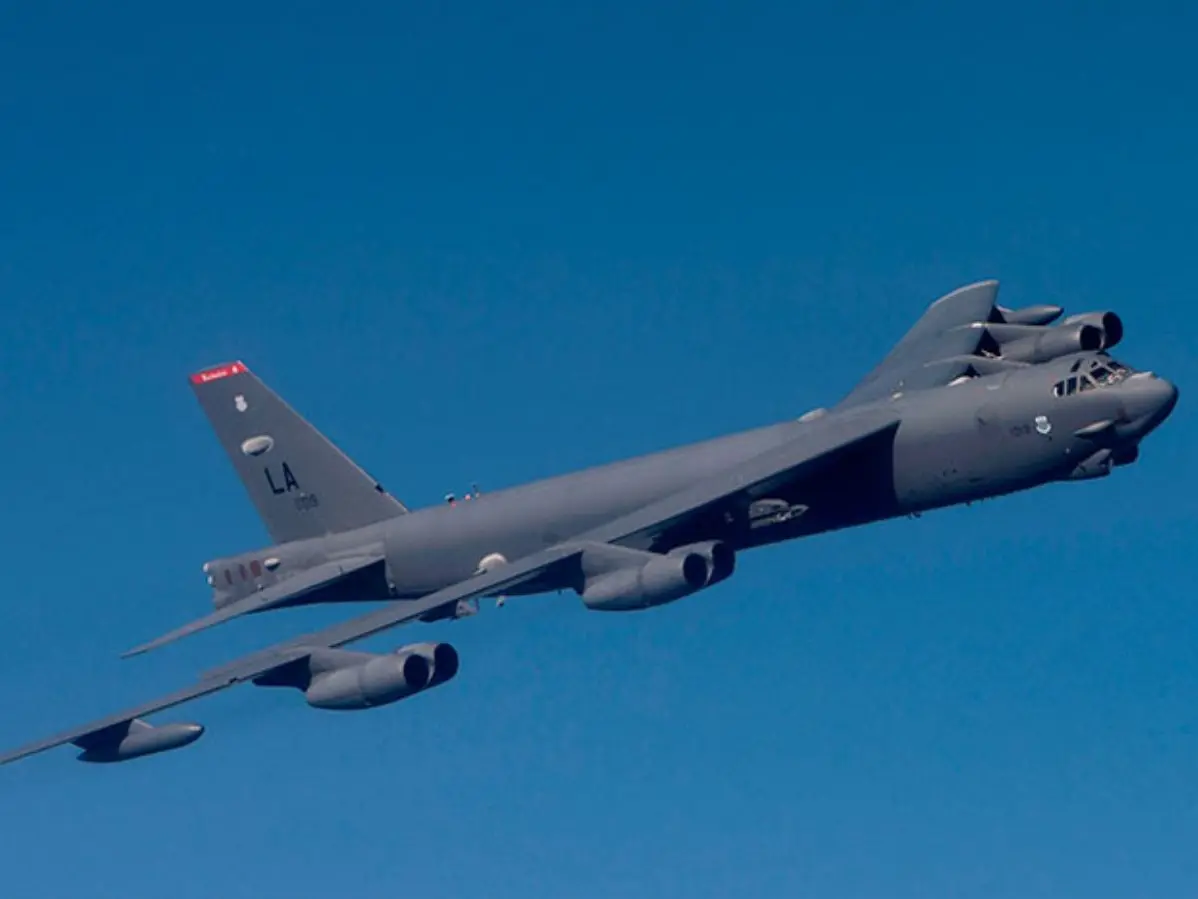
When people think of the B-52 Stratofortress, they think of nuclear deterrence, carpet bombing, and cruise missile strikes. What almost nobody thinks of is the B-52 as a weapon against ships. But one of the aircraft's most strategically significant capabilities is maritime mining — the ability to rapidly deploy large numbers of naval sea mines across critical waterways from high altitude, denying passage to enemy vessels without ever putting a ship in the water.
51 Mines From One Aircraft
A fully loaded B-52H can carry up to 51 Quickstrike Mk 62 naval mines using its internal Common Strategic Rotary Launchers. Quickstrike mines are 500-pound bottom mines equipped with sophisticated sensors that can detect and engage specific vessel types based on their acoustic, magnetic, and pressure signatures. Once deployed, the mines settle on the seabed and can remain active for months, waiting for a vessel matching their programmed parameters to pass overhead. A single B-52 sortie can establish an entire minefield across a shipping lane or harbour approach — a task that would traditionally require multiple surface ships operating in contested waters over a much longer period.

Extended Range: Drop Mines From 40 Miles Away
In May 2023, the US Air Force successfully tested the Quickstrike Extended Range system — known as QS-ER — from a B-52H during exercises off Kauai, Hawaii. The QS-ER concept mates a Mk 64 underwater mine with a Joint Direct Attack Munition Extended Range guidance kit, giving the mine GPS-guided glide capability after release. This allows the B-52 to deploy mines from a standoff distance of over 40 miles — well beyond the range of most coastal defence systems. The bomber drops the weapon at altitude, and the mine glides autonomously to its designated position on the seabed. The B-52 never needs to fly directly over the area it is mining.
Why This Changes Naval Warfare
Trending Stories
&im=FitAndFill=(700,400))
How fast can the Sukhoi Su-30 fighter jet really fly?
)
Did China ask its people 'not to respond to aliens'? Origin of bizarre claim on social media
)
MS Dhoni-CSK Fallout? Report claims failed stake sale talks triggered rift
)
Scientists reveal the SAFEST COUNTRY when catastrophe strikes the planet
)
Serial killer on the loose in South Korea's Jeju Island? Fourth body found in three days as more than a dozen people go missing
)
2/3rd of glacier detached, collapsed: ISRO satellite images reveal what triggered Nepal floods
)
Trump once again claims without him there would be ‘no Israel right now’
)
Foreign espionage attacks against German companies surge to 37%, Bitkom report reveals
)
Blake Lively wins partial legal fee from Justin Baldoni after $8M request
)
Why is Pakistan deploying Turkish Bayraktar TB2 drones near India border?
)
'OH MY GOD! We've found other agents!': Investigators discover not one or two, almost 700 OpenAI AI agents went rogue, hacked Hugging Face
)
Lunar eclipse 2026: India timings, places to see and more. August Blood moon factsheet
)
RSS chief Mohan Bhagwat on global outreach tour
)
Both pilots killed as training aircraft crashes in Lucknow – What we know
)
16-year-old charged with preparing terror attack on kindergarten in Norway
&im=FitAndFill=(700,400))
How the S-400 protects itself from enemy attacks
)
Nepal floods: Over 165 dead, 400 missing; US, India, China, World Bank mobilise aid
)
India's multi-layered watch: The new surveillance war
)
5 doomsday planes spotted in US skies hours after CIA director's secret trip to Russia
)
9/11 mastermind Khalid Sheikh Mohammed to finally face trial in 2028, nearly 27 years after horrific attacks
)
Islamabad hospital fire: What we know about one of the biggest facility that housed Imran Khan
)
Workers run for life while filming Nepal flash flood: Scary new visuals emerge from Rasuwa
)
Russian military planes enter South Korean air defence zone amid rising tensions with North Korea: What's happening
)
Ron Weasley Is Back! Rupert Grint set to return to Harry Potter universe on Broadway
)
400-year-old 'vampire' grave in Poland reveals non-existent genetic lineage
)
Dolly Parton, global icon and queen of country music, dies at 80
)
Nepal flash floods: Kailash Mansarovar yatra affected, close to 400 pilgrims out of contact
)
'If he is dead, they're putting on a pretty good show': Trump casts fresh doubt over Mojtaba Khamenei's fate
)
Man arrested near US Capitol with guillotine in pickup truck: What happened?
&im=FitAndFill=(700,400))
Why the Su-30MKI cockpit is painted bright turquoise green
Traditional mine-laying requires surface ships or submarines to physically transit into the waters being mined — a slow, dangerous process that exposes the mine-laying vessel to enemy fire, detection, and interception. The B-52 eliminates this risk entirely. Flying at high altitude, at speeds of up to 960 kilometres per hour, and with a range of over 14,000 kilometres, a B-52 can deploy a minefield across a critical chokepoint — a strait, a harbour approach, a canal entry — in minutes rather than hours, from a distance that keeps the aircraft safely beyond the reach of most coastal defences. In a conflict in the Pacific, where control of shipping lanes is a central strategic concern, this capability is not theoretical — it is operational.
The Mission Nobody Talks About
Maritime mining is one of the oldest forms of naval warfare, and one of the most effective. Mines are cheap relative to the damage they inflict, difficult to detect and clear, and psychologically powerful — the mere knowledge that mines have been deployed in a shipping lane is often enough to shut it down. The B-52's ability to deploy 51 mines in a single sortie, from standoff range, at speed, and across vast distances, makes it one of the most efficient mine-laying platforms in the world — despite being a 70-year-old strategic bomber that was never originally designed for the role. It is one more example of the B-52 doing a job that nobody imagined for it when it was built, and doing it better than purpose-designed alternatives.
