

&imwidth=800&imheight=600&format=webp&quality=medium "A judge told the Pentagon it cannot punish Anthropic for refusing to build surveillance tools")
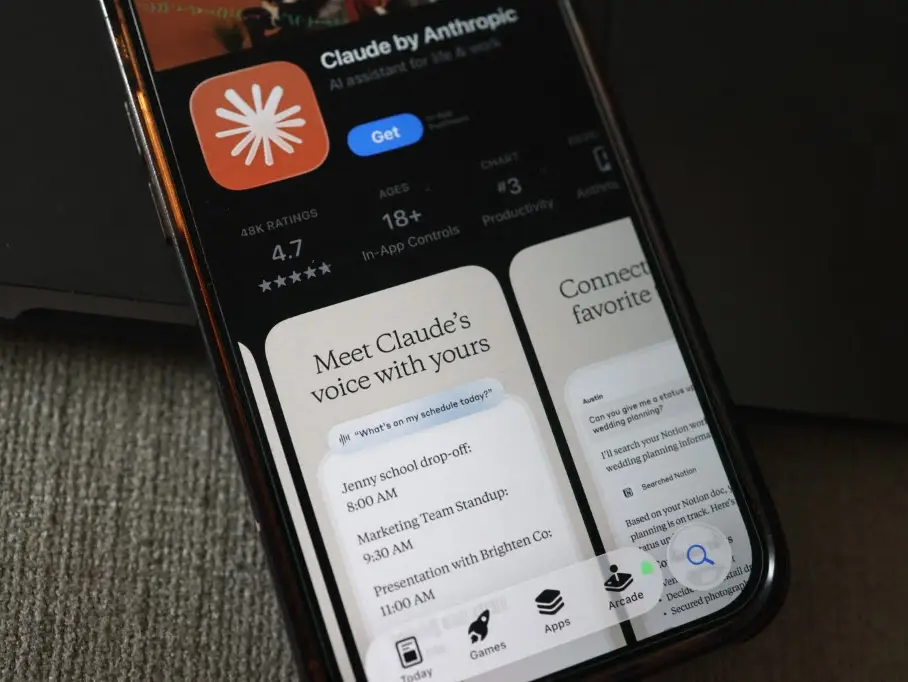
An AI company told the United States military there were things it would not let its technology do. The military tried to blacklist it for saying so. A federal judge has now ruled that punishment illegal.
The Ruling
US District Judge Rita Lin, sitting in San Francisco, held that the Department of Defense violated the First Amendment when it designated Anthropic a national security supply-chain risk.
That designation is a serious instrument. It is applied to companies whose products might expose military systems to infiltration or sabotage by adversaries, and it effectively excludes a firm from federal work.
Lin found it had been applied here for a different purpose. The department acted, she wrote, out of a desire to make a public example of the company.
Her 59-page decision contains the line that will be quoted for years: ‘The empty invocation of national security is not a blank check to punish and retaliate against government critics.’
Trending Stories
&im=FitAndFill=(700,400)&imwidth=180&imheight=135&format=webp&quality=medium)
Navratri 2026: 9 days, 9 forms of Goddess Durga and 9 colours- Check the complete list
&imwidth=180&imheight=135&format=webp&quality=medium)
Russian woman and Bihar boy's love story goes viral after she reaches India to marry him
&imwidth=180&imheight=135&format=webp&quality=medium)
Arijit Singh 9-city India stadium tour to start from January: Check venue and ticket prices
&imwidth=180&imheight=135&format=webp&quality=medium)
F1 set to return to Africa for first time since 1993
&imwidth=180&imheight=135&format=webp&quality=medium)
'Don't ever mess with nature!': Trump’s tiger attack post triggers social media backlash as victim's family issues heartbreaking tribute
&imwidth=180&imheight=135&format=webp&quality=medium)
US judge blocks Trump administration sanctions on human rights groups supporting Gaza war crimes investigation
&imwidth=180&imheight=135&format=webp&quality=medium)
Washington calls for 'de-escalation' as Ethiopia-Eritrea tensions fuel war fears
&imwidth=180&imheight=135&format=webp&quality=medium)
Trump's $100,000 H-1B fee: Why neither Republicans nor Democrats want to make it a 2026 US Midterm issue
&im=FitAndFill=(700,400)&imwidth=180&imheight=135&format=webp&quality=medium)
Which jobs are safest from humanoid robots?
&imwidth=180&imheight=135&format=webp&quality=medium)
US midterms: Trump rallies behind Husted as Brown mounts challenge in crucial Ohio race
&imwidth=180&imheight=135&format=webp&quality=medium)
US police foil alleged mass shooting plot targeting Illinois Hindu temple; 19-year-old’s manifesto called Indians ‘subhumans’
&imwidth=180&imheight=135&format=webp&quality=medium)
‘Rise up, young patriots!’: American singer Mary Millben says US donors funding CJP, backs Modi govt
&imwidth=180&imheight=135&format=webp&quality=medium)
Nobel Peace Prize winner Navi Pillay calls on US to 'get back to' being defender of human rights
&imwidth=180&imheight=135&format=webp&quality=medium)
Iran war: Will Trump, Netanyahu escalate conflict ahead of crucial elections? | Race to Power
&imwidth=180&imheight=135&format=webp&quality=medium)
Iranian woman, 23, handed death sentence for ‘blasphemy’ in social media post; appeals for help
&imwidth=180&imheight=135&format=webp&quality=medium)
'Turn approver, resign, we'll forgive you': Rahul Gandhi claims receiving messages from CEC Gyanesh Kumar
&imwidth=180&imheight=135&format=webp&quality=medium)
'Leakers should be shot': Trump rages over leak of US military plans to attack Iran, slams media
&imwidth=180&imheight=135&format=webp&quality=medium)
Somaliland celebrates after Trump calls it 'a totally different country', raise hopes of US recognition
&imwidth=180&imheight=135&format=webp&quality=medium)
‘My president, I mean my husband’: Trump's new press secretary Katie Zacharia's first briefing goes off the rails in 14 minutes
&imwidth=180&imheight=135&format=webp&quality=medium)
Mars is not for man: Human heart is too weak to survive the trip, study shows
&imwidth=180&imheight=135&format=webp&quality=medium)
Sheikh Hasina warns of 'deep sense of insecurity' among Bangladesh's minorities in Durga Puja message
&imwidth=180&imheight=135&format=webp&quality=medium)
FBI refutes media report claiming Kash Patel is in Russia for talks, says he is in Virginia
&imwidth=180&imheight=135&format=webp&quality=medium)
'Ouch!!! That must hurt': Kangana Ranaut hails Kamal Haasan's sharp reply to Elon Musk over Starlink row
&imwidth=180&imheight=135&format=webp&quality=medium)
Girl 'dead' for 8 hours wakes up at her own funeral, dad insists she wasn't breathing
&imwidth=180&imheight=135&format=webp&quality=medium)
Durga Puja 2026: Kolkata roads get a splash of colours
&im=FitAndFill=(700,400)&imwidth=180&imheight=135&format=webp&quality=medium)
New OTT releases this week (October 12-18, 2026): Sacrifice, Koffee with Karan S9, Roadies Rebirth- 6 titles coming on Netflix, JioHotstar and more
&imwidth=180&imheight=135&format=webp&quality=medium)
Did the US withhold missile warnings? Ukraine questions Washington's 'bad weather' explanation after Russian strikes kill six, cut power to 600,000
&imwidth=180&imheight=135&format=webp&quality=medium)
US Singer Mary Millben alleges foreign funding for CJP, warns against anti-Modi forces: All you need to know
&imwidth=180&imheight=135&format=webp&quality=medium)
Global energy crisis hits Indian economy
&imwidth=180&imheight=135&format=webp&quality=medium)
Durga Puja 2026: Power banks, water bottles and more, a foolproof guide to pandal hopping
&imwidth=180&imheight=135&format=webp&quality=medium)
Netflix layoffs: Streaming giant to cut 1,000 jobs globally amid slow growth and declining user engagement
&imwidth=180&imheight=135&format=webp&quality=medium)
Hidden video recording device found on Australian Navy ship amid claims of secret filming
&imwidth=180&imheight=135&format=webp&quality=medium)
Zelensky feels betrayed by Trump, urges Musk to restore Starlink in Ukraine; Musk responds
&imwidth=180&imheight=135&format=webp&quality=medium)
'Girls are uncomfortable': Salman Khan calls out paparazzi for bad angles, speaks on PR on Koffee With Karan
&imwidth=180&imheight=135&format=webp&quality=medium)
After flydubai co-pilot attack, Air France bans Pakistani, Muslim-majority crew on Israel flights
&imwidth=180&imheight=135&format=webp&quality=medium)
US midterms 2026: Trump under election watch? Democrats deploy 100 observers across nine states
What Anthropic Refused To Do
The dispute began with two specific refusals. Anthropic would not permit its Claude models to be used for surveillance of Americans, or in fully autonomous weapons.
It is worth being precise about the scope, because it is narrower than the framing sometimes suggests. This was not a refusal to work with the military. Anthropic sells to government, and the disagreement concerned two categories of use rather than the relationship itself.
Anthropic's suit alleged that Defense Secretary Pete Hegseth had overstepped his authority, and characterised the administration's response as an unlawful campaign of retaliation.
The Complication Nobody Should Skip
There is a second case, and it went the other way.
Anthropic filed in two places: the federal district court in San Francisco, and a federal appeals court in Washington DC. In April, the Washington panel declined to issue an order shielding Anthropic from the consequences of the designation while it continued gathering evidence.
So the same dispute has now produced opposite outcomes in two courts four months apart. Industry figures have said publicly that the conflict muddles the landscape for anyone trying to work out what the rules actually are.
That is a real caveat on this week's ruling and it belongs in any honest account of it. Lin's decision is the more recent and the more substantive — a merits ruling rather than a refusal of interim relief — but it is a district court decision that the government can appeal, and a separate appellate body has already declined to help Anthropic once.
Why It Matters Beyond One Company
The question underneath the litigation is whether an AI company can set limits on how a government uses its technology without being punished for it.
Every frontier laboratory has published a usage policy restricting certain applications. Those policies are the primary mechanism by which the industry claims to govern itself, and they are the thing regulators, journalists and customers are repeatedly pointed to as evidence that self-regulation works.
A usage policy that cannot be enforced against the most powerful customer in the world is not a usage policy. If refusing a government application results in exclusion from federal contracting, then the policies survive only for as long as no one important tests them.
Lin's ruling says the government cannot make that trade explicit. It does not stop the government making it quietly, through procurement decisions that are harder to attribute.
The Timing
The ruling arrives while Anthropic is preparing to go public.
The company has filed confidentially, its annualised revenue reached roughly $65 billion by the end of July, and investors have discussed a valuation that would make it the largest listing ever completed. An unresolved federal blacklisting is precisely the kind of contingency that has to be disclosed to prospective shareholders and precisely the kind that depresses a price.
Removing it, even provisionally, is worth a great deal to Anthropic in the next two months. That does not make the ruling wrong, but it explains why this particular decision, in this particular week, is a larger commercial event than the underlying contract value would suggest.
What To Watch
Three things determine whether this holds.
Whether the government appeals Lin's decision, and to which circuit. Whether the Washington case, still collecting evidence, eventually reaches a conclusion that conflicts with hers on the merits rather than on interim relief. And whether other laboratories now hold firmer lines in their own government contracts, having watched one company be punished for it and then win.
The last of those is the one with consequences for everybody else. An industry that governs itself through usage policies has just been shown both what enforcement costs and that a court may cover the cost afterwards.
