

&imwidth=800&imheight=600&format=webp&quality=medium "576GB of HBM3E under a desk: AMD's Halo Station is aimed squarely at Nvidia's DGX")
AMD used its IFA 2026 keynote to announce Threadripper Halo Station, a workstation built around a claim it is happy to make loudly: that it is the most powerful workstation in the world.
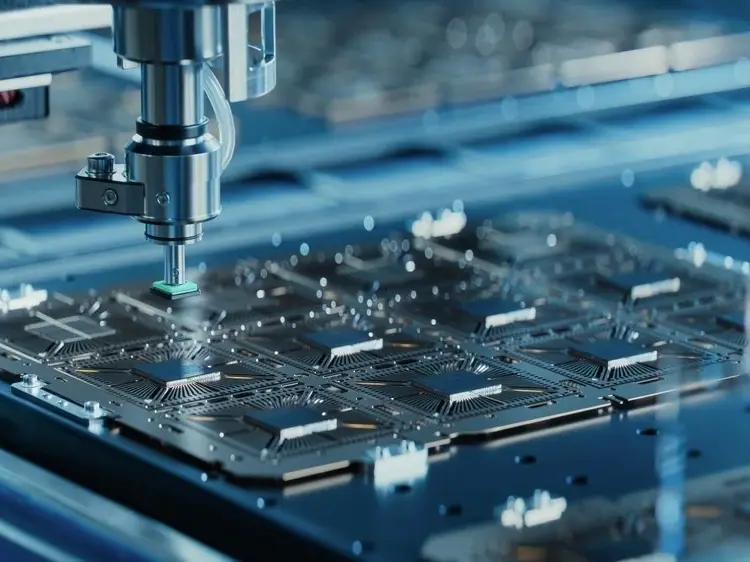
The specification is the argument. A 96-core, 192-thread Threadripper PRO 9995WX on Zen 5, boosting to 5.4GHz, supporting up to 2TB of DDR5 system memory — and up to four Instinct MI350P accelerators, each carrying 144GB of HBM3E at 4TB/s.
At four cards that is 576GB of high-bandwidth GPU memory in a single desk-side chassis. AMD's presented configuration uses two cards for 288GB, with the upgrade path to four.
Everything significant in the system is liquid cooled, which AMD frames as a noise decision as much as a thermal one. A machine intended to sit next to a person has different constraints from one in a rack.
The One Use Case
AMD has been unusually direct about what this is for. The system is designed around running AI models with more than one trillion parameters locally, without a cloud connection.
Trending Stories
&imwidth=180&imheight=135&format=webp&quality=medium)
'My name has always been Ilhan Omar': Congresswoman hits back at Trump, calls him a 'creep'
&imwidth=180&imheight=135&format=webp&quality=medium)
Gravitas | US attack could trigger WW III: Russian planes in Tehran, Israeli jets, US warships in action
&imwidth=180&imheight=135&format=webp&quality=medium)
Viral video shows cross falling on Colombia priest, no official confirmation | WATCH
&imwidth=180&imheight=135&format=webp&quality=medium)
US Navy, Marine Corps boards defy Trump's transgender military ban, vote to retain troops
&imwidth=180&imheight=135&format=webp&quality=medium)
Will the US attack Iran this weekend? Trump's envoy says, 'absolutely'
&imwidth=180&imheight=135&format=webp&quality=medium)
Fauzi teaser out: Prabhas takes on the British Empire in patriotic avatar | Watch
&imwidth=180&imheight=135&format=webp&quality=medium)
India-China face-off continues near Arunachal’s Taksing, reveals ITBP chief in first official confirmation of tensions
&imwidth=180&imheight=135&format=webp&quality=medium)
Nairobi building collapse: Several feared trapped after 16-storey structure crumbles; rescue operation underway
&imwidth=180&imheight=135&format=webp&quality=medium)
Pakistan airline PIA unveils new crew uniforms, faces online criticism
&imwidth=180&imheight=135&format=webp&quality=medium)
Did Neha Bora call for Bangladesh-like GenZ protest, 'anarchy' in India? WION Fact-checks viral claim
&imwidth=180&imheight=135&format=webp&quality=medium)
'Already tired of his 9-to-5': Baby born with a moustache becomes internet sensation, video goes viral | Watch
&imwidth=180&imheight=135&format=webp&quality=medium)
Horrific video shows the moment 18-year-old fell to her death from Mexico amusement park ride
&imwidth=180&imheight=135&format=webp&quality=medium)
'Black triangle' UFO flying at 1,800mph spotted over sensitive US site: Latest Trump admin UFO file dump
&imwidth=180&imheight=135&format=webp&quality=medium)
IND-W vs ZIM-W, 1st ODI: Rawal, Charani star in India’s nine-wicket win over Zimbabwe
&imwidth=180&imheight=135&format=webp&quality=medium)
Massive 7.2 magnitude quake off Vanuatu triggers tsunami warning for coasts within 300 km
&imwidth=180&imheight=135&format=webp&quality=medium)
French Open: PV Sindhu storms into final with win over Hina Akechi
&imwidth=180&imheight=135&format=webp&quality=medium)
Google Fitbit Air’s new health guardian feature tracks trends: How it works
&imwidth=180&imheight=135&format=webp&quality=medium)
US midterms 2026: Trump revises Canada tariffs as Susan Collins faces tight re-election race in Maine
&imwidth=180&imheight=135&format=webp&quality=medium)
US midterms 2026: Viral video claims Lindsey Graham paid underage men for sex; clip released weeks before his sister's Senate race
&imwidth=180&imheight=135&format=webp&quality=medium)
IND vs NZ 2nd T20I: Shreyas Iyer on brink of breaking Rohit Sharma’s record
&imwidth=180&imheight=135&format=webp&quality=medium)
AI deepfakes are spreading online: Why is removing them so difficult?
&imwidth=180&imheight=135&format=webp&quality=medium)
China's dancing robot turns violent bodyguard, lifts cars and fights intruders - Watch
&imwidth=180&imheight=135&format=webp&quality=medium)
Global cybersecurity alert: PHP flaws trigger website shutdowns as hack attempts surge into millions
&imwidth=180&imheight=135&format=webp&quality=medium)
'You’re a horrible little reporter, aren’t you?': Trump snaps at NBC reporter questioning his support for Ramaswamy's campaign ad
&imwidth=180&imheight=135&format=webp&quality=medium)
Chemical warehouse explosion in Mexico: Several injured in multiple blasts, 1,000 evacuated in León
&imwidth=180&imheight=135&format=webp&quality=medium)
US charges two former FBI officials with lying to Congress about Hunter Biden probes. 'Politically motivated' Trump grievance or something else?
&im=FitAndFill=(700,400)&imwidth=180&imheight=135&format=webp&quality=medium)
How smart robots and AI assemble vehicles in 20 hours
&im=FitAndFill=(700,400)&imwidth=180&imheight=135&format=webp&quality=medium)
New Friday OTT releases (October 23, 2026): Gajab Raat, Dorothy, Chaar Yaar- Watch these 6 new movies and TV shows on Netflix, Prime Video and more
&imwidth=180&imheight=135&format=webp&quality=medium)
Anthropic security chief issues grim cyberattack warning: ‘It’s going to get a lot worse’
&imwidth=180&imheight=135&format=webp&quality=medium)
Tu Hai Meri Kiran film review: Sonakshi Sinha and Zaheer Iqbal's thriller gets tangled in its own twists
&imwidth=180&imheight=135&format=webp&quality=medium)
First Lady Melania Trump secures ceasefire between Russia, Ukraine in Oleshky: White House
&imwidth=180&imheight=135&format=webp&quality=medium)
Negotiators from Ukraine, Russia, United States to meet in Abu Dhabi: Zelensky
&imwidth=180&imheight=135&format=webp&quality=medium)
Farooq Abdullah says Pakistan’s raising of Kashmir issue keeps pressure on Delhi
&imwidth=180&imheight=135&format=webp&quality=medium)
Emmanuel Macron calls Paris suburb shooting a 'racist terrorist attack' after one killed, several injured
The memory figure is what makes that plausible. Model weights have to fit somewhere, and at 4-bit precision a trillion-parameter model lands within reach of 576GB. The MI350P's bandwidth — which AMD puts at fourteen times that of any LPDDR5X variant — is the difference between a model that technically loads and one that responds at usable speed.
This is the specification that determines whether local inference at frontier scale is real or theatrical, and AMD has chosen to compete on exactly that number.
The Target
The comparison AMD wants is with Nvidia's DGX Station, and the positioning is transparent.
Nvidia has spent years making the desk-side AI workstation its own category, and AMD's pitch is that supercomputer-class compute should be available to an individual developer rather than rationed through a cloud queue. Whether that lands depends almost entirely on software — Nvidia's advantage has rarely been silicon alone, and CUDA remains the reason many teams do not seriously evaluate alternatives.
Hardware parity does not resolve that. It only makes the question worth asking again.
Who It Is Actually For
The honest audience for this machine is narrow, and worth naming.
It is for teams working on data they are not permitted to send anywhere — medical records, defence work, unreleased financials, anything under a jurisdictional constraint. It is for researchers whose iteration speed is bottlenecked by cloud scheduling rather than raw compute. And it is for organisations that have run the arithmetic on sustained inference and found that renting indefinitely costs more than owning.
It is not for most developers, who will continue to rent because renting is cheaper until utilisation is high and constant.
The Missing Number
AMD has not announced pricing, availability, or complete system specifications.
That absence matters more than usual here, because the entire economic case rests on it. A local machine competes with a cloud subscription, and without a price the comparison cannot be made. Four MI350P cards represent serious silicon, and the plausible range for a fully configured system starts well above what most individual developers will fund themselves.
Until AMD publishes a number, 'available to individual developers' is a positioning statement rather than a claim that can be tested.
What To Watch
The price, first and above all. Whether the four-card configuration ships at launch or arrives later. And whether the software stack has closed enough of the gap that a team can move a working pipeline across without rewriting it — because that, not memory capacity, is what has kept this category Nvidia's.
