‘Shoot and kill any boat’: Trump orders US Navy to target mine-laying vessels in Strait of Hormuz

&imwidth=600&imheight=450&format=webp&quality=medium "‘Shoot and kill any boat’: Trump orders US Navy to target mine-laying vessels in Strait of Hormuz")
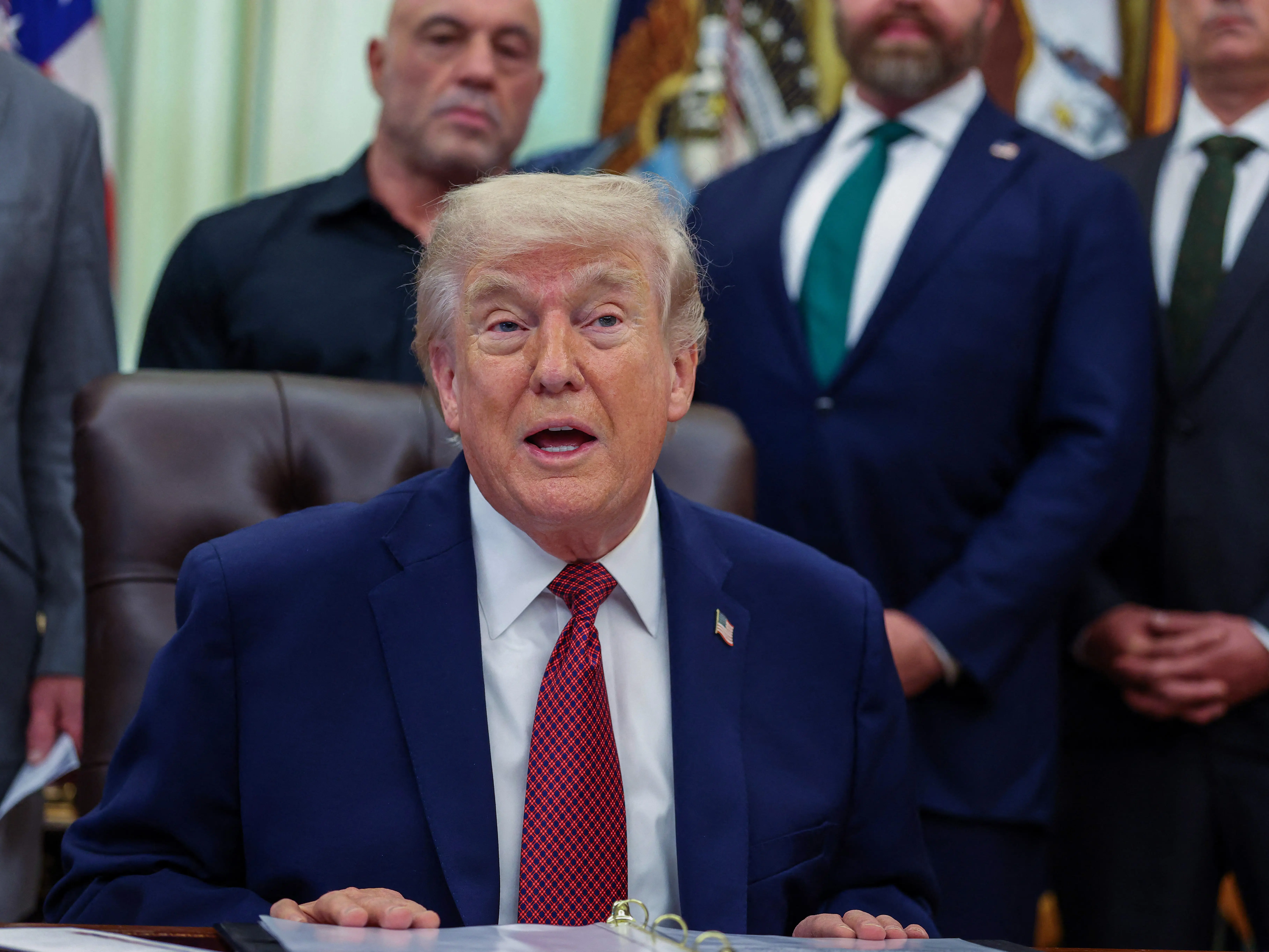
US President Donald Trump Photograph: (AFP)
Trump said there should be “no hesitation” in carrying out such action and asserted that the US was intensifying its naval operations in the region. He added that mine-clearing efforts were already underway and would now be significantly ramped up.
US President Donald Trump on Thursday (April 23) ordered the American Navy to open fire on any vessel found laying mines in the strategically critical Strait of Hormuz, signalling a sharp escalation in maritime security measures as tensions with Iran continue.
Trump said there should be “no hesitation” in carrying out such action and asserted that the US was intensifying its naval operations in the region. He added that mine-clearing efforts were already underway and would now be significantly ramped up.
“I have ordered the United States Navy to shoot and kill any boat, small boats though they may be (Their naval ships are ALL, 159 of them, at the bottom of the sea!), that is putting mines in the waters of the Strait of Hormuz. There is to be no hesitation,” Trump wrote in a post on Truth Social.
“Additionally, our mine ‘sweepers’ are clearing the Strait right now. I am hereby ordering that activity to continue, but at a tripled-up level!” he added.
The latest directive comes at a critical moment, with a second round of talks between the United States and Iran anticipated soon, as Pakistan attempts to bring both sides to the negotiating table after the failure of the first round of talks in Islamabad.
Also Read: EU approves $105 billion Ukraine loan after Orbán defeat, announces fresh Russia sanctions
Trending Stories
&imwidth=280&imheight=210&format=webp&quality=medium)
&imwidth=280&imheight=210&format=webp&quality=medium)
&imwidth=280&imheight=210&format=webp&quality=medium)
&imwidth=280&imheight=210&format=webp&quality=medium)
&imwidth=280&imheight=210&format=webp&quality=medium)
&imwidth=280&imheight=210&format=webp&quality=medium)
&imwidth=280&imheight=210&format=webp&quality=medium)
&imwidth=280&imheight=210&format=webp&quality=medium)
&imwidth=280&imheight=210&format=webp&quality=medium)
&imwidth=280&imheight=210&format=webp&quality=medium)
&imwidth=280&imheight=210&format=webp&quality=medium)
&imwidth=280&imheight=210&format=webp&quality=medium)
&imwidth=280&imheight=210&format=webp&quality=medium)
&imwidth=280&imheight=210&format=webp&quality=medium)
&imwidth=280&imheight=210&format=webp&quality=medium)
&imwidth=280&imheight=210&format=webp&quality=medium)
&imwidth=280&imheight=210&format=webp&quality=medium)
&imwidth=280&imheight=210&format=webp&quality=medium)
&imwidth=280&imheight=210&format=webp&quality=medium)
&imwidth=280&imheight=210&format=webp&quality=medium)
&imwidth=280&imheight=210&format=webp&quality=medium)
&imwidth=280&imheight=210&format=webp&quality=medium)
&imwidth=280&imheight=210&format=webp&quality=medium)
&imwidth=280&imheight=210&format=webp&quality=medium)
&imwidth=280&imheight=210&format=webp&quality=medium)
&imwidth=280&imheight=210&format=webp&quality=medium)
&im=FitAndFill=(700,400)&imwidth=280&imheight=210&format=webp&quality=medium)
&imwidth=280&imheight=210&format=webp&quality=medium)
&imwidth=280&imheight=210&format=webp&quality=medium)
&imwidth=280&imheight=210&format=webp&quality=medium)
&imwidth=280&imheight=210&format=webp&quality=medium)
&imwidth=280&imheight=210&format=webp&quality=medium)
&imwidth=280&imheight=210&format=webp&quality=medium)
&imwidth=280&imheight=210&format=webp&quality=medium)
&imwidth=280&imheight=210&format=webp&quality=medium)
&imwidth=280&imheight=210&format=webp&quality=medium)
The initial session was led by US Vice President JD Vance, accompanied by Special Envoy Steve Witkoff and Trump's son-in-law Jared Kushner, while Parliament Speaker Mohammad Bagher Ghalibaf and Foreign Minister Abbas Araghchi led the Iranian delegation.
The statement also follows Trump’s recent decision to extend the ceasefire, during which he said Iran’s leadership had been “fractured” by the war and required time to formulate a proposal for achieving peace between the two countries.
Despite the extension, Trump has maintained a firm stance on continuing the naval blockade, a key sticking point in negotiations, with Iran insisting that the blockade must be lifted before it can consider any agreement to end the conflict that began on February 28 following joint military action by Israel and the United States.