

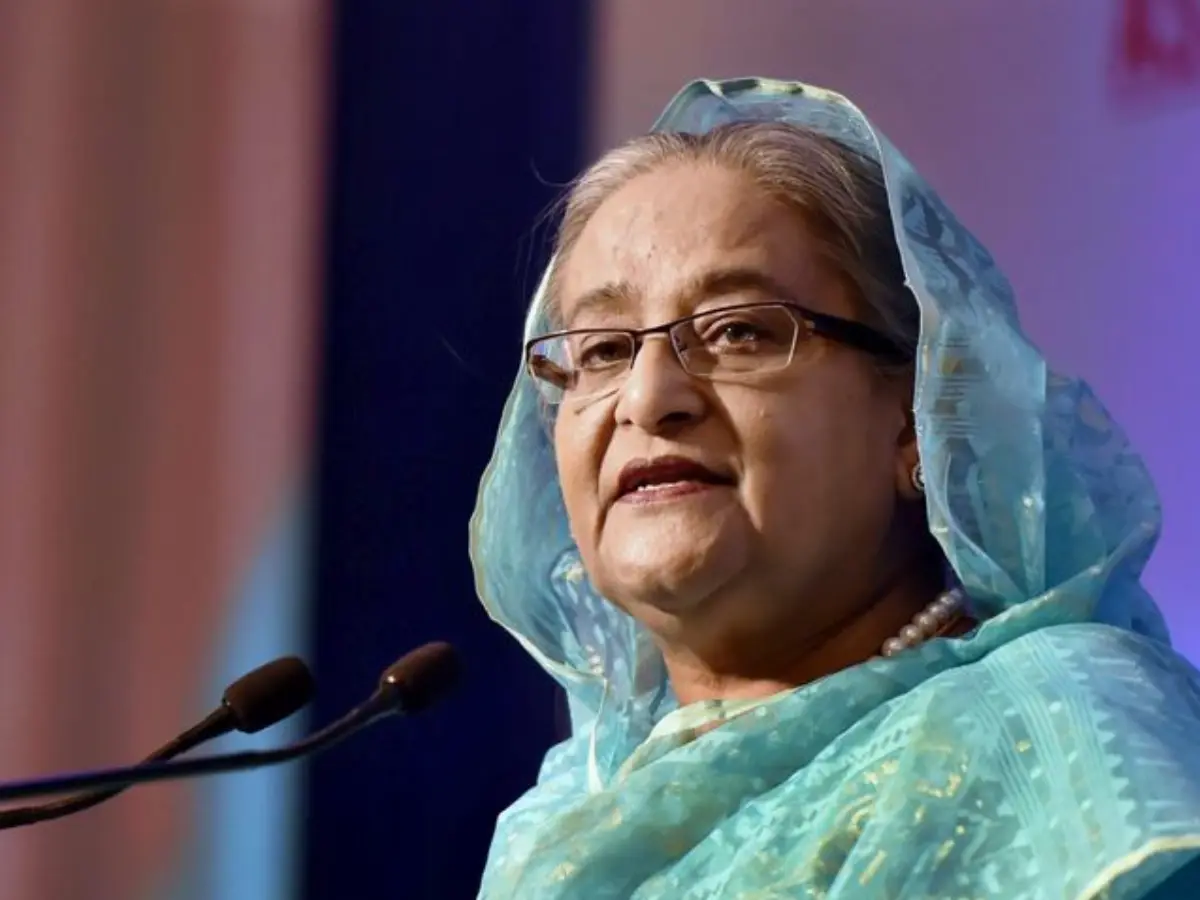
&imwidth=800&imheight=600&format=webp&quality=medium "'My first priority is restoring constitutional governance': Former Bangladesh PM Sheikh Hasina to Zee Network")
In this exclusive interview with Zee 24 Ghanta, a sister publication of WION, former Bangladesh Prime Minister Sheikh Hasina addresses Bangladesh’s deepening political crisis, outlining priorities to restore constitutional governance, revive the economy, protect minorities, and rebuild democratic institutions.
1. What will be your priority after landing in Bangladesh?
My priority will be the restoration of constitutional governance and the rule of law. Bangladesh has endured months of lawlessness, mob violence, arbitrary detention, and the systematic dismantling of our democratic institutions. Over 152,000 people remain imprisoned on fabricated political charges, enduring brutal conditions and torture. Their release must be immediate. Beyond that, we must rebuild what Yunus has destroyed. Our fast-growing economy has stalled, and external investment all but ceased. Employment opportunities for youth, farmers, and labourers have vanished. The secular foundations of our republic have been attacked, and religious minorities live in fear every day. There is no rule of law in the country; what exists instead is mob terrorism. People from all walks of life are being persecuted by the extremist forces that Yunus has empowered. These forces, many of which are linked to proscribed terrorist groups, have been granted total impunity and proudly admit to the atrocities they committed. Bangladesh needs a government with a democratic mandate to heal these wounds, restore confidence, and set our country back on the path of progress. The Awami League is prepared to serve, whether in government or opposition, but we cannot do so while banned and persecuted.
2. Are Tariq Rahman and BNP trustworthy?
The BNP and the Awami League have a long history as parliamentary opponents. When we governed, they opposed us; when they governed, we opposed them. This is how democracy functions. Healthy opposition strengthens governance.
However, we must not forget the facts. Tarique Rahman spent 17 years in comfortable exile in London after being found guilty of abetting the embezzlement of public funds. Leadership requires accountability and presence, not direction from abroad followed by sudden re-entry when conditions appear favourable. What concerns me more is the BNP's consistent willingness to align with extremist elements when it serves short-term interests. Already, we see BNP activists intimidating voters on their doorsteps, forcing them to vote under threats of violence and destruction. This is not democracy; it is coercion. If the BNP forms the next government, I would urge them to restore proper parliamentary democracy by lifting the ban on the Awami League and allowing us to serve as legitimate opposition. A parliament without genuine opposition is not a parliament at all.
3. Terrorist Osman Hadi was termed a martyr and was buried near Kazi Nazrul Islam. How do you look at this? National Poet and a terrorist lying side by side
Trending Stories
&imwidth=180&imheight=135&format=webp&quality=medium)
Mohra re-release in 4K: Akshay Kumar, Raveena Tandon’s film to clash with Ranbir Kapoor’s Ramayana
&imwidth=180&imheight=135&format=webp&quality=medium)
'I've done my work sincerely': AR Rahman on facing backlash over Ramayana soundtrack
&imwidth=180&imheight=135&format=webp&quality=medium)
'Shove that ballroom up your a**': Trump heckled at Mississippi rally over White House ballroom renovations | WATCH
&imwidth=180&imheight=135&format=webp&quality=medium)
'Lousy president': Trump hits back at Obama over 'cheesecake factory' White House jibe
&imwidth=180&imheight=135&format=webp&quality=medium)
Democrats allege 'desperate efforts to cover up' Trump's involvement in Jeffrey Epstein sex crimes, release 50-page report
&imwidth=180&imheight=135&format=webp&quality=medium)
Microsoft offers voluntary exit packages to 60,000 employees in India, US, UK and Canada
&imwidth=180&imheight=135&format=webp&quality=medium)
US Midterms 2026: Last leg polls and forecasts indicate Democratic momentum, but Senate control remains uncertain
&imwidth=180&imheight=135&format=webp&quality=medium)
Maurene Comey, daughter of ex-FBI director James Comey, was unlawfully fired as federal prosecutor, judge rules
&imwidth=180&imheight=135&format=webp&quality=medium)
Zimbabwe slips four places to 14th out of 29 in Africa’s Digital Rights and Inclusion ranking
&imwidth=180&imheight=135&format=webp&quality=medium)
‘That is a miss’: Ravi Ashwin questions Sooryavanshi’s demotion to No. 3 in 2nd T20I vs NZ
&im=FitAndFill=(700,400)&imwidth=180&imheight=135&format=webp&quality=medium)
New OTT releases this week (October 26-November 1, 2026): Baththa, Akka, The One About Matthew Perry- 7 titles coming on Netflix, Prime Video and more
&imwidth=180&imheight=135&format=webp&quality=medium)
One dead, six injured in Elizabeth, New Jersey mass shooting; suspect flees
&imwidth=180&imheight=135&format=webp&quality=medium)
US midterms 2026: Democrat Annie Andrews gains bipartisan backing against Trump's pick Darline Graham in South Carolina Senate race
&imwidth=180&imheight=135&format=webp&quality=medium)
Meta’s AI bet is getting more expensive: What its $95 billion share plan means
&imwidth=180&imheight=135&format=webp&quality=medium)
'Already tired of his 9-to-5': Baby born with a moustache becomes internet sensation, video goes viral | Watch
&imwidth=180&imheight=135&format=webp&quality=medium)
Trump accused of 'brutal' rape by ex-Miss Switzerland; Beatrice Keul alleges 'Don's best friend' Epstein facilitated assault in 1993
&imwidth=180&imheight=135&format=webp&quality=medium)
'Hire the robot, fire the human': Bill Gates's words hint at a bleak future
&imwidth=180&imheight=135&format=webp&quality=medium)
'Hell of a beautiful a**': Trump compliments Nicki Minaj as rapper joins him in Michigan rally
&imwidth=180&imheight=135&format=webp&quality=medium)
Storm Boelo’s fierce winds push passenger plane onto grass in UK, terrifying landing caught on cam
&imwidth=180&imheight=135&format=webp&quality=medium)
Chris Brown given suspended eight-month jail term for London nightclub attack
&imwidth=180&imheight=135&format=webp&quality=medium)
Trump’s oil and gas holdings surge to $81.6 million amid Iran war as Americans face rising fuel costs
&imwidth=180&imheight=135&format=webp&quality=medium)
Shah Rukh Khan unveils new poster of King, Internet reacts
&imwidth=180&imheight=135&format=webp&quality=medium)
Trick or Treat -Anthropic's IPO sales pitch is the perfect Halloween scare for AI enthusiasts
&imwidth=180&imheight=135&format=webp&quality=medium)
WATCH | Virat Kohli returns to training ahead of New Zealand ODI series
&imwidth=180&imheight=135&format=webp&quality=medium)
'He is a red flag': Ex-India strength and conditioning coach on Rohit's fitness regime
&imwidth=180&imheight=135&format=webp&quality=medium)
Pakistan airline PIA unveils new crew uniforms, faces online criticism
&imwidth=180&imheight=135&format=webp&quality=medium)
Hijack scare unfolds on United flight over suspicious text message. Here is what happened
&imwidth=180&imheight=135&format=webp&quality=medium)
Uttarakhand innovator Ravi Tamta builds flying car without any formal engineering degree
&imwidth=180&imheight=135&format=webp&quality=medium)
Police called after 3-year-old scores 10 goals in 12 minutes at Florida youth soccer game
&imwidth=180&imheight=135&format=webp&quality=medium)
Jordan strikes 'terrorist organisations' in Syria after deadly church attack as Damascus shuts main border crossing
&imwidth=180&imheight=135&format=webp&quality=medium)
'She is a beautiful woman': Trump mocks Mexican President Sheinbaum, mimics her voice at US Midterms rally
Kazi Nazrul Islam stood for rebellion against oppression, for communal harmony, for the dignity of the oppressed. The violence that followed Sharif Osman Hadi’s death is the very antithesis of this. Every death associated with this violence is a loss. But the glorification of those who participated in violence and destruction is deeply troubling. Sharif Osman Hadi's death arose from electoral rivalries among BNP, Jamaat, and NCP candidates over the Dhaka-8 constituency. Rather than conducting a credible investigation, the authorities allowed mobs to burn newspaper offices with journalists inside and attack diplomatic missions. What concerns me most is the way these mobs sought to exact vengeance by attacking one of the fundamental pillars of our society: freedom of expression. During our time in government, we encouraged freedom of expression. Journalists were free to write without fear of intimidation or reprisals. Political opposition was welcomed as a hallmark of a healthy, functioning democracy. The glorification of this sort of violence by an unelected head of state who came to power by killing people, burning state property, and creating panic across the country is no surprise.
4. India's EAM S Jaishankar went to Khaleda Zia's last rites. How do you look at the BNP and India's relationship?
India's gesture was one of diplomatic courtesy and respect for a former head of government. Khaleda Zia’s role in political life is undeniable, and her contributions to the nation were significant. I extend my condolences to her family and to those who mourn her. However, India's fundamental interests remain unchanged. India wants a reliable partner in Bangladesh: one that can maintain stability, protect minorities, honour commitments, and uphold regional cooperation. The current situation in which extremist mobs terrorise religious minorities, threaten journalists, and attack diplomatic premises serves neither country. The ties that bind our countries run deep and have been forged through decades of careful cooperation and mutual respect. I have faith that the natural partnership between our countries will one day be restored.
5. How will you restructure your party, and what will be the role of the new generation inside your party wing?
The Awami League has never belonged to one family. It belongs to the tens of millions of Bangladeshis who believe in democracy, freedom, and the values of 1971. Our party emerged from the struggle for independence and remains rooted in every village and neighbourhood. This crisis has shown us where renewal is needed. We need leaders who connect with every generation, who understand the challenges facing young people in cities and rural villages alike, who can navigate the digital age while honouring our founding principles. The demand for fresh voices is justified, and we are listening. The achievements of our government were never the accomplishments of any single individual. They belonged to our party workers and to the Bangladeshi people who placed their trust in us nine times. That collective strength remains. Millions of Bangladeshis continue to place their trust in us and would vote for us again if we were allowed to participate in the upcoming elections. But meaningful restructuring requires democratic conditions to exist. You cannot renew a political party while it is banned, while thousands of our supporters are arbitrarily detained and subject to torture, and while membership itself is treated as a crime.
6. How did you spend the last year? Do you connect with your party regularly? Do you think it gives you extra strength?
I have watched from afar as everything we built has been systematically dismantled: the economic progress, the religious harmony, the institutional stability. It has been painful to witness the suffering of our people, the persecution of our supporters, and the attacks on minorities. But I have also witnessed extraordinary courage. Despite facing day-to-day harassment, imprisonment, and torture, Awami League supporters have refused to abandon their beliefs. Journalists have continued writing the truth about the realities of life in Bangladesh today despite attacks on their freedoms. Ordinary Bangladeshis have dared to speak out despite the risks. Staying connected with our party and our people has been essential. The Awami League is not merely a political organisation; it represents the spirit of 1971, the dream of a secular, democratic, prosperous Bangladesh. That dream cannot be extinguished by persecution. I remain patient because I know that regimes built on fear and exclusion do not endure. Bangladesh belongs to its people, and eventually, they will reclaim it.

