Scientists discover prehistoric humans built artificial islands 5,000 years ago

&imwidth=600&imheight=450&format=webp&quality=medium "Scientists discover prehistoric humans built artificial islands 5,000 years ago")
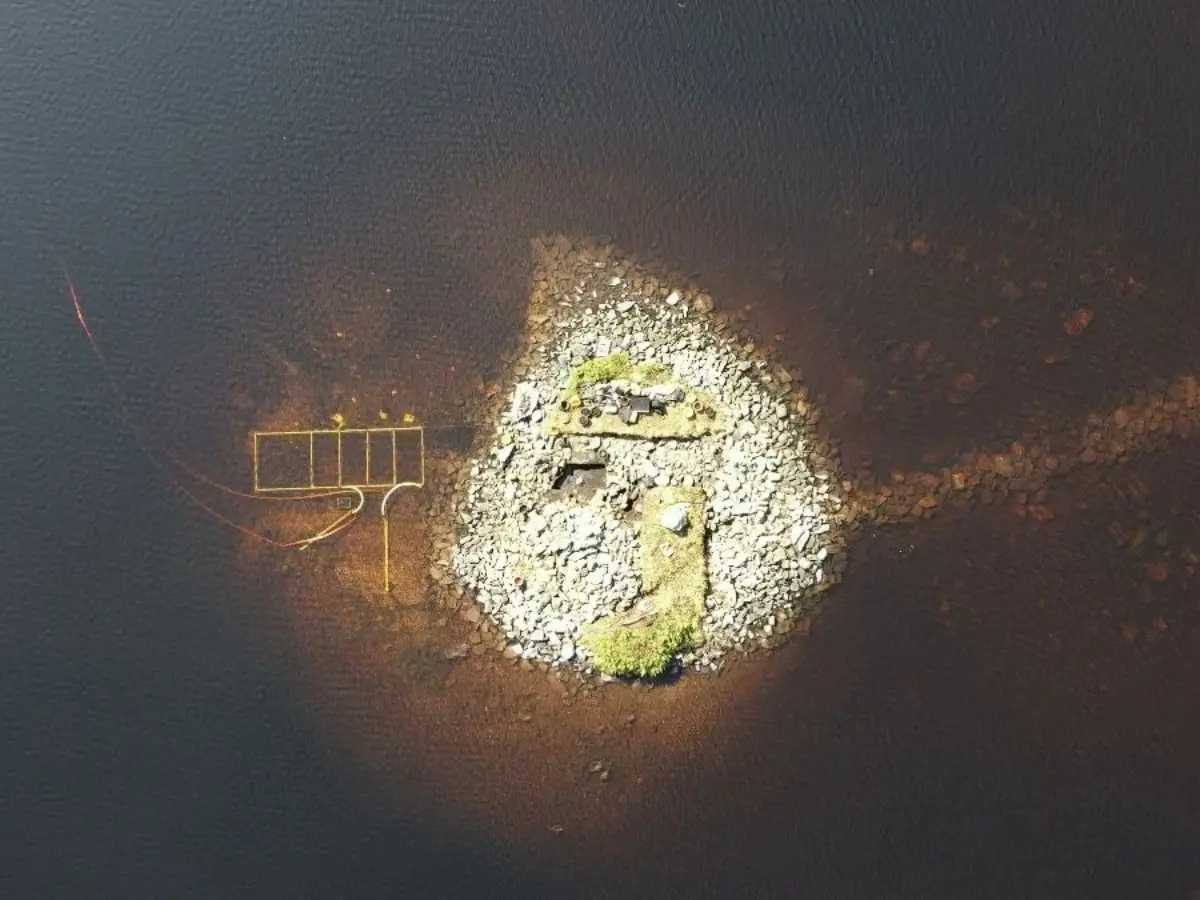
Loch Bhorgastail on the Isle of Lewis in Scotland was built 5,000 years ago. Photograph: (University of Southampton)
Humans have been adept at the technology of building artificial islands for thousands of years, a discovery in Scotland has revealed. The foundations of a crannog made 5,000 years ago show humans have been technologically advanced for several millennia.
Scientists have found evidence of artificial islands built by prehistoric humans thousands of years ago. The remains of the "crannog" in Loch Bhorgastail on the Isle of Lewis in Scotland reveal that it was built during the Late Neolithic, some 5,000 years ago. Till now, the artificial islands were believed to have been constructed between the Iron Age and the post-medieval period. But the latest discovery shows that humans were masters of the art much earlier, having built them between 3800 and 3300 BCE. Wooden and stone foundations that established the Loch Bhorgastail crannog have been discovered, and show that the civilisation during the Neolithic period was technologically advanced.
"Crannogs are small artificial islands that are typically thousands of years old," archaeologist Stephanie Blankshein, from the University of Southampton in the UK, said. She added that the lochs of Scotland are home to many of these artificial islands, which "remain unexplored or undiscovered." This particular one is a circular wooden platform with brushwood on top and spans around 75 feet. The research was published in Advances in Archaeological Practice.
Also Read: Armageddon in 15 years? A 2040 forecast about THIS river is triggering 'end times' warnings
How the remnants of the island were studied
Researchers have known about the site and the stone layer of the island for a long time. They used new technology to carry out a detailed analysis of the foundation and other fragments found near it. They used stereophotogrammetry to build a three-dimensional model of an object with photos from different positions. A lot of the features of the crannog in Loch Bhorgastail are submerged in shallow, murky water, which made photogrammetry ineffective. "Fine sediments, choppy conditions, floating vegetation, and distorted or reflected light all hinder shallow water imaging," maritime archaeologist Fraser Sturt from the University of Southampton said.
Also Read: Antarctic cosmic dust proves Earth has been traversing through supernova debris for 80,000 years
Trending Stories
)
)
)
)
)
)
)
)
)
)
)
)
)
)
)
)
)
)
)
)
)
)
)
)
)
)
)
)
)
)
)
)
)
)
)
Excavation of the crannog in Scotland
The crannog was excavated, and radiocarbon dating of the material was carried out. The researchers soon learned that "the terrestrial and underwater components formed a single continuous structure spanning both environments and could not be treated separately." The researchers explained in the peer-reviewed paper that they came across wooden foundations dating back thousands of years, which could be seen in the combined photogrammetry model through a trench excavated below the water. The first construction was 5,000 years ago, and 2,000 years later, the crannog was further reinforced with stone.
The research shows that humans have been artificially adding and altering the landscape for thousands of years. The exact purpose of the crannog remains unclear.

