Scientists crack the mystery of the 'golden egg', and it is not an egg but an...

&imwidth=600&imheight=450&format=webp&quality=medium "Scientists crack the mystery of the 'golden egg', and it is not an egg but an...")
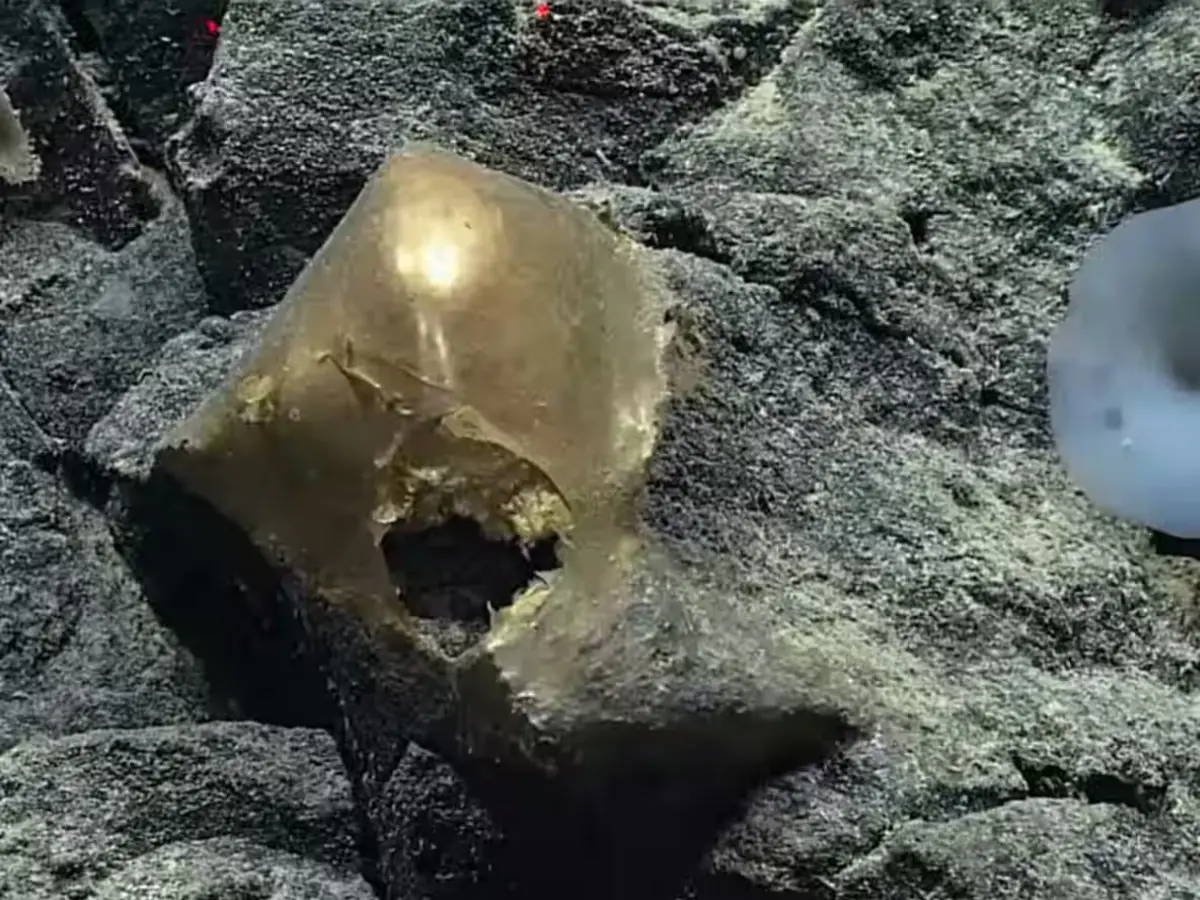
Golden orb found in the Pacific was quite a mystery for scientists. Photograph: (NOAA)
A mysterious golden object that looked like an egg was discovered in the ocean three years ago. Scientists thought it was some sort of egg. However, after over two years, they have finally figured out what it is.
A mysterious golden object that resembles an egg was discovered below the waters of the Gulf of Alaska in 2023. After three years of studies and analysis, scientists finally know what this strange item is. Scientists at the National Oceanic and Atmospheric Administration say it is not an egg, as was suggested at the time, but a part of a giant, deep-sea anemone. This golden thing is hidden underneath the animal belonging to the Relicanthus daphneae species. However, one of them simply left it behind in a bizarre occurrence. The agency is unsure about what happened to the rest of the animal, its upper half. They believe it could have died without this part, or likely "moved to a new home." "We might never know for sure,” NOAA said in a new video detailing the findings. The golden orb was found by the remotely operated vehicle Deep Discoverer stuck to a rock. It was four inches wide and had a small hole which offered a view of its insides.
Also Read: Scientists find mysterious never-seen-before 'spooky golden egg' at the bottom of Pacific Ocean
Simple tests and analysis did not help with the golden orb
The vehicle collected the orb, and it was sent to the lab at the Smithsonian National Museum of Natural History for analysis. NOAA Fisheries got to work to try to understand what they were looking at. Its physical structure and DNA were put under the scanner, but a routine analysis did not show anything. "I suspected that our routine processes would clarify the mystery,” zoologist Dr Allen Collins, the director of NOAA Fisheries’ National Systematics Laboratory in the museum, said. However, the simple methods didn't work, and several experts had to pay special attention to the object. This was a complex mystery that required morphological, genetic, deep-sea and bioinformatics expertise to solve,” he said.
How scientists identified the golden egg
Trending Stories
&im=FitAndFill=(700,400))
)
)
)
)
)
)
)
)
&im=FitAndFill=(700,400))
)
)
)
)
)
)
)
)
)
)
)
)
)
)
)
)
&im=FitAndFill=(700,400))
&im=FitAndFill=(700,400))
)
)
)
)
)
)
The golden orb was fibrous and had a layered surface packed with sting cells, such as those found in corals or anemones. The cells were revealed to be spirocysts, only seen in one group of the invertebrates known as Hexacorallia. They also tried matching the DNA to other DNA, but it showed no results, NOAA said. This likely happened since the orb had picked up DNA from other microscopic life. So they turned to whole-genome sequencing, which confirmed that the DNA on the orb was of an animal. The DNA molecules were found to be “genetically almost identical to a known Relicanthus daphneae reference genome.” Scientists say the golden orb was a deep-sea mystery and definitely not the last one. They are hoping advancements in technology will keep showing them the way.

