Overlooked for decades, two Egyptian structures buried under sand may have helped build pyramids

&imwidth=600&imheight=450&format=webp&quality=medium "Overlooked for decades, two Egyptian structures buried under sand may have helped build pyramids")
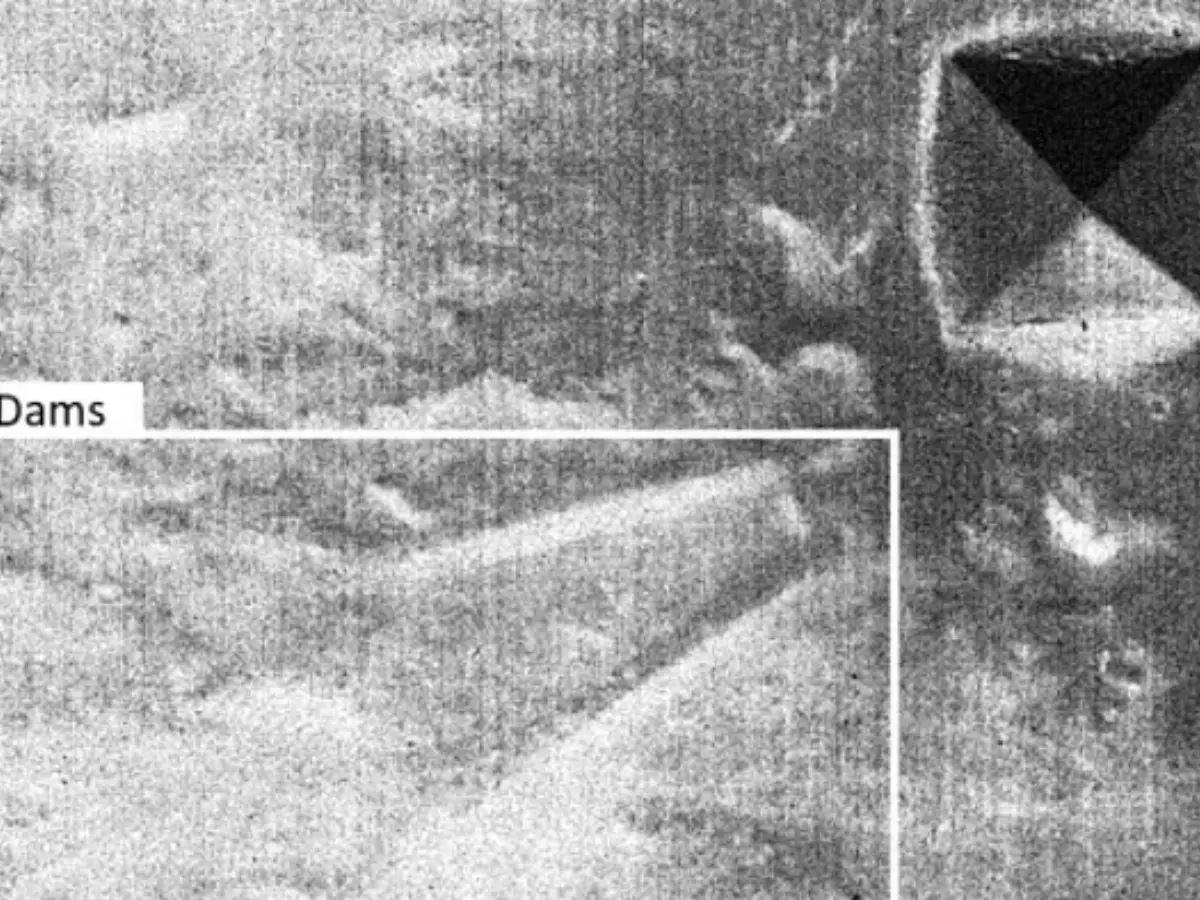
The two formations had been dismissed as merely a route and a natural occurrence for decades. Photograph: (Cairo University)
An engineering system has been unearthed near one of the oldest pyramids in Egypt, which researchers think helped build the structures in multiple ways. The discovery was made in Dahshur, where two structures had been hiding in plain sight for years.
A discovery in Egypt is throwing light on how the pyramids were built thousands of years ago. A massive engineering system has been discovered next to the Red Pyramid, located a few kilometres outside Cairo, that appears to be dams. The protrusions here have been known about for decades, but were believed to be naturally occurring and used as a stone-transport route. But now a study led by Cairo University and published in Nature states that it is a colossal hydraulic system that was used to build the pyramids.
Roles of the Dam in Construction and Daily Operations
The dam system trapped sediment and captured floodwater while regulating its flow. The structure consists of two dams, a reservoir, a diversion canal and a triangular spillway. Scientists say the latter could be the earliest advanced spillway in ancient Egypt. The team believes that the dam helped in the process in several ways. The controlled water flow helped move heavy cargo near the pyramid. The water was also used to prepare mortar, and the dam itself safeguarded the under-construction pyramids from floods. The workers also relied on this water for their needs.
If the theory is true, it would mean Egyptians had the technology to develop complex water engineering 4,500 years ago. However, it is hard to say for sure that the recently uncovered structure is linked to the Red Pyramid. Excavation and dating would be needed to learn the age of the dam system. The Red Pyramid is 4,600 years old and located in Dahshur. It was built during the time of pharaoh Sneferu of Egypt's Fourth Dynasty.
Dimensions, Alignment, and True Purpose of the Structures
Trending Stories
)
)
)
)
)
)
)
)
)
)
)
)
)
)
)
)
)
)
)
)
)
)
)
)
)
)
)
)
)
)
)
)
)
)
&im=FitAndFill=(700,400))
)
)
)
)
The dam system has two formations that extend approximately 1,970 to 2,300 feet from one side of the valley to the other. Researchers carried out topographical reconstructions, which showed the structures are approximately 49 to 98 feet wide at their bases. Around 20 to 23 feet of them are visible above the present valley floor, while a major portion is under the sand. They are not in tune with the natural travel route through the valley. Located squarely in the drainage path, both structures sit exactly where flood-retention barriers ought to go.
Till now, the eastern structure was believed to be used as a road used to transport limestone for the Red Pyramid, while the western one was just seen as a natural rise. But the latest study shows that they worked in tandem as a two-stage water and sediment management system. The upper structure worked as a check dam, filtering out rocks and sediments from flood waters.
The clean water moved to the second formation, which likely was the main retention dam. Between them, an intermediate reservoir spanning approximately 21 acres would have held an estimated 61 million gallons of water. However, its capacity could have been double this estimate.
The Two-Stage Reservoir System and "Duckbill" Spillway
Satellite images have in the past captured a large zigzagging or triangular section at the centre of the western structure which didn't seem to be part of a transport route. It was identified as a "duckbill" spillway which fits a much longer crest into a narrow footprint, allowing it to release far more floodwater than a straight wall could. The crest would have been 656 feet long and 13 to 23 feet high. It could have released more than twice as much water as a straight spillway, which reduced the risk of floodwater pouring uncontrollably over the top of the dam.

