Flashing eyes, loud howls: Japan’s ‘Monster Wolf’ robots see boom in orders as bear attacks rise

&imwidth=600&imheight=450&format=webp&quality=medium "Flashing eyes, loud howls: Japan’s ‘Monster Wolf’ robots see boom in orders as bear attacks rise")
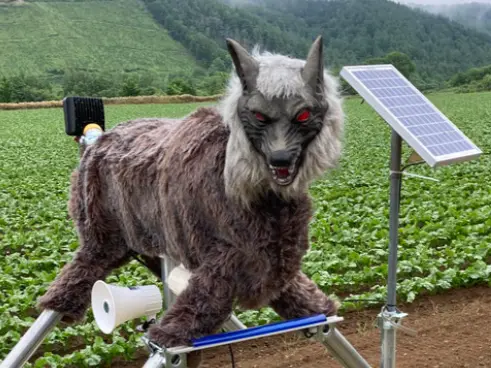
A giant robotic wolves with glowing red eyes. Photograph: (X/@volcaholic1)
Bears were spotted on airport runways, golf courses, near schools, and even around supermarkets and hot spring resorts, triggering near-daily concern. The number of bears captured nearly tripled from the previous year to 14,601, setting a new record.
A Japanese company making ferocious-looking "Monster wolf" robots is in high demand to scare off bears in Japan after several fatal bear attacks on humans last year. The designed robot is an animatronic scarecrow with flashing red eyes that howls and growls threateningly to scare away wild animals.
The Hokkaido-based company, Ohta Seiki, that makes the devices, has already received nearly 50 orders in 2026, more than the firm usually receives in an entire year. "We make them by hand. We cannot make them fast enough now. We are asking our customers to wait two to three months," company president Yuji Ohta told AFP.
"Awareness of bear safety and measures against wildlife damage (on farm products) improved. There was also a growing recognition that our product is effective in dealing with bears," Ohta said, adding that most orders are coming from farmers, golf course operators and people who work outdoors in rural regions.
Bears were responsible for 13 deaths across Japan during 2025–2026, more than double the previous record, while over 200 others were injured. Last week, authorities confirmed the first fatal bear attack of 2026, along with two other suspected deadly incidents.
Terror of bears across the city
Official figures show that more than 50,000 bear sightings were reported across the country, more than twice the previous record set two years earlier. Bears were spotted on airport runways, golf courses, near schools, and even around supermarkets and hot spring resorts, triggering near-daily concern. The number of bears captured and subsequently culled also surged, nearly tripling from the previous year to 14,601, setting a new all-time record.
Trending Stories
)
)
)
)
)
)
)
)
)
)
)
)
)
)
)
)
)
)
)
)
)
)
)
)
)
)
)
)
)
)
)
)
)
)
&im=FitAndFill=(700,400))
)
)
)
)
Local media confirmed that several northern regions also reported more than four times as many bear sightings in April compared with the same period last year, as the animals emerge from hibernation. Scientists attribute the rise in attacks to the rapidly growing numbers of bears, combined with a falling human population, particularly in rural areas.
This depopulation has effectively given bears more space to expand into new territories, biologist Koji Yamazaki of Tokyo University of Agriculture told CBS News’ Elizabeth Palmer in 2023.

