Expert says interstellar object 3I/ATLAS is alien spacecraft: 3 reasons why he thinks so

&imwidth=600&imheight=450&format=webp&quality=medium "Expert says interstellar object 3I/ATLAS is alien spacecraft: 3 reasons why he thinks so")
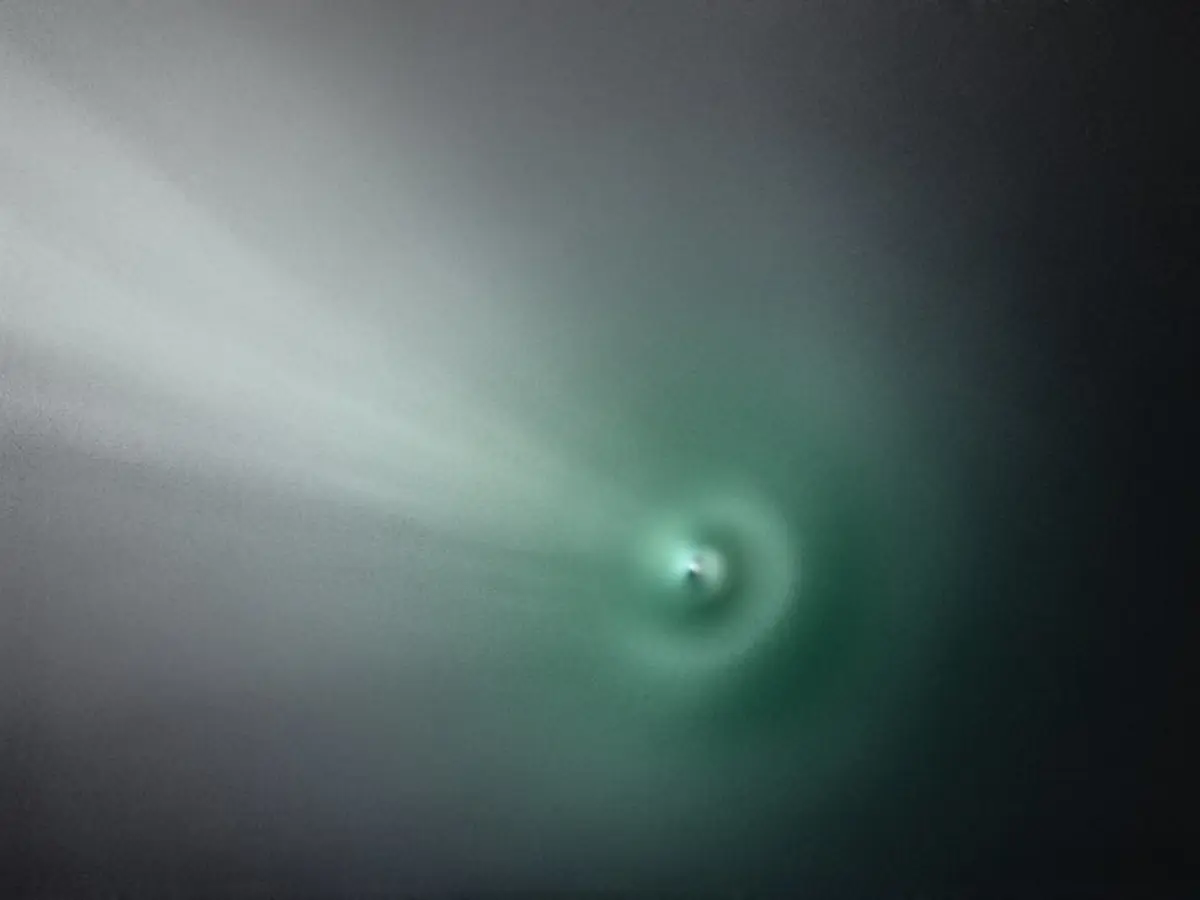
Expert says interstellar object is alien spacecraft: Photograph: (ATLAS/University of Hawaii/NASA)
Avi Loeb, known for his theories on aliens, thinks that the interstellar object in our solar system is a spacecraft sent by aliens. He points to its trajectory, size and speed to state that it is almost impossible that such a natural cosmic object could have travelled so far.
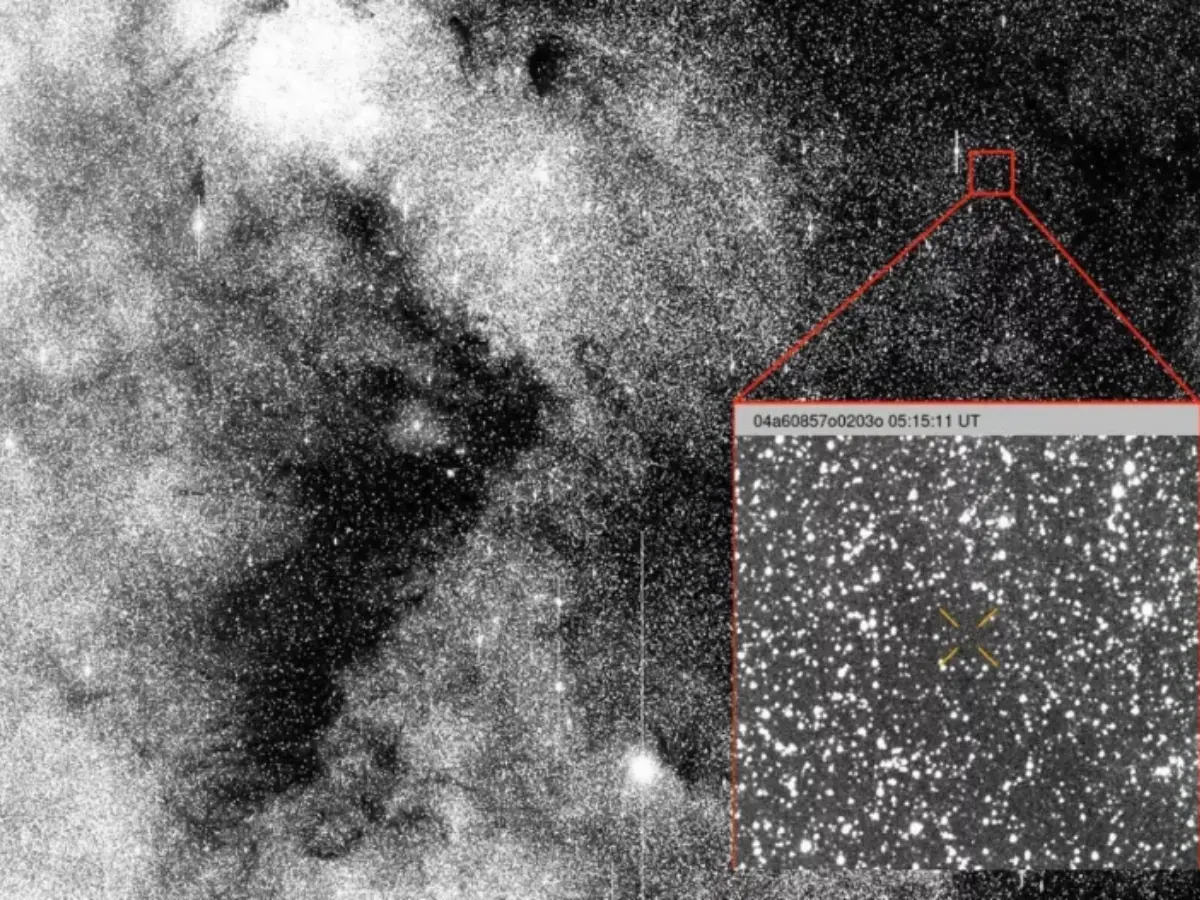
Avi Loeb, an Israeli-American theoretical physicist known for talking about aliens, now thinks that the interstellar comet spotted in the solar system is an artificial object sent by an advanced alien civilisation. The Harvard professor points out the cosmic object's trajectory, size and behaviour to suggest that it doesn't appear to be a natural space rock, and is likely a spacecraft. 3I/ATLAS is only the third known interstellar object ever recorded in our solar system. It was detected on July 1 by NASA's ATLAS telescope in Chile and has been classified as a comet. Loeb told Newsweek, "The retrograde orbital plane of 3I/ATLAS around the Sun lies within 5 degrees of that of Earth... The likelihood of that coincidence out of all random orientations is 0.2 per cent." However, other experts have quashed his claims, saying there is nothing that points to it being an alien probe. The comet has travelled from another star system. Scientists have said that it is probably even older than our solar system. It could have taken it billions of years to get here. But Loeb thinks that 3I/ATLAS is so large that it is extremely unlikely it could have naturally taken this journey to reach us. Also Read: Interstellar visitor spotted is only the third: One of the other two appeared to be an 'alien vessel'
Nothing natural about the interstellar object: Avi Loeb
The comet is travelling at 60 kilometres per second, and Loeb claims that there is no natural cosmic process that would let it travel in this manner towards the inner solar system. He told MailOnline, "An alternative is that the object targets the inner solar system by some technological design." After the object was spotted for the first time, scientists noted its extremely elliptical orbit and high speed, and both of them pointed to its origins lying outside the solar system. 3I/ATLAS has come from the constellation Sagittarius and is heading towards the inner solar system. Its closest approach to the Sun is expected on October 30, when it will be 210 million km from our star, that is somewhere around the orbit of Mars. It is not expected to reach Earth.
How did such a mammoth object travel all this way to the solar system?
The sheer size of the interstellar visitor also hints that it is not a natural object, Loeb says. Right now, it is 490 million km from Earth. Its size has been measured based on the amount of light it reflects. This calculation states that it is around 20-24km in diameter. It is 200 times larger than 'Oumuamua, the thin and 100-metre-long interstellar visitor that took a trip to the solar system in 2017. Loeb doesn't think an object of this size can travel all the way here without dying out. He told MailOnline that there are about a million objects on the scale of 'Oumuamua for each object that is 24 kilometres in size. "But we haven't seen a million 'Oumuamua-sized interstellar objects before seeing this one; it's very strange," he pointed out. Also Read: Moon babies from asteroid collisions mean Earth has 7 moons at all times
Trending Stories
&imwidth=280&imheight=210&format=webp&quality=medium)
&im=FitAndFill=(700,400)&imwidth=280&imheight=210&format=webp&quality=medium)
&im=FitAndFill=(700,400)&imwidth=280&imheight=210&format=webp&quality=medium)
&imwidth=280&imheight=210&format=webp&quality=medium)
&imwidth=280&imheight=210&format=webp&quality=medium)
&imwidth=280&imheight=210&format=webp&quality=medium)
&imwidth=280&imheight=210&format=webp&quality=medium)
&imwidth=280&imheight=210&format=webp&quality=medium)
&imwidth=280&imheight=210&format=webp&quality=medium)
&imwidth=280&imheight=210&format=webp&quality=medium)
&imwidth=280&imheight=210&format=webp&quality=medium)
&imwidth=280&imheight=210&format=webp&quality=medium)
&imwidth=280&imheight=210&format=webp&quality=medium)
&imwidth=280&imheight=210&format=webp&quality=medium)
&imwidth=280&imheight=210&format=webp&quality=medium)
&imwidth=280&imheight=210&format=webp&quality=medium)
&imwidth=280&imheight=210&format=webp&quality=medium)
&imwidth=280&imheight=210&format=webp&quality=medium)
&imwidth=280&imheight=210&format=webp&quality=medium)
&imwidth=280&imheight=210&format=webp&quality=medium)
&im=FitAndFill=(700,400)&imwidth=280&imheight=210&format=webp&quality=medium)
&imwidth=280&imheight=210&format=webp&quality=medium)
&imwidth=280&imheight=210&format=webp&quality=medium)
&imwidth=280&imheight=210&format=webp&quality=medium)
&imwidth=280&imheight=210&format=webp&quality=medium)
&imwidth=280&imheight=210&format=webp&quality=medium)
&imwidth=280&imheight=210&format=webp&quality=medium)
&imwidth=280&imheight=210&format=webp&quality=medium)
&imwidth=280&imheight=210&format=webp&quality=medium)
&imwidth=280&imheight=210&format=webp&quality=medium)
&imwidth=280&imheight=210&format=webp&quality=medium)
&imwidth=280&imheight=210&format=webp&quality=medium)
&imwidth=280&imheight=210&format=webp&quality=medium)
&imwidth=280&imheight=210&format=webp&quality=medium)
How many such objects could exist in Milky Way?
Loeb has even written a paper that will be published by the Research Notes of the AAS, detailing the scenarios that can facilitate such a mammoth object to reach our solar system. He used previous data to calculate how many objects of this size could exist in the Milky Way. He multiplied this number by the mass of 3I/ATLAS, and the results made "zero sense". He says there is not enough mass to make ample rocks of this size. This means that 3I/ATLAS is a lot rarer than its appearance in our Solar System suggests. Since there aren't a lot of similar objects floating around, it seems strange that one that does is aiming for our inner solar system, Loeb said. The Harvard physicist also dismissed the comet theory, saying there is no direct evidence of dust or gas being released by the object. The 'reddening' caused by dust is how it was concluded to be a comet. Loeb says this could be simply because the object is red.