

&imwidth=800&imheight=600&format=webp&quality=medium "Ancient humans had a mining factory in the mountains 7,000 years ago, for 5,000 years")
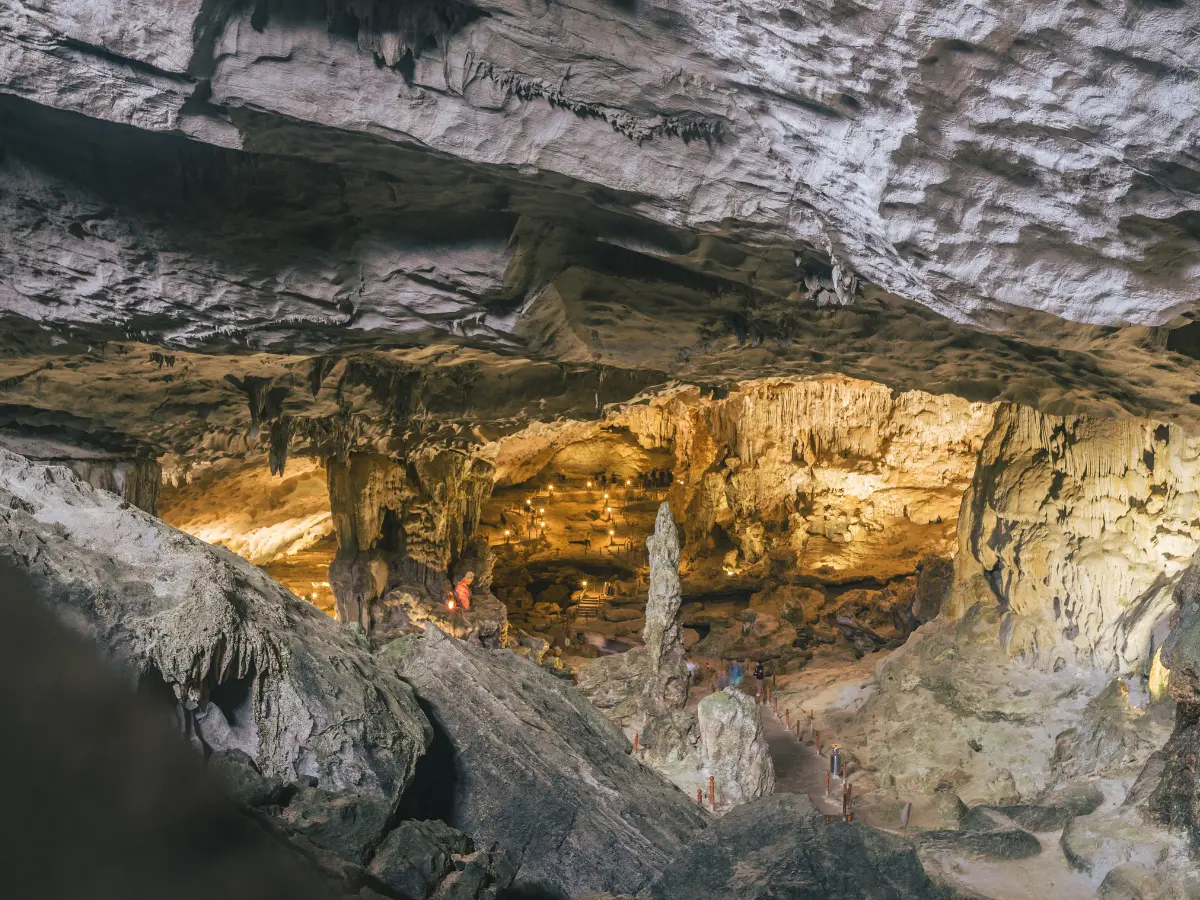
A discovery high in the mountains of Spain has thrown light on how people lived between the 5th and 1st millennia BC. For the longest time, archaeologists believed that areas above 6,562ft were only used as a passing by ancient humans. However, they have found a prehistoric cave known as Cova that sits 7,333ft above sea level and was once inhabited. For 5,000 years, multiple civilisations lived in this cave. But it was never continuously occupied, as humans came and went regularly. It was abandoned for years, evidence shows, but they kept returning, suggesting that the time for its occupation was preplanned. Ancient humans came here to fragment and process minerals, as shown by the findings in this cave.
Lead author of the study, Carlos Tornero, said, “For a long time, these spaces were assumed to be marginal. What we document here is recurrent occupation, with complex activities and a clear exploitation of mineral resources.” It was published in the journal Frontiers in Environmental Archaeology.
What scientists found in the Spanish cave
Scientists from the Universitat Autònoma de Barcelona (UAB) and the Institut Català de Paleoecologia Humana i Evolució Social (IPHES-CERCA) led excavations at the cave between 2021 and 2023. They found animal bones, ceramic fragments, proof that fire was lit here, and two pendants, one made from marine shell and the other a brown bear tooth. The discovery of green minerals in the cave suggests the site was used for copper extraction, one of the earliest such evidence in Western Europe. Scientists think the green minerals are likely malachite, a copper carbonate mineral. The researchers say everything that transpired at this cave was highly organised, indicating that it was used for systemised exploitation of minerals at specific times in history.
Trending Stories
&imwidth=180&imheight=135&format=webp&quality=medium)
Brendan Taylor overtakes Andy Flower to become Zimbabwe’s leading ODI run-scorer
&imwidth=180&imheight=135&format=webp&quality=medium)
Researchers name newly discovered Andean plant after Argentina legend Lionel Messi
&imwidth=180&imheight=135&format=webp&quality=medium)
Lawrence Bishnoi gang claims responsibility for firing at Tiger Shroff over ties to Salman Khan
&imwidth=180&imheight=135&format=webp&quality=medium)
Flying car race: Alef Aeronautics welcomes Tesla Roadster '11 years' later, but are the two models the same?
&imwidth=180&imheight=135&format=webp&quality=medium)
KATSEYE performs at Victoria’s Secret show, teases Sophia Laforteza’s return
&imwidth=180&imheight=135&format=webp&quality=medium)
Shastri backs Shami comeback; lauds Bhuvi and warns Bumrah on format workload ahead of World Cup
&imwidth=180&imheight=135&format=webp&quality=medium)
Saudi Arabia asks skyscraper employees to work from home amid Houthi threats
&imwidth=180&imheight=135&format=webp&quality=medium)
Tiger Shroff shows injuries after Juhu firing incident; Eknath Shinde says Mumbai won’t tolerate gang wars
&imwidth=180&imheight=135&format=webp&quality=medium)
NFl 2026/27 - Saints vs Steelers to go ahead in Paris next week despite protest
&imwidth=180&imheight=135&format=webp&quality=medium)
4 killed, 19 critically injured in grass fire at Canada's largest military base
&imwidth=180&imheight=135&format=webp&quality=medium)
Nobel laureate Machado, who dedicated prize to Trump, confirmed as Venezuela opposition leader
&imwidth=180&imheight=135&format=webp&quality=medium)
After Kennedy Center and reflecting pool disputes, Trump turns to Washington golf course plan amid legal battle
&imwidth=180&imheight=135&format=webp&quality=medium)
Why France looks the most fragile in the G7 amid protests and budget deadlock
&imwidth=180&imheight=135&format=webp&quality=medium)
China responds to Trump's Press Secretary Katie Zacharia after toilet remark: 'Visit China more often'
&imwidth=180&imheight=135&format=webp&quality=medium)
Cattle feed found in biscuits of Indian company, FSSAI sends legal notice
&imwidth=180&imheight=135&format=webp&quality=medium)
Anthropic’s public benefit plan: What its 5% share commitment means for AI’s future
&imwidth=180&imheight=135&format=webp&quality=medium)
Girl 'dead' for 8 hours wakes up at her own funeral, dad insists she wasn't breathing
&imwidth=180&imheight=135&format=webp&quality=medium)
MI5 is opening an AI threat centre, and OpenAI just told MPs the worst isn't over
&imwidth=180&imheight=135&format=webp&quality=medium)
Elon Musk features on Lucknow's 'anti-India' Ravan poster alongside Rahul Gandhi, Akhilesh
&im=FitAndFill=(700,400)&imwidth=180&imheight=135&format=webp&quality=medium)
New OTT releases this week (October 19-25, 2026): Gajab Raat to Chaar Yaar-8 titles to watch during Dussehra week on Netflix, Prime Video and more
&imwidth=180&imheight=135&format=webp&quality=medium)
Kylie Jenner makes Victoria’s Secret debut in $50 million diamond-encrusted design as Timothée Chalamet cheers
&imwidth=180&imheight=135&format=webp&quality=medium)
Putin wants joint meeting with Trump-Xi summit on Ukraine war, proposes talks alongside APEC: Report
&imwidth=180&imheight=135&format=webp&quality=medium)
No Ravindra Jadeja, Yashasvi Jaiswal in India’s 2027 ODI World Cup plans: Report
&imwidth=180&imheight=135&format=webp&quality=medium)
India moves to buy 10,000 more AI chips for a national compute pool open to startups
&imwidth=180&imheight=135&format=webp&quality=medium)
Tiger Shroff attacked by three gunmen in Mumbai, actor safe, two injured
&imwidth=180&imheight=135&format=webp&quality=medium)
Anirudh Ravichander-Kavya Maran wedding: Telangana CM reveals Chennai reception date
&im=FitAndFill=(700,400)&imwidth=180&imheight=135&format=webp&quality=medium)
Tesla Roadster engineering: The hidden hardware behind its flying demonstration
&imwidth=180&imheight=135&format=webp&quality=medium)
US to review Russia sanctions waiver within 60 days as Rubio cites India’s ‘substantial’ Russian energy imports
&imwidth=180&imheight=135&format=webp&quality=medium)
'Grassroots leagues help bridge the gap': India's ODI WC winner Suresh Raina lauds ISCL ahead of Season 2
&imwidth=180&imheight=135&format=webp&quality=medium)
'We feel like Mr India': Gujarat’s undercover SHE team guard garba nights at Navratri
&imwidth=180&imheight=135&format=webp&quality=medium)
Cattle-feed bran in biscuits, detergent in milk: FSSAI acts against 3 companies
&im=FitAndFill=(700,400)&imwidth=180&imheight=135&format=webp&quality=medium)
5 technologies that could make the Tesla Roadster one of the most unusual cars ever built
&imwidth=180&imheight=135&format=webp&quality=medium)
'It's a joy to see the makers bring it on such a grand scale': SS Rajamouli on Ramayana
&imwidth=180&imheight=135&format=webp&quality=medium)
Priest dies after crucifix falls on his head during livestreamed Mass in Ecuador | VIDEO
A global trend of high-altitude pioneers: Ancient parallels of humans living at extreme heights
However, Spain is not the only place where ancient humans lived at great heights. Scientists are finding evidence that early humans colonised mountains in other parts of the world much earlier than we thought. The Baishiya Karst Cave on the Tibetan Plateau was inhabited by ancient hominins, or Denisovans, for over 100,000 years, despite lying at a staggering 10,760 feet above sea level.
Another similarity lies with the Can Tintorer mines in Gavà, Catalonia, which have also been studied by researchers from the Universitat Autònoma de Barcelona. While the residents of Cova processed green minerals (malachite) for copper extraction, Can Tintorer is a famous Neolithic mining complex in the same region where ancient humans mined variscite, a green mineral used for jewellery. Later, it was also used for copper mining.

