300-year-old shipwreck with $20 billion worth of treasure has four parties squabbling

&imwidth=600&imheight=450&format=webp&quality=medium "300-year-old shipwreck with $20 billion worth of treasure has four parties squabbling")
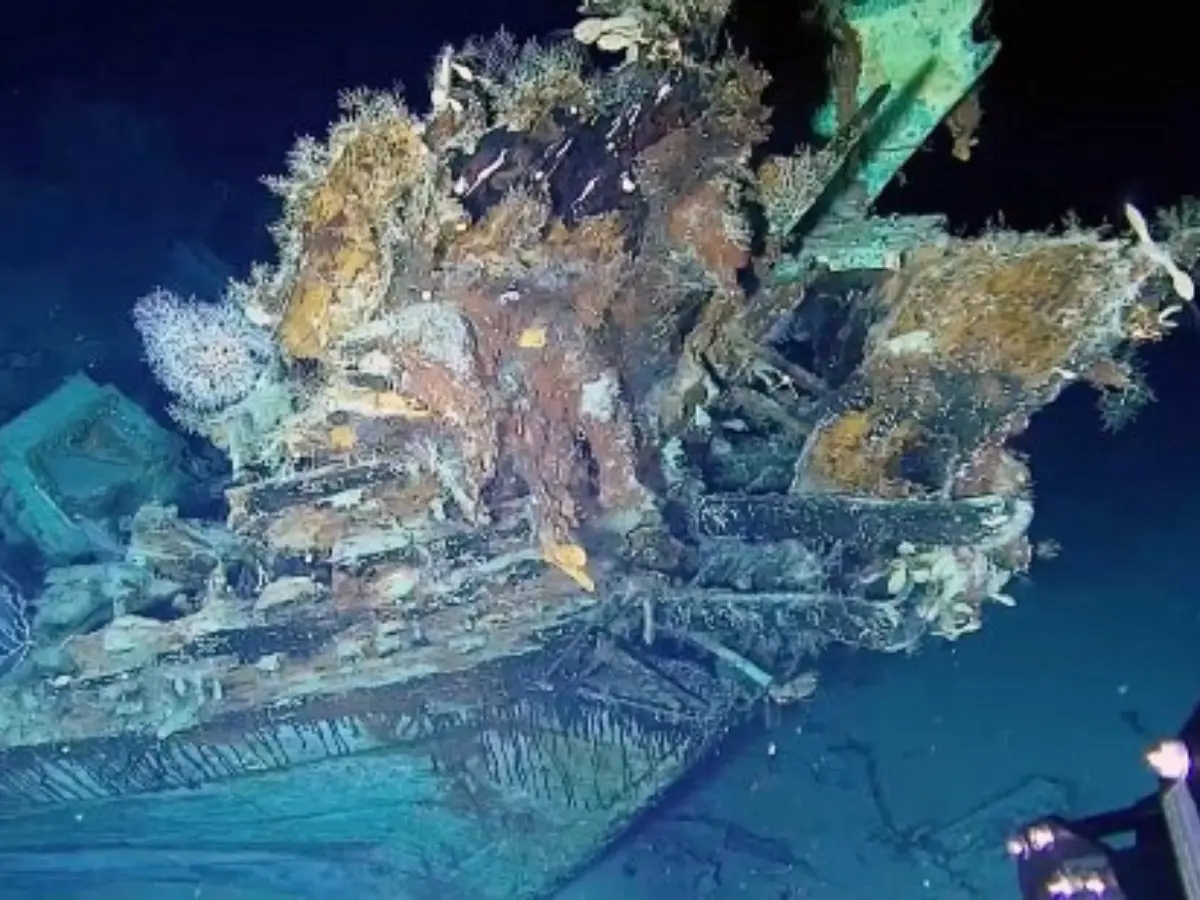
Colombia shipwreck of 1708. (Photo: AFP)
Four parties are fighting over $20 billion worth of treasure found in a shipwreck that is over 300 years old. The Colombian government says it is theirs, a US firm has claimed half of it, while the Spanish government also wants it. An indigenous group says they also have a right over it.
A Spanish ship that sank over 300 years ago with enormous amounts of gold, silver, and emeralds has finally been discovered. Researchers have released underwater images of the shipwreck that prove that what they are seeing off the coast of Colombia is the legendary San José. The ship was ambushed by the British in 1708 and blown apart, after which it sank. It had 600 sailors on board, along with $20 billion worth of treasures.
The shipwreck was first seen in 2015 by the Colombian navy. However, its identity remained a mystery. Colombian researchers dug deeper and studied the items scattered on the ocean floor. They have published their findings in the journal Antiquity.
Archaeologist Daniela Vargas Ariza, of Colombia's Naval Cadet School and the National Institute of Anthropology and History, was involved with the study. Remotely operated vehicles (ROVs) captured photos of coins scattered on the ocean floor, about 1,970 feet underwater. They said that their technique helped them get high-resolution scans of silver coins near the stern.
The proof lies in these coins, according to the authors. They are dated the same year that San Jose set sail - 1707. They carry the marks of Lima, the capital of Peru, and are stamped with the royal symbols of Castile and León, the emblems of Spain's empire.
Daniela said in a statement that at the time, these coins were known as "cobs" or "macuquinas."
Trending Stories
)
)
)
)
)
)
)
)
)
)
)
)
)
)
)
)
)
)
)
)
)
)
)
)
&im=FitAndFill=(700,400))
)
)
)
)
)
)
&im=FitAndFill=(700,400))
)
)
&im=FitAndFill=(700,400))
)
)
"Hand-struck, irregularly shaped coins - known as cobs in English and macuquinas in Spanish - served as the primary currency in the Americas for more than two centuries," she said in a statement.
"This body of evidence substantiates the identification of the wreck as the San José Galleon."
The cobs were created in 1707 at the Lima Mint. A ship was recorded to have navigated the Tierra Firme route in the early eighteenth century, at this time, and only San Jose matches the description, Daniela said.
Other items found in the shipwreck are Chinese porcelain from the Kangxi period (1662 to 1722) and 17th-century cannons from 1665.
Fight over $20 billion treasure
The shipwreck has been a point of conflict between four parties - Spain, the US, Colombia and an indigenous group - all claiming rights over the jewels and other loot.
In 2015, the Colombian government said its Navy had discovered the 300-year-old shipwreck beneath 3,100 feet of water. Another team brought more photos of it in 2022. The next year, the Colombian government announced that it would pull out the wreck before President Gustavo Petro's term ends in 2026.
However, Glocca Morra, an American research company, came forward and claimed it found the San Jose in 1981. It said that it handed the coordinates to the Colombians on the condition that half of the trove would be given to them. Spain and the indigenous group also came forward.
But, in 2015, Colombia's then-president, Juan Manuel Santos, said the wreck was not found in the same location, dismissing Morra's claim. What will happen to the $20 billion treasure remains to be seen.

