Infosys co-founder Nandan Nilekani says AI should solve real problems, not concentrate power

&imwidth=600&imheight=450&format=webp&quality=medium "Infosys co-founder Nandan Nilekani says AI should solve real problems, not concentrate power")
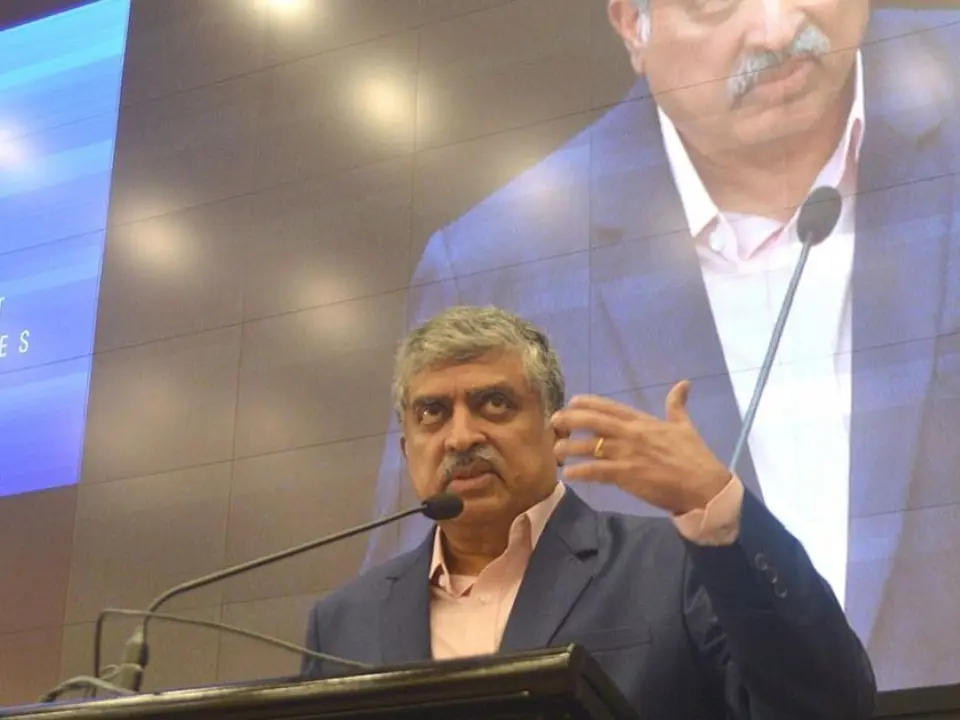
Infosys co-founder Nandan Nilekani says AI should solve real problems, not concentrate power Photograph: (X)
Infosys co-founder Nandan Nilekani warns that AI could deepen inequality if misused. He urges India to focus on public good over global AI dominance, applying AI in healthcare, education, and local languages to solve real problems.
Nandan Nilekani says AI could deepen inequality, urges focus on public good.
Infosys co-founder Nandan Nilekani has warned that artificial intelligence (AI) could lead to a concentration of wealth and power in the hands of a few. However, he focused that this should not stop countries like India from using AI to solve real-life problems in healthcare, education and language accessibility.
Nilekani made the remarks during an event organised by the Asia Society. He said the global AI race may lead to unequal outcomes, but added, “We can’t fight that. Forces at play are much bigger than any of us.” Instead of chasing global dominance in AI, he suggested India should focus on using the technology for local needs.
AI should serve public needs, not just profit
Nilekani, who played a key role in building India's digital public infrastructure like Aadhaar and the Unified Payments Interface (UPI), believes AI must be directed towards inclusive outcomes. He said the country’s focus should not be on competing globally but on building solutions that directly improve lives.
“Let’s use AI to improve healthcare systems, make education more accessible, and break language barriers,” he said, calling for socially meaningful applications of the technology. He pointed to India’s successful use of digital tools to solve large-scale problems as a guide for AI development.
Not in favour of universal basic income
Trending Stories
)
)
)
)
)
)
)
)
)
)
)
)
)
)
)
)
)
)
)
)
)
)
)
)
)
)
)
)
)
)
)
)
)
)
&im=FitAndFill=(700,400))
)
)
)
)
Nilekani also pushed back against popular ideas like universal basic income (UBI), which some propose as a solution to job loss due to automation. “I don’t agree with that vision. It’s a dystopian idea,” he said. Instead, he suggested that AI should enhance human ability, allowing people to do more rather than replacing them.
Simplicity is key to innovation
Reflecting on India’s approach to digital design, Nilekani said that platforms like UPI were built with simplicity and scale in mind. “The document explaining the payments platform was just one page long,” he said, referring to work by Dilip Asbe and Pramod Verma. He highlighted this simplicity as crucial to building cost-effective, widely used platforms.
His message was clear: while AI will create new challenges, India’s strength lies in designing public digital systems that are inclusive, efficient, and people-focused.
