

&imwidth=800&imheight=600&format=webp&quality=medium "Anthropic resumes Pentagon talks after dispute over AI use by the US military: Reports")
Artificial intelligence company Anthropic has resumed discussions with the United States Department of Defence over the potential use of its AI technology by the US military.
The talks, which had briefly collapsed last week, could determine whether the Pentagon continues using Anthropic’s AI models or moves to restrict the company’s access to government contracts.
According to people familiar with the discussions, negotiations have restarted in an effort to resolve disagreements around how the technology could be used.
Why talks between Anthropic and the Pentagon broke down
The negotiations were originally led by Anthropic CEO Dario Amodei and Emil Michael, the Pentagon’s under-secretary of defence for research and engineering.
However, discussions reportedly stalled after Anthropic requested guarantees that its AI systems would not be used for two purposes:
Trending Stories
&imwidth=180&imheight=135&format=webp&quality=medium)
‘Nuclear-use decision should be taken by humans’: India flags AI risks at UN
&imwidth=180&imheight=135&format=webp&quality=medium)
WATCH | Japan launches historic mission to collect samples from Mars' moon Phobos
&imwidth=180&imheight=135&format=webp&quality=medium)
Netanyahu rival Benny Gantz quits Israel election race, vows to push for unity government
&im=FitAndFill=(700,400)&imwidth=180&imheight=135&format=webp&quality=medium)
What is the real meaning behind Pete Hegseth's tattoos?
&imwidth=180&imheight=135&format=webp&quality=medium)
Cattle-feed bran in biscuits, detergent in milk: FSSAI acts against 3 companies
&imwidth=180&imheight=135&format=webp&quality=medium)
India moves to buy 10,000 more AI chips for a national compute pool open to startups
&imwidth=180&imheight=135&format=webp&quality=medium)
US Midterm 2026: What do opinion polls and prediction markets say less than two weeks before voting
&imwidth=180&imheight=135&format=webp&quality=medium)
Pujara says 'Samson and Vaibhav cannot be in Playing XI' for India on NZ tour
&imwidth=180&imheight=135&format=webp&quality=medium)
Trump calls on New Mexico to become 'New America', claims 'home values and incomes would rise'
&imwidth=180&imheight=135&format=webp&quality=medium)
US midterms 2026: From Pooja Sethi to Vivek Ramaswamy, here are Indian-origin candidates to watch out for
&imwidth=180&imheight=135&format=webp&quality=medium)
Shastri backs Shami comeback; lauds Bhuvi and warns Bumrah on format workload ahead of World Cup
&imwidth=180&imheight=135&format=webp&quality=medium)
Prince Harry, Meghan Markle never accepted Queen Elizabeth’s terms for royal exit: Report
&imwidth=180&imheight=135&format=webp&quality=medium)
Dussehra 2025: Why is Ravana not burnt but worshipped in these places of India?
&imwidth=180&imheight=135&format=webp&quality=medium)
India begins National Red List Assessment of 1,211 bird species to boost conservation
&imwidth=180&imheight=135&format=webp&quality=medium)
Two Indians among 28 arrested in California over alleged voter registration fraud, DOJ says
&imwidth=180&imheight=135&format=webp&quality=medium)
'Paris is going to be a Muslim city very soon': Trump blames immigration for France unrest, urges Macron to tighten border policies
&imwidth=180&imheight=135&format=webp&quality=medium)
WATCH | Albania protesters set Supreme Court on fire as anti-Rama riots escalate
&imwidth=180&imheight=135&format=webp&quality=medium)
Pete Hegseth meets Benjamin Netanyahu during unannounced visit to Israel ahead of election
&imwidth=180&imheight=135&format=webp&quality=medium)
Feds obtain DNA evidence that could prove Ilhan Omar married her brother: Report
&imwidth=180&imheight=135&format=webp&quality=medium)
Flying car race: Alef Aeronautics welcomes Tesla Roadster '11 years' later, but are the two models the same?
&imwidth=180&imheight=135&format=webp&quality=medium)
Baby orangutan rescued in India returns to Indonesia
&imwidth=180&imheight=135&format=webp&quality=medium)
'Whatever I can do to end this war': Trump floats China Summit with Putin and Xi, questions Zelensky's role in peace talks
&imwidth=180&imheight=135&format=webp&quality=medium)
Kim Jong Un death rumours: State media shares photos to prove dictator is alive amid reports of brain haemorrhage
&im=FitAndFill=(700,400)&imwidth=180&imheight=135&format=webp&quality=medium)
Priyanka Chopra to Shilpa Shetty: 6 Bollywood actresses and their fitness secrets
&imwidth=180&imheight=135&format=webp&quality=medium)
'It's a joy to see the makers bring it on such a grand scale': SS Rajamouli on Ramayana
&imwidth=180&imheight=135&format=webp&quality=medium)
Ramayana advance booking: Ranbir Kapoor, Yash's film cross $500K ahead of Diwali release
&imwidth=180&imheight=135&format=webp&quality=medium)
Indian Air Force turns to homegrown firefighting robot developed under iDEX programme
&imwidth=180&imheight=135&format=webp&quality=medium)
'Not going to let it happen here': From Kansas, Trump ramps up US midterm campaign, points to ‘what’s happening in France’
&im=FitAndFill=(700,400)&imwidth=180&imheight=135&format=webp&quality=medium)
New OTT releases this week (October 19-25, 2026): Gajab Raat to Chaar Yaar-8 titles to watch during Dussehra week on Netflix, Prime Video and more
&imwidth=180&imheight=135&format=webp&quality=medium)
AUS vs SA: Boland grabs opportunity with both ends to help Australia dominate
&imwidth=180&imheight=135&format=webp&quality=medium)
PCB omits Atherton, Hussain from tri-series commentary panel over Imran Khan interview row
&imwidth=180&imheight=135&format=webp&quality=medium)
Girl 'dead' for 8 hours wakes up at her own funeral, dad insists she wasn't breathing
&imwidth=180&imheight=135&format=webp&quality=medium)
Trump Commerce Secretary Howard Lutnick’s family fortune more than doubles to $7.3 billion, outpacing his boss
&imwidth=180&imheight=135&format=webp&quality=medium)
'We feel like Mr India': Gujarat’s undercover SHE team guard garba nights at Navratri
&im=FitAndFill=(700,400)&imwidth=180&imheight=135&format=webp&quality=medium)
Ghaziabad is world's fastest-growing city; Surat, Patna, Rajkot also feature on list
Mass surveillance of American citizens
Deployment of fully autonomous weapons
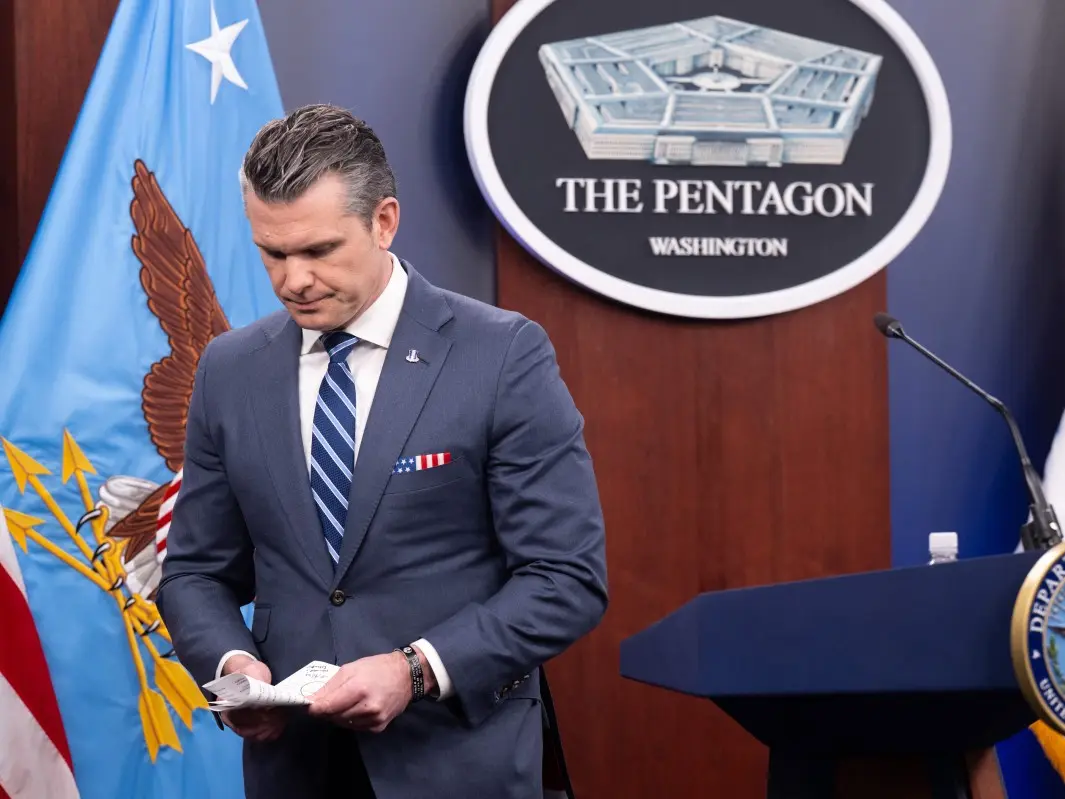
Following the breakdown in talks, US Defence Secretary Pete Hegseth labelled Anthropic a “supply-chain risk”.
This classification is normally used for companies or organisations seen as a potential threat to US national security.
Why the negotiations matter for the AI industry
The dispute has attracted attention across Silicon Valley because it highlights a growing debate over the military use of artificial intelligence.
If both sides reach a new agreement, the Pentagon could continue using Anthropic’s AI tools while reducing concerns about surveillance or weaponisation.
However, failure to reach a deal could lead to Anthropic being restricted from defence-related contracts.
That outcome would also affect competition among major AI companies.
Last week, OpenAI announced that it had reached an agreement allowing the Pentagon to deploy its AI models on classified government networks.
OpenAI CEO Sam Altman said the company was working with defence officials to add safeguards around potential surveillance uses.
A fast-growing AI company under scrutiny
The Pentagon dispute comes at a time when Anthropic is experiencing rapid growth.
According to industry estimates, the company is currently valued at around $380 billion and is projected to generate nearly $20 billion in annual revenue based on current performance.
This would represent more than double the company’s revenue run rate compared with late last year.
Anthropic’s AI assistant app has also recently topped download charts on Apple’s App Store, indicating growing popularity among users.
Silicon Valley rallies behind Anthropic
Several technology groups representing major firms such as Google and Apple have urged the administration of Donald Trump to reconsider designating Anthropic as a national security risk.
Industry groups argue that such a decision could create wider uncertainty for the technology sector, particularly as artificial intelligence companies increasingly work with government agencies.
A final agreement between Anthropic and the Pentagon would help clarify how AI companies collaborate with defence institutions while maintaining ethical boundaries.
For now, the resumed negotiations suggest that both sides are looking for a compromise.
