

&imwidth=800&imheight=600&format=webp&quality=medium "AI vs voice actors: Can artificial dubbing take over creative voice work?")
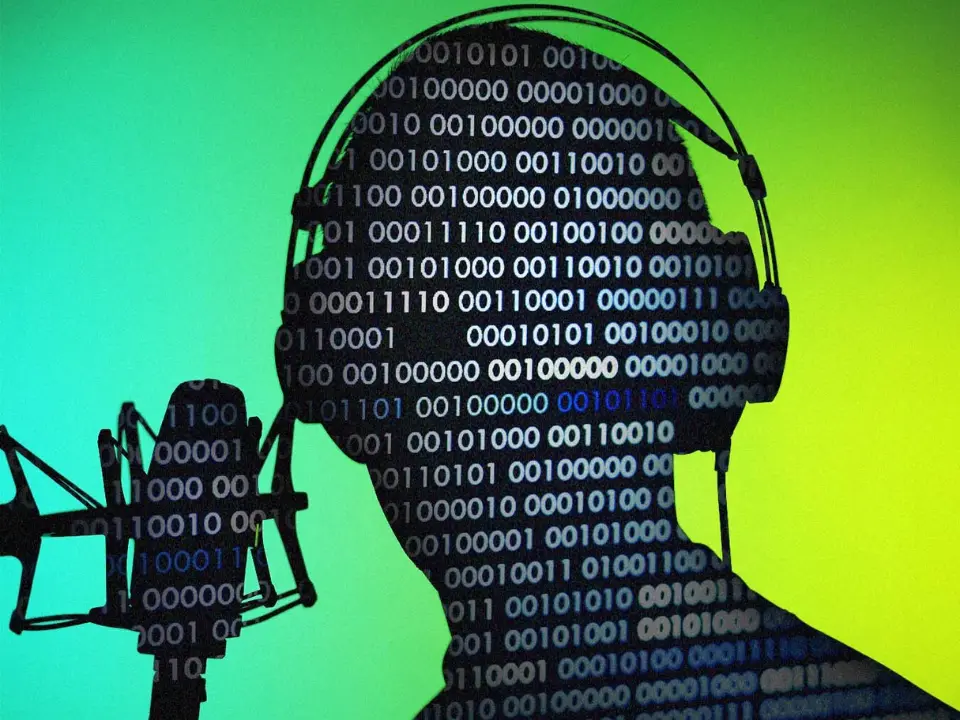
As artificial intelligence continues to grow in the entertainment industry, a new conflict is brewing all over the globe, especially in Europe. Voice actors, who lend their voices to films and TV shows, are worried that AI-generated voices may take over their work.
One such voice actor is Boris Rehlinger, the French voice behind Hollywood stars like Ben Affleck and Joaquin Phoenix. Rehlinger has joined a campaign called TouchePasMaVF, aimed at protecting human dubbing against artificial voices. Speaking to Reuters, he said, “I feel threatened even though my voice hasn’t been replaced by AI yet.”
Why dubbing is so important in Europe
Dubbing is a big industry in Europe, especially with global platforms like Netflix relying on it to bring non-English content to more viewers. Shows like Squid Game and Lupin reached wide audiences due to high-quality dubbing.
According to GWI, 43 per cent of viewers in countries like France, Germany, Italy and the UK prefer dubbed content over subtitles. Research by Business Research Insights shows that the dubbing market could grow from $4.3 billion in 2025 to $7.6 billion by 2033.
However the rise of AI voice technology could change this. AI-generated voices can reduce costs and speed up production, making them attractive to streaming platforms, voice actors argue that this shift risks lowering quality and removing creative jobs.
Trending Stories
&imwidth=180&imheight=135&format=webp&quality=medium)
Blasts heard in Sanaa as Saudi-led coalition warns civilians to evacuate; Houthis vow retaliation
&imwidth=180&imheight=135&format=webp&quality=medium)
China's counter-surveillance industry booms amid heightened espionage fears | Gravitas
&imwidth=180&imheight=135&format=webp&quality=medium)
Saudi Arabia strikes Yemen oil sites as Houthi missiles target Riyadh; 'limited fire' breaks out at Aramco
&im=FitAndFill=(700,400)&imwidth=180&imheight=135&format=webp&quality=medium)
Navratri 2026: 9 days, 9 forms of Goddess Durga and 9 colours- Check the complete list
&imwidth=180&imheight=135&format=webp&quality=medium)
Trump accuses Houthis of driving up oil prices before US midterms, warns of consequences
&imwidth=180&imheight=135&format=webp&quality=medium)
New Delhi rejects Beijing’s claims and remarks on Ladakh location naming exercise
&imwidth=180&imheight=135&format=webp&quality=medium)
CMs Vijay-Naidu meet in Vijayawada, discuss water sharing, river-linking
&imwidth=180&imheight=135&format=webp&quality=medium)
US Midterms 2026: In Alaska, cost-of-living anxiety meets strangest ballot in high-stakes Senate race
&imwidth=180&imheight=135&format=webp&quality=medium)
OpenAI employee arrested by FBI after allegedly hiding recording device in office
&imwidth=180&imheight=135&format=webp&quality=medium)
Man dies at Six Flags Georgia: Past accidents at Six Flags amusement parks across US
&imwidth=180&imheight=135&format=webp&quality=medium)
1,500 drones illuminate Mumbai sky as Cordelia Cruises unveils second ship, Cordelia Sky
&imwidth=180&imheight=135&format=webp&quality=medium)
Pope Leo XIV diagnosed with lung cancer after surgery, Vatican says 'successful surgery and recovering'
&imwidth=180&imheight=135&format=webp&quality=medium)
Pakistan to chair UN-backed global Borrowers’ Platform as its own debt burden mounts, triggers sarcastic reactions on social media
&imwidth=180&imheight=135&format=webp&quality=medium)
Suicidal man survives jump from 11th floor in Japan, could now be tried for murder
&imwidth=180&imheight=135&format=webp&quality=medium)
Robot gropes girl, makes thrusting movements in bizarre crime in Germany
&imwidth=180&imheight=135&format=webp&quality=medium)
Trump says Republicans face equally tough fight in House and Senate midterms
&imwidth=180&imheight=135&format=webp&quality=medium)
France accuses Musk of ‘online harassment’ of European leaders, warns of poll interference
&imwidth=180&imheight=135&format=webp&quality=medium)
MI5 chief warns Russia is UK’s ‘aggressor number one’ as Iran and AI threats grow
&imwidth=180&imheight=135&format=webp&quality=medium)
'Turn approver, resign, we'll forgive you': Rahul Gandhi claims receiving messages from CEC Gyanesh Kumar
&imwidth=180&imheight=135&format=webp&quality=medium)
Inside the alleged drug-money trail behind a Mumbai couple’s properties
&imwidth=180&imheight=135&format=webp&quality=medium)
‘My president, I mean my husband’: Trump's new press secretary Katie Zacharia's first briefing goes off the rails in 14 minutes
&im=FitAndFill=(700,400)&imwidth=180&imheight=135&format=webp&quality=medium)
IMF World Economic Outlook: 10 economies to watch for growth in FY27 and FY28 - Where does India stand?
&imwidth=180&imheight=135&format=webp&quality=medium)
Marco Rubio to visit India next week, focus on energy cooperation and strategic ties
&imwidth=180&imheight=135&format=webp&quality=medium)
L Murugan resigns as Union Minister, expresses wish to return to grassroots
&imwidth=180&imheight=135&format=webp&quality=medium)
'Ouch!!! That must hurt': Kangana Ranaut hails Kamal Haasan's sharp reply to Elon Musk over Starlink row
&imwidth=180&imheight=135&format=webp&quality=medium)
Sidhu Moose Wala’s younger brother wins hearts by recreating late singer’s signature move at Toronto Hologram Show
&imwidth=180&imheight=135&format=webp&quality=medium)
Girl 'dead' for 8 hours wakes up at her own funeral, dad insists she wasn't breathing
&imwidth=180&imheight=135&format=webp&quality=medium)
UK school ditches technology, shifts from screen to pen and paper for learning
&im=FitAndFill=(700,400)&imwidth=180&imheight=135&format=webp&quality=medium)
New OTT releases this week (October 12-18, 2026): Sacrifice, Koffee with Karan S9, Roadies Rebirth- 6 titles coming on Netflix, JioHotstar and more
&imwidth=180&imheight=135&format=webp&quality=medium)
Rahul Gandhi speaks on Anti-CeC protests: Gathering over tea after Supreme Court rally
&imwidth=180&imheight=135&format=webp&quality=medium)
Anupam Kher joins Ranbir Kapoor's Ramayana as Jatayu, new poster unveiled
&imwidth=180&imheight=135&format=webp&quality=medium)
Measles kills again: 6 dead in Pennsylvania as America faces its worst outbreak in decades | Gravitas
&imwidth=180&imheight=135&format=webp&quality=medium)
Ken Paxton's Dubai night out with two US fugitives sparks political storm as Texas Senate race tightens
&imwidth=180&imheight=135&format=webp&quality=medium)
Mundhe: Fight against unsafe food goes on
&imwidth=180&imheight=135&format=webp&quality=medium)
Cornell University suspends fraternity parties over 2024 gang rape allegations
Voice artists call for better laws
Across Europe, voice actor associations are asking for stronger legal protections. In Germany, a petition launched by the VDS voice actors' association gathered over 75,000 signatures. They are asking the EU to ensure that AI companies cannot use actors’ voices without consent or compensation.
Cedric Cavatore, a VDS member and game voice actor, warned: “When intellectual property is no longer protected, no one will create anymore because they fear it will just be stolen.”
VDS is also working with United Voice Artists, a network of 20,000 artists globally, to push for fair rules around AI.
Studios are already testing AI dubbing
Some studios are already experimenting with AI in dubbing. Example, a German-dubbed version of Polish crime series "Murderesses" used AI-generated voices, but it was removed after viewers complained about the poor quality.
Meanwhile, startups like DeepDub and Flawless AI are promoting hybrid models using both AI and human voices. According to Audio Innovation Lab’s CEO Stefan Sporn, AI could change the way films are dubbed, but he believes humans will still be needed to add emotion and cultural accuracy.
Netflix, which has used generative AI for visual effects in series like El Eternauta, has also tested AI for matching lip movements with dubbed dialogue. But the company has not commented on how widely it will use the tech in dubbing.
What comes next?
AI is already reshaping many industries, and dubbing is no exception. While the AI technology promises efficiency, many actors and creatives fear it could lead to job losses and reduced quality. The future of voice work may lie in finding the right balance, where AI supports the process, but humans still lead the performance.
