

&imwidth=800&imheight=600&format=webp&quality=medium "What is DSD? The rare condition behind Caster Semenya’s ban from women’s events in Olympics")
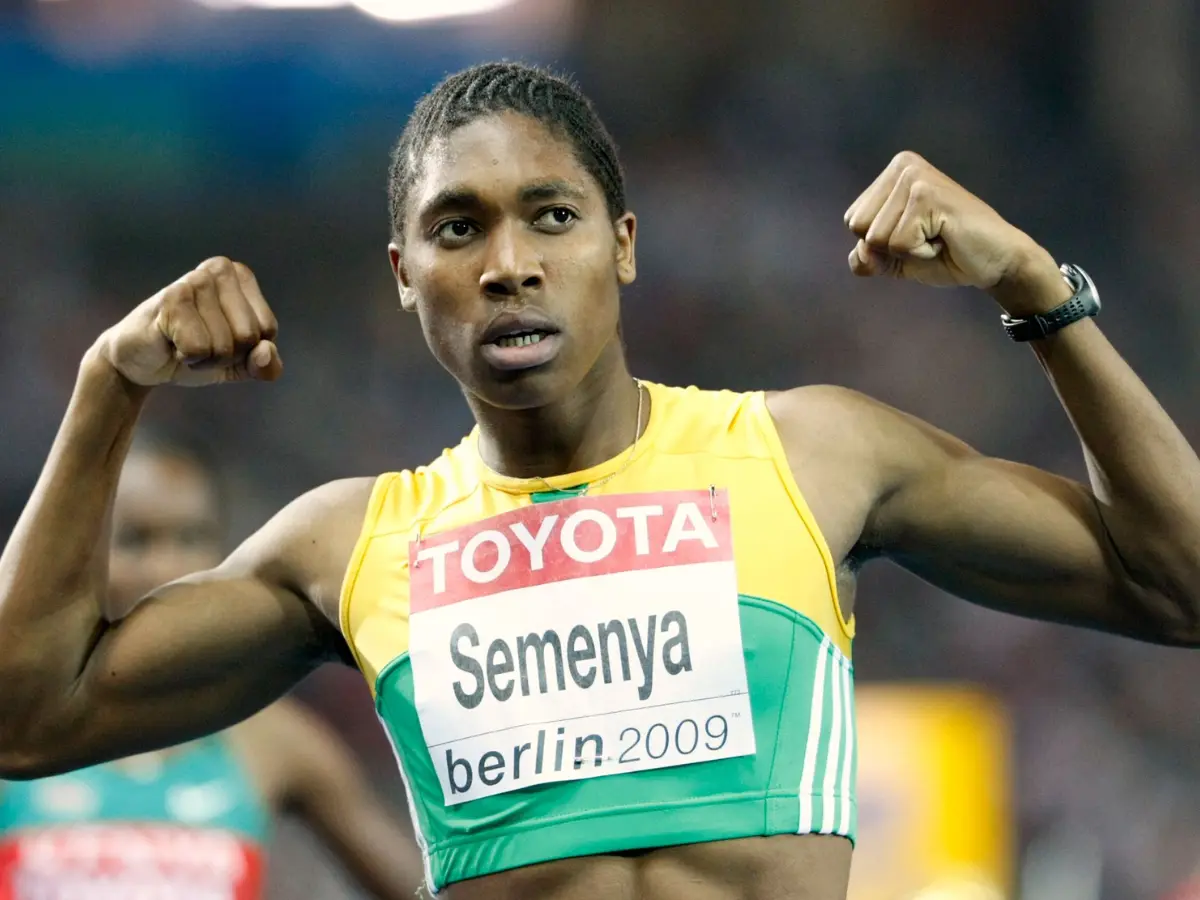
Two-time Olympic gold medallist Caster Semenya secured a partial victory in her long legal battle over athletics sex eligibility rules on Thursday (Jul 10), as the European Court of Human Rights (ECHR) ruled that her right to a fair hearing was violated by the Swiss Federal Supreme Court. The ECHR court declared that the Switzerland-based court failed to properly review Semenya’s appeal from 2020, where she had challenged World Athletics’ decision that restricted her from participating in women’s events of 800m unless she reduced her natural testosterone levels.
Semenya, a South African-based sprinter, was born with differences of sexual development (DSD), a condition that causes female athletes to have naturally higher levels of testosterone. These hormone levels, according to World Athletics, provide a boost, giving such athletes an 'unfair advantage.' Now, let's understand what DSD is.
What is Difference in Sexual Development (DSD)?
Males are naturally born with 'XY' chromosomes and females with 'XX' chromosomes. But in some rare occurrences, some are born with different classifications of chromosomes that don't fit the usual ones. One such condition is known as DSD (differences of sexual development), a rare biological condition where a female is born with a reproductive structure that doesn’t fit either male or female.
In Caster Semenya’s case, she was assigned female at birth and has always identified as a woman. However, it was later revealed that she has XY chromosomes, which are found in males. She also has no uterus or ovaries, but instead, internal testes, which are a result of her specific DSD condition. Internal testes are male reproductive organs that develop inside the body, which leads to naturally higher testosterone levels.
How does higher testosterone play a role?
Trending Stories
&imwidth=180&imheight=135&format=webp&quality=medium)
US troop deaths in Iran war on rise? Pentagon reveals latest toll
&imwidth=180&imheight=135&format=webp&quality=medium)
Lula campaign accuses Meta of election interference after social media content blocked
&imwidth=180&imheight=135&format=webp&quality=medium)
PM Modi inaugurates Rs 4,900 crore Chennai Metro Phase II stretch, takes ride with CM Vijay: VIDEO
&imwidth=180&imheight=135&format=webp&quality=medium)
100,000 strikes in 3 years: How October 7 redefined Israel's war
&im=FitAndFill=(700,400)&imwidth=180&imheight=135&format=webp&quality=medium)
Navratri 2026: 9 days, 9 forms of Goddess Durga and 9 colours- Check the complete list
&imwidth=180&imheight=135&format=webp&quality=medium)
‘Your people don’t even let us near it’: IAF chief’s blunt response on US F-35; India yet to decide on Russia’s Su-57
&imwidth=180&imheight=135&format=webp&quality=medium)
Saudi Arabia's King Khalid International Airport attack kills 12, injures 309; India calls it 'unacceptable'
&imwidth=180&imheight=135&format=webp&quality=medium)
‘Never-ending flow of cheap labour’: JD Vance hits back at Indian-origin Congresswoman over US green card curbs for major tech companies
&imwidth=180&imheight=135&format=webp&quality=medium)
HYBE’s Weverse Con India sets ticket sale date for March 2027 festival
&imwidth=180&imheight=135&format=webp&quality=medium)
Messi scores twice in Inter Miami return following final match for Argentina
&imwidth=180&imheight=135&format=webp&quality=medium)
CJP's Abhijeet Dipke, Ashutosh Ranka, Saurav Das released 22 hours after flight detention
&imwidth=180&imheight=135&format=webp&quality=medium)
'Unwarranted interference': India slams UN human rights office over remarks on Delhi protests
&imwidth=180&imheight=135&format=webp&quality=medium)
'Jantar Mantar not the story of India': BJP's Sambit Patra claims 'anarchists' tried to hold Delhi captive
&imwidth=180&imheight=135&format=webp&quality=medium)
3rd T20I Preview: Another run-fest on cards as India face West Indies in Indore
&imwidth=180&imheight=135&format=webp&quality=medium)
Nicolas Cage refuses AI waiver for Spider-Noir, hints at Amazon exit and True Detective role
&imwidth=180&imheight=135&format=webp&quality=medium)
At least 109 migrants, including 15 children dead as boat sinks off Djibouti, 116 go missing
&imwidth=180&imheight=135&format=webp&quality=medium)
Riyadh airport hit in missile attack, dozens injured; 5 in intensive care
&imwidth=180&imheight=135&format=webp&quality=medium)
Powerful 7.7 magnitude earthquake strikes Panama, tsunami warning issued
&imwidth=180&imheight=135&format=webp&quality=medium)
US mid-term elections: What are PACs - Unique American System that lets corporates shape voting
&imwidth=180&imheight=135&format=webp&quality=medium)
Imran Khan released hours after Mumbai Police detain him during CJP protest
&imwidth=180&imheight=135&format=webp&quality=medium)
Nathan Lyon completes 1,000 Test runs at No. 10 to script rare cricket feat
&imwidth=180&imheight=135&format=webp&quality=medium)
Nepal flash floods swallow homes and bridges a month after devastating disaster
&imwidth=180&imheight=135&format=webp&quality=medium)
Sehwag sees reflection of himself in Sooryavanshi: ‘His thinking is similar to mine’
&imwidth=180&imheight=135&format=webp&quality=medium)
'Ouch!!! That must hurt': Kangana Ranaut hails Kamal Haasan's sharp reply to Elon Musk over Starlink row
&imwidth=180&imheight=135&format=webp&quality=medium)
Sidhu Moose Wala’s younger brother wins hearts by recreating late singer’s signature move at Toronto Hologram Show
&imwidth=180&imheight=135&format=webp&quality=medium)
Barry Manilow cuts short Las Vegas comeback show, cancels next concert over Bronchitis
&imwidth=180&imheight=135&format=webp&quality=medium)
Hamas used double agents, deceived Israel to carry out October 7 massacre
&imwidth=180&imheight=135&format=webp&quality=medium)
Bigg Boss 20: Who is Manish Goel? Meet the new wild card contestant on Salman Khan’s show
&imwidth=180&imheight=135&format=webp&quality=medium)
Portugal Federation confirms Cristiano Ronaldo’s return to national team despite suspension
&imwidth=180&imheight=135&format=webp&quality=medium)
Kim Kardashian brings glamour to Singapore Grand Prix while supporting boyfriend Lewis Hamilton
&imwidth=180&imheight=135&format=webp&quality=medium)
Ganesh Dust To Stardust trailer: Ganesh Acharya directs a tale of dreams and sacrifice | Watch
&imwidth=180&imheight=135&format=webp&quality=medium)
‘Time for Ukraine to get a new president’: Trump lashes out at Zelensky over Russia strikes
&imwidth=180&imheight=135&format=webp&quality=medium)
BTS’ RM raises privacy concerns over drones, lasers outside hotel amid Lima concert, urges fan respect
&imwidth=180&imheight=135&format=webp&quality=medium)
Thai queen becomes first reigning monarch to fly jet solothailand #queen #wion
&im=FitAndFill=(700,400)&imwidth=180&imheight=135&format=webp&quality=medium)
Food shortages, suicide attempts and more: USS Abraham Lincoln returns to US after 321 day deployment — What happened aboard the US carrier?
&imwidth=180&imheight=135&format=webp&quality=medium)
Rahul Gandhi calls Modi, Shah ‘cowards’ amid CJP protest crackdown in Delhi
&imwidth=180&imheight=135&format=webp&quality=medium)
Delhi Police arrest 4 men seen in viral video allegedly assaulting women protesters during CJP protest
&imwidth=180&imheight=135&format=webp&quality=medium)
Where are Abhijeet Dipke, Ashutosh Ranka, Saurav Das? CJP gives big update after flight detention
&imwidth=180&imheight=135&format=webp&quality=medium)
Putin conveys Iran’s proposal to Trump, offers to take Tehran’s enriched uranium
&im=FitAndFill=(700,400)&imwidth=180&imheight=135&format=webp&quality=medium)
Amitabh Bachchan turns 84: A look at Big B’s iconic dialogues that continue to win hearts
Testosterone is a hormone that affects human muscles, stamina, and endurance. Athletes with naturally higher testosterone levels have an edge, particularly in speed- and stamina-based sports like sprinting. Due to the same reason, World Athletics introduced rules in 2019 requiring athletes to reduce their testosterone levels through medication to compete in certain female events, a decision that ended Semenya’s participation in the Olympics.
However, if higher testosterone levels are considered an unfair advantage, then factors like height and longer limbs should also fall under the same category. Since all these qualities occur naturally, it is high time the International Olympic Committee (IOC) clearly define what truly means an unfair advantage.
.

