Explained | Did Sri Lanka's Rajapaksa orchestrate Easter bombings of 2019 for return to power?

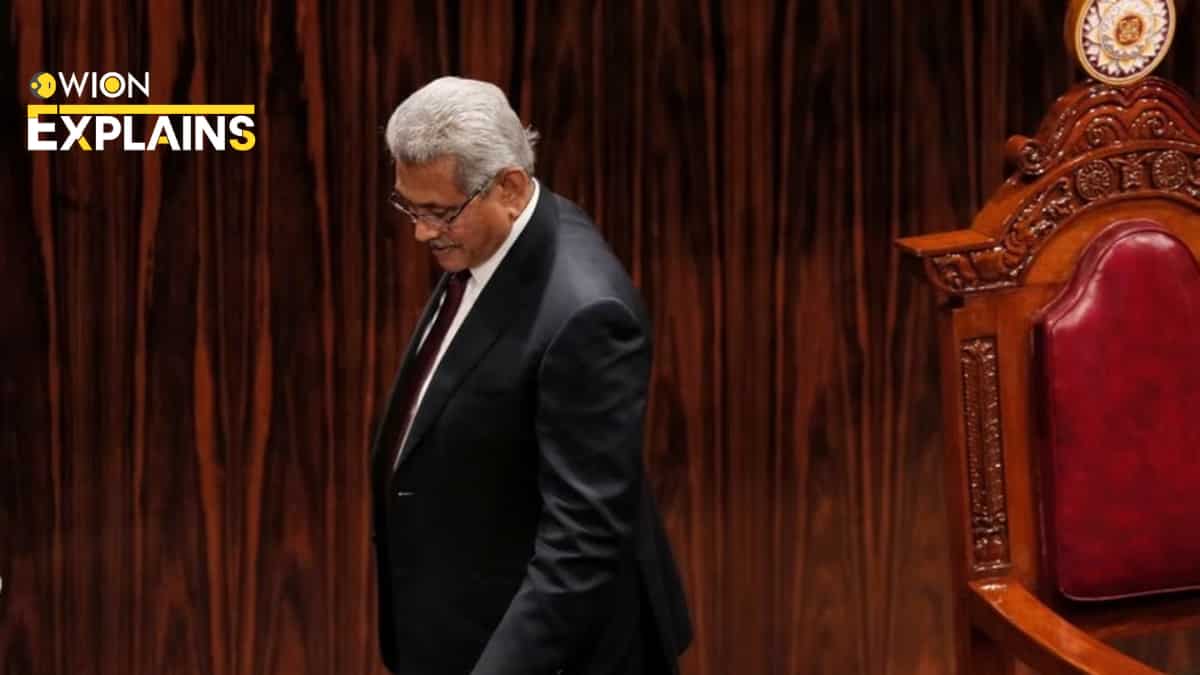
File photo of Sri Lanka's former president Gotabaya Rajapaksa
Sri Lanka's previous government led by President Gotabaya Rajapaksa has been accused of orchestrating Easter attacks of April 2019 by a whistleblower. The latest accusation over the cause of attack in which six suicide bombers targeted churches and luxury hotels across the country was made in a documentary for Channel 4’s Dispatches. Sri Lanka's Easter bombings of 2019, the worst terrorist attack in the history of the South Asian island nation, killed 269 people and shook Sri Lanka from a peacetime limbo for the first time since the end of its civil war in 2009.
The whistleblower further alleged that the attacks were orchestrated to "create instability in Sri Lanka", so that the Rajapaksa's — the most powerful political dynasty who dominated the country's economy in the 2010s — would win the presidential elections in 2019, reports The Guardian.
Gotabaya Rajapaksa won Sri Lanka's presidential elections at the end of 2019. But by the first half of 2022, Sri Lanka went through a phase of rare economic instability, partly due to Covid pandemic and the way Rajapaksa threw the weight of Sri Lankan economy around high-interest Chinese loans.

Rajapaksa was forced to flee the country due to a popular uprising following which — in July 2022 — Colombo's corridors of power came under President Ranil Wickremesinghe. Rajapaksa's successor managed to bring about a semblance of economic stability in the country through interest-free credit lines from multilateral financial institutions and countries such as neighbouring India.
Investigation into Sri Lanka's Easter bombings: Five years on
)
AI kill switch explained: Why shutting down a dangerous AI may not be as simple as pressing a button
)
US ships in Indian Ocean ‘will be attacked’ if war resumes, warns Iran
)
SNL UK takes aim at Ed Sheeran with AI Princess Diana sketch
)
Trump says he'll build an 'AI Force' and appoint a czar, for 'high IQ' people only
)
‘0% chance’: Nvidia CEO Jensen Huang dismisses AI extinction fears by 2030
&im=FitAndFill=(700,400))
What TSMC's 2nm technology means for Apple
)
'Were you here to sell chickpeas?': Wasim Akram criticises Babar Azam's captaincy
)
Sikh bus driver assaulted, bus stolen and rammed into cars in England; video surfaces
)
Mark Carney mimics Trump in hilarious moment over C$70 billion clean-energy investment; room erupts in laughter
&im=FitAndFill=(700,400))
Top 10 countries in mathematics: See the world’s best performers in 2026
)
Apple reportedly building AI server with M8 Ultra chips, may use Nvidia technology
)
TIFF 2026: Theja Rio’s Angh wins Platform Prize, puts Nagaland story on global stage
)
BTS' fans question iHeartRadio’s treatment of group after brief festival set
)
Samsung raises Galaxy S26 prices by Rs 20,000: Here’s what each model now costs
)
Operation Sindoor’s hidden naval dimension | MoD reveals Indian Navy Special Forces joined May 7 strikes
)
Bessent meets China’s He Lifeng to prepare for Trump-Xi summit
)
Trump defends AI amid growing alarm, announces new 'AI force' and promises an 'AI czar'
)
S Jaishankar, former Army chief among high-profile names issued Delhi SIR notices
)
Iran sets 7 conditions to end war with US: What are Tehran’s demands?
)
Trump announces ‘AI Force’ as debate grows over AI risks and regulation
)
Arvind Kejriwal, family members, Delhi CM Rekha Gupta get SIR notices
)
AI actress Tilly Norwood glitches mid-interview, switches from English to Chinese | Watch
)
Saudi vs Houthis: Houthis claim missiles & drones used in attack on key Saudi sites
)
Ed Sheeran addresses Macklemore's removal, Gaza conflict during Philadelphia concert: 'I cannot hide how I feel'
)
Saudi Arabia exits China-led mBridge digital currency platform amid Saudi-Houthi conflict
)
'Lot of things to learn from experienced players': Jayasuriya backs Rohit, Virat for 2027 ODI World Cup
)
Chancellor Friedrich Merz vows to stay on as exit polls signal major poll setback
)
North Korea's nuclear tests triggered 1,399 earthquakes: Earth is still shaking | Gravitas
)
Several petrol pumps, other businesses to refuse UPI payments above Rs 2,000 from Oct 16: Is it legal?
)
Kampala-Ankara rift deepens: Uganda suspends military ties, seeks Fred Lumbuye's extradition
)
AUS vs ZIM, 3rd ODI: Ellis stars as Australia edge Zimbabwe by one wicket in last-over thriller
)
West Indies Squad for India Series: Hetmyer included for T20Is, Holder rested
)
China now makes advanced memory chips without the machines it was banned from buying
)
Trump in ‘deciding mode’ on Iran, says ‘very big things’ going to happen soon
)
Harry Brook targets long reign at top of T20I rankings after Sri Lanka sweep
)
Microsoft executive called AI training the ‘largest theft of labour in human history’
)
Munich Mayor taps first keg to kick off Oktoberfest
Over five years on, an investigation has failed to provide any answers for how the attacks took place.
No criminal convictions have been made so far.
People previously involved in the investigation as well as the leader of Sri Lanka’s Catholic church, have alleged that inquiries were repeatedly sabotaged and obstructed by the Rajapaksa government.
So far, more than 200 people have been charged in the investigation. But no convictions have been made so far.
The Sri Lankan government at the time did not clarify how a number of high-level warnings about the April 2019 Easter attacks were ignored, including by the Indian intelligence.
In January, former president Maithripala Sirisena, who was in power at the time of the attacks, was ordered by the Supreme Court to pay millions in compensation to the victims.
Inside Sri Lanka's Easter attacks: What documentary claims?
The person cited in the Channel4 documentary claimed that he had helped an intelligence officer with close ties to the Rajapaksa family meet members of the local Islamist group, National Thowheeth Jama’ath (NTJ), that carried out the attack.
The person further claims that theplan was hatched over a couple of years to create an "unsafe" security situation that would help bring Rajapaksa backto power.
Also watch |Did Gotabaya Rajapaksa allow the Easter bombing?
The Rajapaksa family had ruled Sri Lanka for almost a decade from 2005. While they are credited with ending its bloody, 26-year-long civil war but their alleged use of "death squads" to target critics and journalists gave them widespread notoriety.
Mahinda Rajapaksa was ousted in 2015 after a backlash against alleged corruption, but the family had planned a return to power in the 2019 election, this time with younger brother Gotabaya as the presidential candidate.
Ravi Seneviratne, the former director general of police who initially led the Easter attacks investigation, told The Guardian that after Gotabaya Rajapaksa was elected president, the government had "prevented the investigation".
Also watch |Did Gotabaya Rajapaksa allow the easter bombing?
He claimed his team had already "established links" between state and military intelligence officers and the NTJ suicide bombers.
But when Rajapaksa took office by the end of 2019, Seneviratne’s entire team at CID was taken off the case.
More than 20 of his officers were transferred without his approval and travel bans were imposed on all 700 CID officers.
"The motive was to make them too scared to send a message. Many were too scared to work and some people even applied for transfers out of CID," Seneviratne told the publication.
Sri Lanka's defence into documentary's accusations
After the Dispatches revelations, the Sri Lankan government said it had set up a special parliamentary committee to probe the allegations.
Also read |Sri Lankan government to investigate allegations of military's complicity in 2019 Easter bombings
Sri Lanka's Defence Ministry in September defended the country's intelligence chief, saying it “vehemently denounces the accusation of orchestrating the attack and assisting the bombers against a dedicated senior military officer who has served the nation for 36 years.”
The move came days after ousted former President Gotabaya Rajapaksa denied the alleged role of Major General Sallay in the bombings and that he had benefited from the attacks to win the presidential election in November 2019.