E Coli can be used to generate electricity, Swiss researchers say

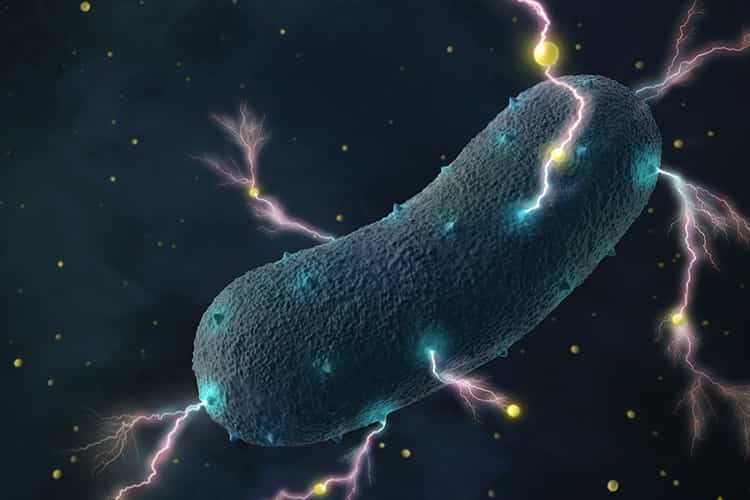
Image for representational purpose
The Swiss researchers have found a way to generate electricity from brewery wastewater using bacteria. A team of scientists at the Swiss Federal Institute of Technology Lausanne (EPFL) engineered bacteria called ‘Escherichia coli’ to achieve this feat.
"E. coli can grow on a wide range of sources, which allowed us to produce electricity in a wide range of environments, including from wastewater," senior author and chemical engineer Ardemis Boghossian was quoted as saying by Science Alert.
Why is it significant?

As per Ardemis, scientists have already identified some exotic microbes that can naturally produce electricity. However, they can do so only in the presence of some special elements.
But, the new bacteria engineered by the Swiss researchers can produce electricity in different kinds of atmospheres, making it viable for extensive and practical use.
Watch:Aliens: Are we looking in the wrong place?
&im=FitAndFill=(700,400))
Suriya and Jyothika say ‘I do’ again after 20 years! See their dreamy wedding pics
)
Saudi vs Houthis: Riyadh claims to have shot Houthi drone targeting Mecca
)
Trump gets new power to hit India, China with up to 100% tariffs as US Senate clears Russia sanctions bill
)
Ex-CIA officer caught with gold bars worth $40 million seeks plea deal | Gravitas
)
Trump calls Canada-EU associate membership plan ‘laughable’ and threatens 'very serious tariffs'
)
Lionel Messi for 2026 Ballon d’Or over Mbappe and Yamal, says Diego Simeone
)
Shahzad Bhatti Network declared terrorist organisation under UAPA: Govt order
)
US Treasury rallies global financial institutions for Op Economic Outcast to isolate Iran
)
Trump's Iran war faces fresh House rebuke; 7 Republicans join Democrats in push to end conflict ahead of midterms
)
Veteran actor Anant Nag honoured with Indian cinema’s highest award
)
Fed raises rates for first time in 3 years, Kevin Warsh defies Trump as inflation mounts
)
Alex Saab, ally of Venezuela's Maduro, pleads guilty in US corruption case
)
Pakistan naval vessel returns to harbour with 'severe damage' after collision with Indian warship in Arabian Sea
)
The Early Spring season 2 is happening, but fans have one request - 'don't change the actors'
)
BRICS success stuns White House, Trump targets India with 100% tariff | Gravitas
)
Finnish president Stubb calls Trump 'good for NATO' as allies increase defense expenditure
)
Trump backs PM Modi’s anti-opium push even as India remains on US illicit drug-producing list
&im=FitAndFill=(700,400))
New OTT releases this week (September 14-20, 2026): Lust Stories 3, Waiting Hai, Irumudi- 5 new titles coming on Netflix, Prime Video and more
)
What is Article 10 of the 1991 treaty at the centre of Pakistan Navy's 'unprofessional conduct'
)
Meghan Markle's phone number leaked from children's WhatsApp group, couple switches Archie and Lilibet's school
)
Trump praises India’s Opium crackdown, hails anti-drug efforts
)
800 million years old - Scientists discover 'fingerprints' of supercontinent Gondwana in ancient rocks
)
No Pandya as Auqib Nabi earns maiden ODI call-up; Mayank returns for WI T20Is| check full squads
)
Katrina Kaif’s postpartum weight is not the problem; your gaze is
)
US, China dominate global economy: Where does India rank among the world's biggest economies?
)
Hockey: Pakistan urges AHF to move Asian Champions Trophy out of India over security concerns
)
US trade tariff: 100% tariff targets Russian buyers amid trade tensions
)
Sydney Sweeney defends provocative ad choice, the internet is still not impressed
)
Bigg Boss 20: Mahhi Vij reveals she lost Yuva role to Kareena Kapoor; 'didn’t work out in my favour'
)
Riyadh warns of ‘red line’ after Mecca targeted; Houthis claim downing Saudi fighter jet – What’s happening?
)
Daayra movie review: Kareena Kapoor, Prithviraj Sukumaran shine in Meghna Gulzar’s cop-versus-cop crime thriller
)
Pakistan: Imran Khan's sons Kasim & Sulaiman claim their father is 'tortured' in jail
)
FBI Director Kash Patel grilled over change of hiring rules on bestiality
)
Abhishek Sharma rises to No. 2 in T20Is; ENG’s Robinson 3rd after record Pakistan Tests
)
Extreme warming in Indian Ocean added 695 billion tons of ice to Antarctica ice sheet
)
All Indian goods to get duty-free access to New Zealand
To better engineer the bacteria, the scientists modified its genome to include instructions for protein complexes found in Shewanella oneidensis, one of the best-known bacterial electricity generators.
By doing so, scientists were able to ramp up E. coli’s electro-activity two-fold.
However, it must be noted that those experiments were done under lab conditions, and it remains to be seen whether or not the same results can be achieved in industrial settings.
E. coli better suited for treating wastewater
Researchers have also found that E. coli is better suited to treat industrial wastewater rather than Shewanella oneidensis.
Breweries are generally required to treat the water they use for cleaning grains and rinsing tanks before disposing it of, as it contains a complex mixture of sugars, starches, alcohols, and yeast. If left untreated, this wastewater could lead to undesirable microbial growth.
To demonstrate their solution, the team conducted experiments using their engineered E. coli system, using a sample of wastewater obtained from a local brewery in Lausanne, Switzerland. Remarkably, the modified bacteria efficiently consumed this wastewater within 50 hours.
"Our bioengineered electric bacteria were able to flourish exponentially by feeding off this waste," says Boghossian, whereas S. oneidensis, used as a comparator, wasn't able to digest the mixed effluent.
This development highlights the potential of engineered E. coli for industrial wastewater treatment, even though it generates electricity at a slightly slower rate compared to S. oneidensis, according to the researchers.
WATCH WION LIVE HERE