New Medical Research: A common food dye used to make skin and muscle temporarily transparent

New Research
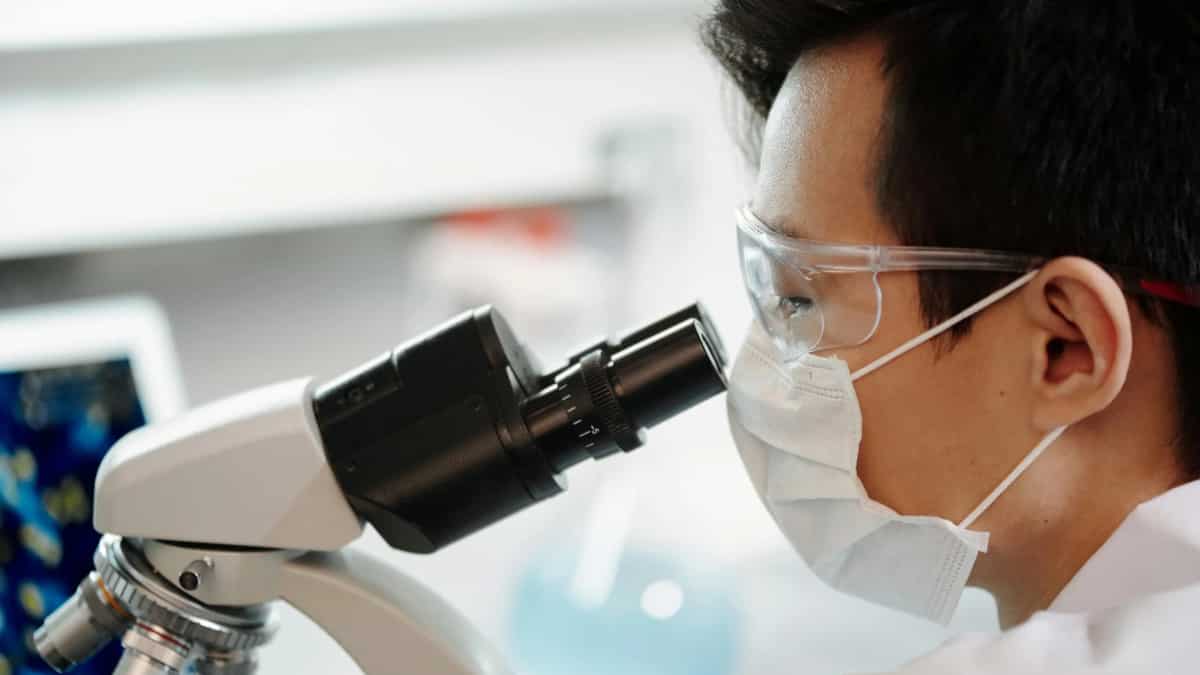
New research has revealed that a common yellow-coloured food dye can temporarily make skin, connective tissues, and muscle transparent. The research was conducted on a mouse, and got some unbelievable findings, allowing for an innovative visualisation of the internal structure of the mousewithout any passive procedures.
All you should know about the research
By applying the dye to the belly of the mouse, the researchers saw its liver, intestines, and bladder clearly through the skin. When the dye was applied to the rodent’s scalp, it enabled the visualisation of blood vessels in the animal’s brain. The treated skin became normal to its natural colour after the dye was removed.

The team then applied the yellow food dye on the mouse's underbelly, which made the abdominal skin transparent and revealed the rodent's organs and intestines. The team also experimented on the mouse’s shaved hair through laser speckle contrast imaging, leading to the transparent and clear visualisation of blood vessels in the brain.
Also Read|Cricket is banned in this small Italian town. Here's why|
What are the researchers saying?
)
India ‘deeply concerned’ as Houthi strikes hit Saudi civilian & energy sites
)
Three labourers killed as DU student loses control of his car, rams into them on Dwarka Expressway
)
Pentagon revives mandatory testosterone testing for male troops aged 30 and above
)
North Korea's last nuclear test in 2017 set off 1,399 earthquakes over 8 years, each stronger than previous
)
India seeks to build a full semiconductor supply chain
)
FACT CHECK: Why did PM Modi ask Xi ‘is it okay’ at BRICS Summit? New video reveals...
&im=FitAndFill=(700,400))
From Abhishek Sharma to Sahil Chauhan, 5 batters with fastest T20I hundreds
)
Indian activist-lawyer Prashant Bhushan's post brings focus on ‘conflict of interest’ appointments of ex-govt officials at Reliance, Adani groups
)
Former India player Diana Edulji wants Smriti Mandhana to replace Harman as skipper at the earliest
&im=FitAndFill=(700,400))
Meet top 5 batters in the latest ICC T20I Rankings
)
UNGA 2026 theme explained: What does ‘Restoring trust, managing transformation: A United Nations that delivers for all’ mean?
)
Godfather of AI Geoffrey Hinton gives US lawmakers a one-year warning on AI
)
US F-16 fighter jet crashes in Michigan during training mission, pilot ejects safely
)
A first in 100 years: New cat species discovered in Bolivia is incredibly tiny
&im=FitAndFill=(700,400))
Meet top 5 Indian batters with fastest T20I centuries
)
Shivakumar attends 79th Kalyana Karnataka Utsav in Kalaburagi
)
Xi-Trump summit may boost military links
)
Hong Kong extends newborn cash support scheme by three years
)
How did an Australian river with 500 crocodiles pass the Olympic test? Here's how
)
‘Will go to any extent’: Pakistan vows to defend Saudi Arabia amid Houthi attacks
)
'He will always be ahead': India coach Gambhir says Sooryavanshi won't walk into team ahead of Samson
)
The Verdict | When precision fails: US commits war crime in Minab school strike, UN finds
&im=FitAndFill=(700,400))
New Friday OTT releases (September 18, 2026): Lust Stories 3, You+Me, Best of the Best- 8 new titles coming on Netflix, Prime Video and more
&im=FitAndFill=(700,400))
Which country has the most F-35s outside America?
)
Africa is splitting, and a lot sooner than estimated, giving way to a new ocean
)
'Gangsta' crab shoves knife blade at man and his dog in Florida - Watch
)
Trump bans CNN, MS NOW and Politico from White House over ‘FAKE NEWS’
)
Ganpati Visarjan: Alia Bhatt and Ranbir Kapoor bid adieu to Bappa, watch viral videos
)
Drone strikes cooling tower at Russia's Kursk Nuclear Plant, IAEA confirms
)
Who is Khalilur Rahman? All you need to know about 81st UN General Assembly President
&im=FitAndFill=(700,400))
Meet top 5 bowlers in latest ICC T20I rankings
&im=FitAndFill=(700,400))
Suriya and Jyothika say ‘I do’ again after 20 years! See their dreamy wedding pics
)
Cristiano Ronaldo returns to Portugal squad for Nations League under new coach
)
Laura Wolvaardt sets new world record for most WT20I runs in a year
)
Asian Games 2026: Shafali stars as India thump Japan by 8 wickets to book semis berth
)
Ukraine plans record $109 bn defence spending, nearly two thirds of budget amid Russia war
The researchers at Stanford University believethat the technique would have many potential applications in humans, from finding veins for drawing blood to locating injuries and spotting tumours.
Dr Guosong Hong, a senior researcher, said, “Instead of relying on invasive biopsies, doctors might be able to diagnose deep-seated tumours by simply examining a person’s tissue without the need for invasive surgical removal.” He added, “This technique could make blood draws less painful by helping phlebotomists easily locate veins under the skin.”
This technique is very similar to Griffin’s technique in The Invisible Man(1897), in which the scientist said that the secret to invisibility lies in matching an object’s refractive index and the ability to bend light.
For example, when light passes through our tissues, it gets scattered because of the different refractive indices of fatty membranes and cell nuclei. However, as light moves from one refractive index to another, it tends to bend, making tissue non-transparent.
Also Read|Hunter Biden to change not-guilty plea in $1.4mn federal tax case|
Dr Guosong Hong said, “The most surprising part of this study is that we usually expect dye molecules to make things less transparent. For example, if you mix blue pen ink in water, the more ink you add, the less light can pass through the water,” He added, “In our experiment when we dissolve tartrazine in an opaque material like muscle or skin, which normally scatters light, the more tartrazine we add, the clearer the material becomes. But only in the red part of the light spectrum. This goes against what we typically expect with dyes.”
The researchers have tagged the procedure as “reversible and repeatable”, with skin becoming normal once the dye is washed. At the moment, transparency is subject to the depth the dye penetrates, but Hong suggested that injections or microneedle patches could let the dye penetrate more deeply.
The procedure is yet to be tested on humans. The researchers need to ensure that the dye is safe for humans, especially, through micro-needling or injections.
Many scientists stand to benefit from this breakthrough discovery, especially those who study naturally transparent animals like zebrafish. The technique of transparency dyes will offer a much wider range of animals to be studied in this way.
(with inputs from agencies)
