Lifeboat mission: Soyuz MS-23 blasts off to bring back stranded cosmonauts from International Space Station

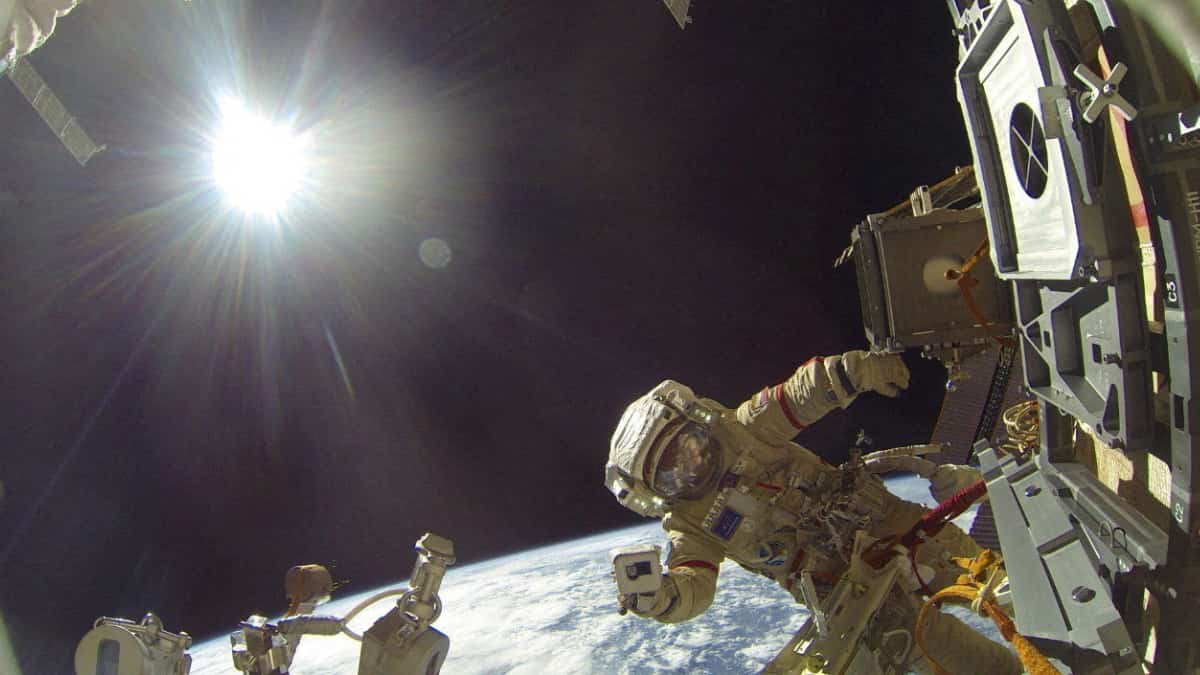
Soyuz MS-22
A Russian Soyuz spacecraft blasted off on Friday for the International Space Station (ISS) from where it will bring back to Earth a crew stranded due to a leak in the cooling system of their original return capsule. The unmanned Soyuz spacecraft took off for a two-day journey from Baikonur space centre in Kazakhstan at 7:24 pm ET, and the mission also includes making repairs to the capsule.
In December, the cooling system of a Soyuz MS-22 capsule started leaking, apparently from a micrometeoroid hit, that is a tiny particle of space rock, leaving Russian cosmonauts Sergey Prokopyev and Dmitry Petelin and US astronaut Francisco Rubio, stranded. "The cause of the leak may be a micrometeorite entering the radiator," TASS had quoted Sergei Krikalev, a former cosmonaut and head of the crewed space flight program for Russia's space corporation Roscosmos, as saying. "Possible consequences are changes in the temperature regime."
Also Read |3 astronauts stranded on International Space Station last year will now return in September

Their mission was due to end in March, but the coolant leak meant that they were stuck at the ISS for longer. Roscosmos informed earlier this weekthat the trio will return to Earth aboard Soyuz MS-23 in September. The damaged MS-22 spacecraft will land without a crew in March.
The cosmonauts will be staying aboard the ISS till September in order to avoid a staffing void.
The Soyuz MS-23 is due to dock Saturday evening. You can catch the spacecraft docking LIVE on NASA's livestream which will start at 7:15 pm ET.
&imwidth=180&imheight=135&format=webp&quality=medium)
Blasts heard in Sanaa as Saudi-led coalition warns civilians to evacuate; Houthis vow retaliation
&imwidth=180&imheight=135&format=webp&quality=medium)
China's counter-surveillance industry booms amid heightened espionage fears | Gravitas
&imwidth=180&imheight=135&format=webp&quality=medium)
Saudi Arabia strikes Yemen oil sites as Houthi missiles target Riyadh; 'limited fire' breaks out at Aramco
&im=FitAndFill=(700,400)&imwidth=180&imheight=135&format=webp&quality=medium)
Navratri 2026: 9 days, 9 forms of Goddess Durga and 9 colours- Check the complete list
&imwidth=180&imheight=135&format=webp&quality=medium)
Trump accuses Houthis of driving up oil prices before US midterms, warns of consequences
&imwidth=180&imheight=135&format=webp&quality=medium)
New Delhi rejects Beijing’s claims and remarks on Ladakh location naming exercise
&imwidth=180&imheight=135&format=webp&quality=medium)
Russian woman and Bihar boy's love story goes viral after she reaches India to marry him
&imwidth=180&imheight=135&format=webp&quality=medium)
US Midterms 2026: In Alaska, cost-of-living anxiety meets strangest ballot in high-stakes Senate race
&imwidth=180&imheight=135&format=webp&quality=medium)
CMs Vijay-Naidu meet in Vijayawada, discuss water sharing, river-linking
&imwidth=180&imheight=135&format=webp&quality=medium)
'Don't ever mess with nature!': Trump’s tiger attack post triggers social media backlash as victim's family issues heartbreaking tribute
&imwidth=180&imheight=135&format=webp&quality=medium)
OpenAI employee arrested by FBI after allegedly hiding recording device in office
&imwidth=180&imheight=135&format=webp&quality=medium)
1,500 drones illuminate Mumbai sky as Cordelia Cruises unveils second ship, Cordelia Sky
&imwidth=180&imheight=135&format=webp&quality=medium)
Ranabaali: Vijay Deverakonda, Rashmika Mandanna film gets U/A certificate with zero cuts
&imwidth=180&imheight=135&format=webp&quality=medium)
Delhi Police arrest Cockroach Janta Party's Saurav Das, Ashutosh Ranka, Ajinkya Shinde in Jantar Mantar case, to be produced before court
&imwidth=180&imheight=135&format=webp&quality=medium)
Pope Leo XIV diagnosed with lung cancer after surgery, Vatican says 'successful surgery and recovering'
&imwidth=180&imheight=135&format=webp&quality=medium)
Pakistan to chair UN-backed global Borrowers’ Platform as its own debt burden mounts, triggers sarcastic reactions on social media
&imwidth=180&imheight=135&format=webp&quality=medium)
Robot gropes girl, makes thrusting movements in bizarre crime in Germany
&imwidth=180&imheight=135&format=webp&quality=medium)
France accuses Musk of ‘online harassment’ of European leaders, warns of poll interference
&imwidth=180&imheight=135&format=webp&quality=medium)
MI5 chief warns Russia is UK’s ‘aggressor number one’ as Iran and AI threats grow
&imwidth=180&imheight=135&format=webp&quality=medium)
'Turn approver, resign, we'll forgive you': Rahul Gandhi claims receiving messages from CEC Gyanesh Kumar
&imwidth=180&imheight=135&format=webp&quality=medium)
Trump reconsidering calling off Nidal Hasan's execution livestream. Here's why
&imwidth=180&imheight=135&format=webp&quality=medium)
‘My president, I mean my husband’: Trump's new press secretary Katie Zacharia's first briefing goes off the rails in 14 minutes
&imwidth=180&imheight=135&format=webp&quality=medium)
‘How many people did she illegally bring from Somalia?’ Trump targets Ilhan Omar, questions her net worth
&imwidth=180&imheight=135&format=webp&quality=medium)
Marco Rubio to visit India next week, focus on energy cooperation and strategic ties
&imwidth=180&imheight=135&format=webp&quality=medium)
Is the AI chip boom already over? Global semiconductor stocks slide as investors question unbridled spending
&imwidth=180&imheight=135&format=webp&quality=medium)
L Murugan resigns as Union Minister, expresses wish to return to grassroots
&imwidth=180&imheight=135&format=webp&quality=medium)
'Ouch!!! That must hurt': Kangana Ranaut hails Kamal Haasan's sharp reply to Elon Musk over Starlink row
&imwidth=180&imheight=135&format=webp&quality=medium)
Girl 'dead' for 8 hours wakes up at her own funeral, dad insists she wasn't breathing
&imwidth=180&imheight=135&format=webp&quality=medium)
Sidhu Moose Wala’s younger brother wins hearts by recreating late singer’s signature move at Toronto Hologram Show
&imwidth=180&imheight=135&format=webp&quality=medium)
UK school ditches technology, shifts from screen to pen and paper for learning
&im=FitAndFill=(700,400)&imwidth=180&imheight=135&format=webp&quality=medium)
New OTT releases this week (October 12-18, 2026): Sacrifice, Koffee with Karan S9, Roadies Rebirth- 6 titles coming on Netflix, JioHotstar and more
&imwidth=180&imheight=135&format=webp&quality=medium)
Anupam Kher joins Ranbir Kapoor's Ramayana as Jatayu, new poster unveiled
&imwidth=180&imheight=135&format=webp&quality=medium)
Measles kills again: 6 dead in Pennsylvania as America faces its worst outbreak in decades | Gravitas
&imwidth=180&imheight=135&format=webp&quality=medium)
Ken Paxton's Dubai night out with two US fugitives sparks political storm as Texas Senate race tightens
&imwidth=180&imheight=135&format=webp&quality=medium)
Cornell University suspends fraternity parties over 2024 gang rape allegations
What had happened to Soyuz MS-22?
NASA said that a micrometeorite strike led to the coolant leak, impacting the integrity of the spacecraft which now could neither be used to take refuge, nor as a return vehicle. The micrometeorite made a hole in the MS-22’s radiator, resulting in the coolant to leak into space. Since now it wasn't possible to regulate the capsule’s cabin temperature, Roscosmos deemed the spacecraft unsafe.
Surprisingly, a second leak was reported on the cooling system of the Progress MS-21 cargo ship earlier this month. This prompted a slight delay in the MS-23 mission which was originally supposed to launch last week. Roscosmos again blamed the leak on an “external impact” and did not say anything about a common manufacturing defect.
What are micrometeoroids?
Tiny micrometeoroids are nothing but space rocks, mostly as small as a grain of sand. They are a common part of the space environment and are not known to cause heavy damage to the ISS and other spacecraft that are protected by advanced shielding.
(With inputs from agencies)
WATCH WION LIVE HERE
You can now write for wionews.com and be a part of the community. Share your stories and opinions with us here.

