James Webb telescope finds never-before detected pairs of planet-like objects in Orion Nebula


Orion Nebula
In a surprising revelation, the James Webb Space Telescope’s new images found pairs of planet-like objects located in the Orion Nebula. The objects had never been detected earlier.
The Orion Nebula is a glowing cloud made of gas and dust and is among the night sky’s brightest nebulae. It is clearly identifiable as the sword in the Orion constellation.
The Orion Nebula, which is located 1,300 light-years from Earth, has for long provided astronomers with a lot of celestial objects to study, which included brown dwarfs, planet-forming disks around stars, or objects with a mass ranging between that of stars and planets.

The near-infrared camera of the James Webb Telescope, called NIRCam, was used by astronomers to capture Orion Nebula’s mosaics in short and long wavelengths of light, which revealed unexpected discoveries and unprecedented details.
When the Orion Nebula’s short-wavelength image was studied by the astronomers Samuel G. Pearson and Mark J. McCaughrean, they closely looked into the Trapezium Cluster, a young star-forming region that’s around one million years old and filled with thousands of new stars till the brim.
)
Why asking questions could be more important than memorising answers
)
BRICS Summit 2026 full schedule: Day-wise agenda, timings and key issues - All you need to know
)
BRICS Summit 2026: Iran's Pezeshkian praises PM Modi at BRICS
)
Osama Bin Laden ‘planned’ to target India, CIA reveals dozens of declassified documents
)
BRICS rejects EU carbon tax as ‘punitive’, ‘discriminatory’; warns of burden on Global South
)
BRICS Summit 2026: Global leaders of BRICS nations attend main open session
)
Why dehydration is the hidden cause of travel fatigue on long flights
)
Top 5 places to visit in Goa beyond its famous beaches
)
'He is popular...': Malaysian PM Anwar Ibrahim's praise for PM Modi during bilateral meeting | WATCH
)
BRICS Summit 2026: 30+ countries seek BRICS membership
)
Frustrated man demolishes his kitchen after thousands flock to see Mother Mary his wife spotted on the wall
)
BRICS Summit 2026: PM Modi, Xi reach key consensus on ties, China to assume BRICS chairmanship in 2027
)
Trump says Canada eager to reach a deal, it could come ‘fairly soon’ if Ottawa treats US farmers better
)
From drones to KAAN fighters: Turkey outlines 229% surge in defence spending amid regional shifts
)
‘Partners, not rivals’: Xi outlines four point plan for stronger India-China ties
&im=FitAndFill=(700,400))
Why Chinese PL-15 air-to-air missiles use dual-pulse motors compared to European interceptors
)
Could staying indoors all day affect your health?
)
Why going digital does not always mean becoming more efficient
)
800 million years old - Scientists discover 'fingerprints' of supercontinent Gondwana in ancient rocks
&im=FitAndFill=(700,400))
Why do air defence missiles explode near their target instead of hitting it?
)
Israel spent nearly $470,000 on PM's hair, makeup since 2019, data shows
)
From severe mobility problems to recovery: Madhuri the elephant’s journey of wildlife care
)
BRICS Summit day 1: New Delhi declaration adopted with full consensus, big diplomatic win for India
)
From India, Putin warns Europe against sending troops to Ukraine, Zelensky expresses willingness to meet him at G20 Summit
)
Did Iran President Pezeshkian touch feet of Hindu spiritual leader at Delhi event as shown in viral video?
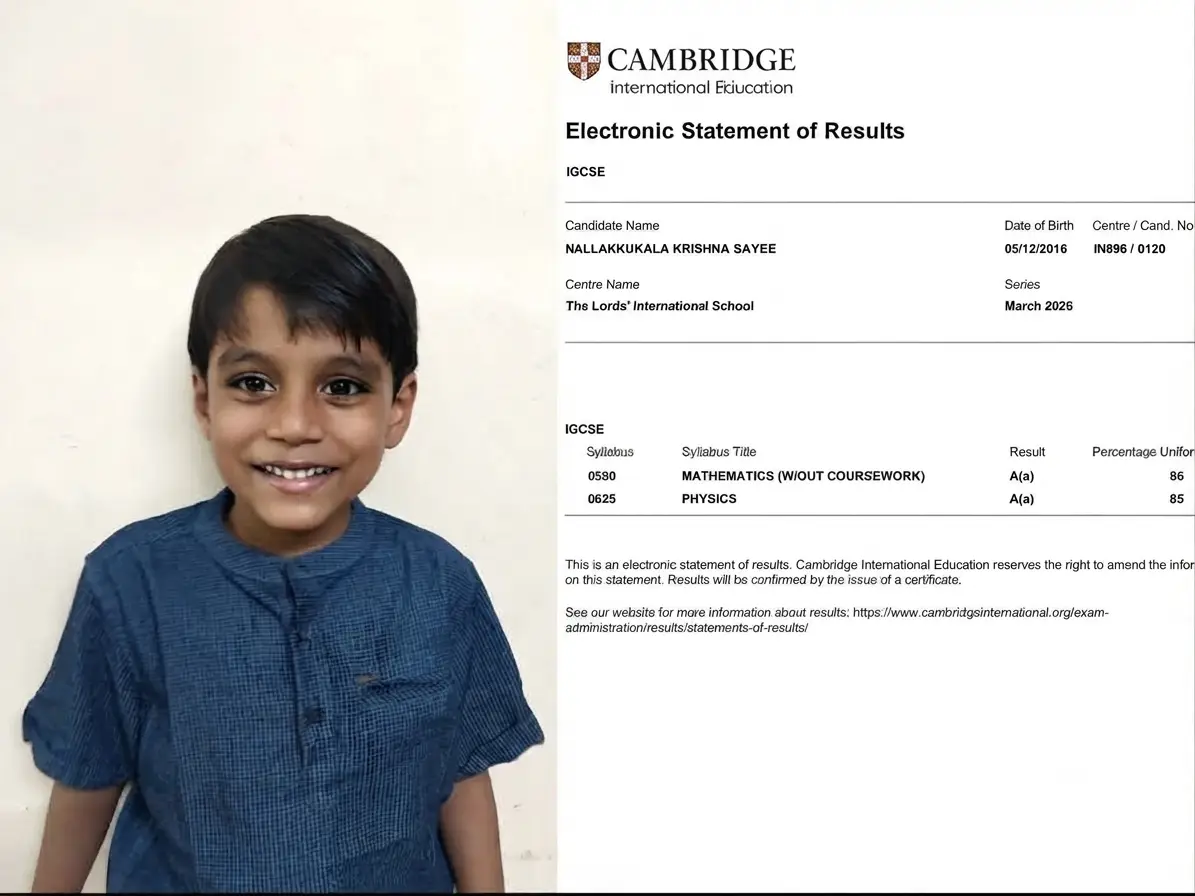)
9-year-old Chennai prodigy clears Cambridge IGCSE grade 10 exams
)
Why does your body need time to adjust after a long journey?
)
Baba Vanga's first prophecy for 2027 is out, and straight out of science fiction
)
Why does your skin need protection from UV rays?
)
How does the loss of forests affect the way wildlife lives and moves?
)
IND vs AFG, 1st T20I: When and where to watch live streaming in India?
)
BRICS Summit: China resumes Guangzhou-New Delhi flight, issues 'good-neighbourliness' remark ahead of Xi-Modi meet
)
Why do wild animals need quiet places to survive?
)
Humans may lose control of AI: Anthropic CEO calls for slowdown, Altman, Musk back him
Astronomers hunt for low-mass isolated objects
Along with the stars, brown dwarfs – which are too small in size for nuclear fusion to start at their cores and become stars – were spotted by the scientists. The mass of brown dwarfs is below 7 per cent of the mass of the sun.
While hunting for other low-mass isolated objects, the astronomers discovered pairs of planet-like objects, which had masses between 0.6 and 13 times the mass of Jupiter, and appeared to defy a few fundamental astronomical theories. They were dubbed by the scientists as Jupiter Mass Binary Objects or JuMBOs.
“Although some of them are more massive than the planet Jupiter, they will be roughly the same size and only slightly larger,” stated Pearson, a European Space Agency research fellow at the European Space Research and Technology Centre in the Netherlands.
Around 40 pairs of JuMBOs and two triple systems were found by the astronomers, all on wide orbits.
WATCH |Gravitas: Battle for supremacy in space
European Space Agency’s senior adviser for science and exploration McCaughrean said, “We are halfway through the life of the sun, so these objects in Orion are 3-day-old babies. They’re still quite luminous and warm because the energy they have when they get created still allows them to glow, which is how we can see these things in the first place.”
“Scientists have been working on theories and models of star and planet formation for decades, but none of them have ever predicted that we would find pairs of super low mass objects floating alone in space — and we’re seeing lots of them,” said Pearson.
“The main thing that we learn from this is that there is something fundamentally wrong with either our understanding of planet formation, star formation, or both,” he added.
You cannow write for wionews.comand be a part of the community. Share your stories and opinions with ushere.
WATCH WION LIVE HERE