Scientist says nuclear weapons could be lurking in space undetected. An explosion could trigger chaos above Earth

&imwidth=600&imheight=450&format=webp&quality=medium "Scientist says nuclear weapons could be lurking in space undetected. An explosion could trigger chaos above Earth")
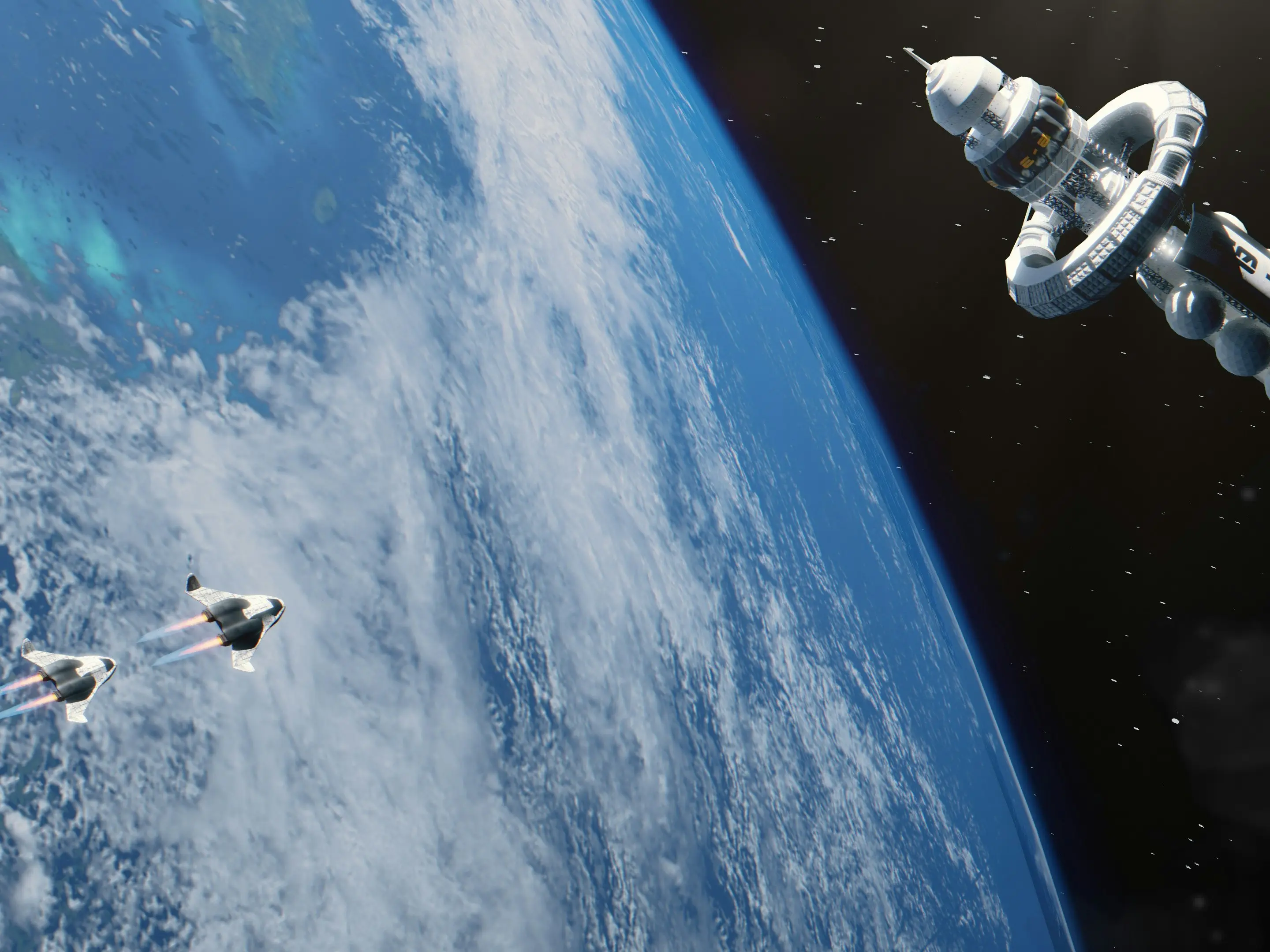
Nuclear weapons could be lurking in space.
Could there already be a nuclear weapon in space? A scientist thinks it is possible. He says that the Outer Space Treaty has no way to detect whether a satellite could have carried a nuke into space. He has developed a method to detect one.
A scientist has raised the possibility that humans could have already sent nuclear weapons into space. He has also proposed a method to detect them. Areg Danagoulian, an associate professor of nuclear science and engineering at the Massachusetts Institute of Technology, published a study in the journal Nature, talking about a concept where a satellite-based sensor system can pick up signatures of a thermonuclear weapon. He states in the proof-of-concept study that this system can orbit near a spacecraft suspected of carrying a nuclear weapon and detect neutrons generated by high-energy protons colliding with radioactive material.
Knowing this is important even though an explosion in space wouldn't cause any deaths or damage to Earth. However, the satellites already in space would take a direct hit, disrupting communications, GPS, weather forecasting and missile warning systems.
Nuclear radiation can damage satellites
This actually happened in 1962 when the United States detonated the Starfish Prime nuclear test about 400 kilometres above the Pacific Ocean. The radiation damaged one-third of the satellites in low-Earth orbit. The charged electrons entered the inner Van Allen belt, a radiation belt that surrounds Earth. Danagoulian says that this led to a sudden and extreme uptick in the number of electrons in the region. When satellites crossed this portion, their electronics and solar panels degraded several notches. Today, there are way more satellites in Earth's orbit, meaning a nuclear explosion could cause considerable damage.
Danagoulian says in the study, "Although the OST is almost 60 years old, it has always lacked robust means of verification for space-based nuclear threats." But creating such a system is challenging, since traditional nuclear detection methods would encounter protons and electrons trapped in the inner Van Allen belt, making it confusing. However, he says that the inner Van Allen Belt can help here.
The Van Allen belt can help
Trending Stories
&imwidth=280&imheight=210&format=webp&quality=medium)
&im=FitAndFill=(700,400)&imwidth=280&imheight=210&format=webp&quality=medium)
&imwidth=280&imheight=210&format=webp&quality=medium)
&imwidth=280&imheight=210&format=webp&quality=medium)
&imwidth=280&imheight=210&format=webp&quality=medium)
&imwidth=280&imheight=210&format=webp&quality=medium)
&imwidth=280&imheight=210&format=webp&quality=medium)
&imwidth=280&imheight=210&format=webp&quality=medium)
&imwidth=280&imheight=210&format=webp&quality=medium)
&imwidth=280&imheight=210&format=webp&quality=medium)
&imwidth=280&imheight=210&format=webp&quality=medium)
&imwidth=280&imheight=210&format=webp&quality=medium)
&imwidth=280&imheight=210&format=webp&quality=medium)
&imwidth=280&imheight=210&format=webp&quality=medium)
&imwidth=280&imheight=210&format=webp&quality=medium)
&imwidth=280&imheight=210&format=webp&quality=medium)
&imwidth=280&imheight=210&format=webp&quality=medium)
&im=FitAndFill=(700,400)&imwidth=280&imheight=210&format=webp&quality=medium)
&imwidth=280&imheight=210&format=webp&quality=medium)
&imwidth=280&imheight=210&format=webp&quality=medium)
&imwidth=280&imheight=210&format=webp&quality=medium)
&imwidth=280&imheight=210&format=webp&quality=medium)
&imwidth=280&imheight=210&format=webp&quality=medium)
&imwidth=280&imheight=210&format=webp&quality=medium)
&imwidth=280&imheight=210&format=webp&quality=medium)
&im=FitAndFill=(700,400)&imwidth=280&imheight=210&format=webp&quality=medium)
&imwidth=280&imheight=210&format=webp&quality=medium)
&imwidth=280&imheight=210&format=webp&quality=medium)
&imwidth=280&imheight=210&format=webp&quality=medium)
&imwidth=280&imheight=210&format=webp&quality=medium)
&imwidth=280&imheight=210&format=webp&quality=medium)
&imwidth=280&imheight=210&format=webp&quality=medium)
Suppose a satellite with a nuclear weapon passes through this zone that is full of protons and electrons, it is going to emit a huge amount of neutrons. This happens because when high-energy protons slam into heavy elements like uranium, they knock loose neutrons and other particles. Danagoulian says that, depending on the amount and size of uranium, a thermonuclear weapon could emit nearly 40 million neutrons per second in the Van Allen belt.
But this alone would not detect the nuclear warhead, which would require a device capable of sorting through all the particle noise in low Earth orbit. His proposed satellite would orbit below the suspect satellite. When they both come across the charged particles, a sensor could remove the incoming protons and only pick up neutron signals.
However, the albedo neutrons coming from Earth create another problem, he told Gizmodo, produced by cosmic rays hitting the atmosphere. But the inspector satellite orbiting under the suspect satellite would use directional detection to determine if a neutron came from the satellite or the Earth. Danagoulian admits that his system might be complicated and hopes someone will develop a simple prototype to solve this problem.

