China to whack asteroid at 26 times the speed of sound. Here's how the mission outrivals NASA's DART

&imwidth=600&imheight=450&format=webp&quality=medium "China to whack asteroid at 26 times the speed of sound. Here's how the mission outrivals NASA's DART")
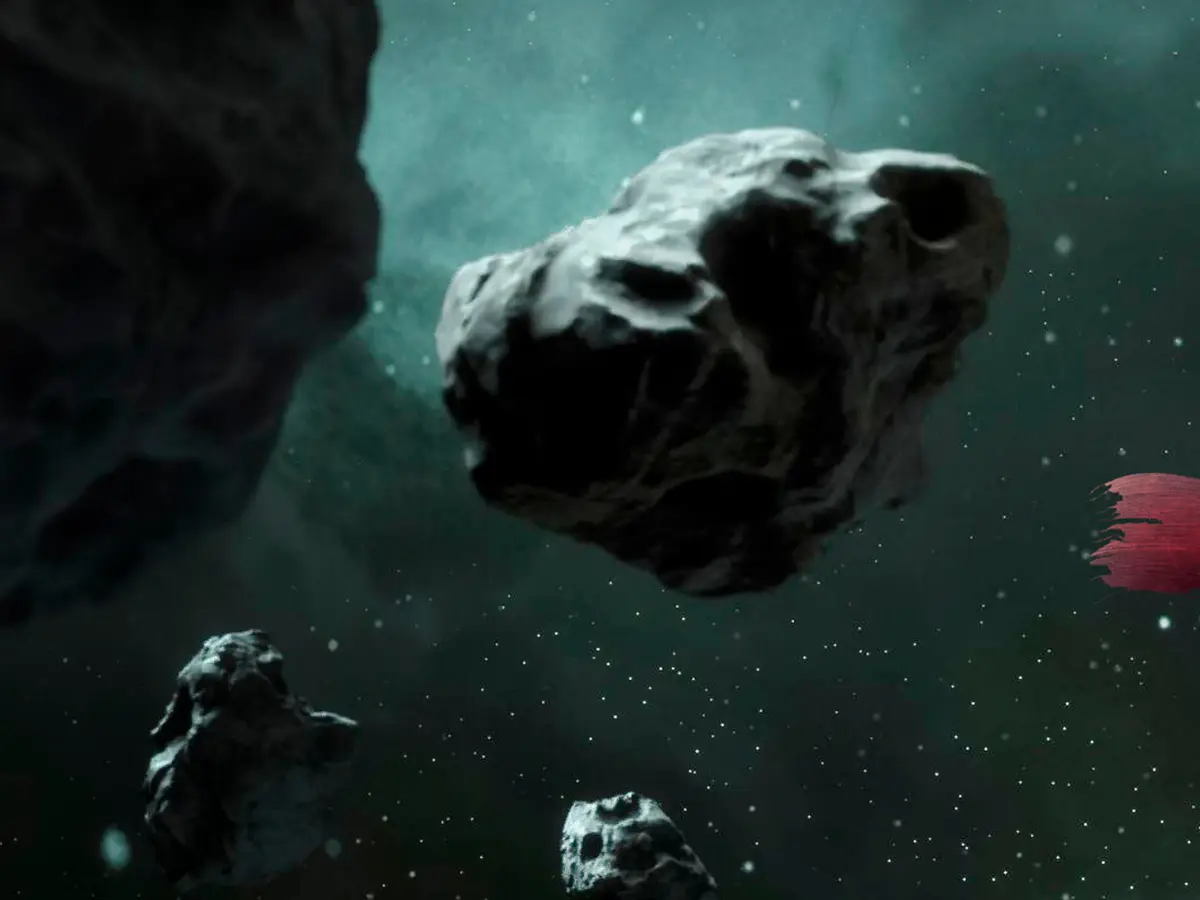
China asteroid deflection mission will try to completely annihilate the space rock Photograph: (Magnific)
China could soon outrival NASA in planetary defence and asteroid strike. Its new mission aims to slam an asteroid at a speed of Mach 26, much higher than the DART mission, and even break apart a small asteroid completely.
China is planning a huge asteroid strike mission where it will crash a spacecraft into a small space rock at 26 times the speed of light. The mission aims to deflect the asteroid from its trajectory and even break it apart entirely, SCMP reported. The planetary defence mission goes way beyond what NASA did with DART in many ways. The American space agency altered the orbit of the asteroid moonlet around the main rock, and later analysis showed that its shape had changed. But China wants to see if it can shatter its composition.
The mission is being led by Li Mingtao, chief scientist of planetary defence at the China National Space Administration (CNSA). The target is Asteroid 2015 XF261, which has not been studied much. Compared to asteroid moonlet Dimorphos, which was a 525-foot rubble-pile space rock, asteroid 2015 XF261 measures only about 98 feet and is believed to be a stronger, more solid body. The intercept will happen when it comes roughly 7 million kilometres near Earth around 2029 or 2030.
The plan is to strike the asteroid at an astonishing speed of 9 kilometres per second, equivalent to Mach 26 at sea level. In comparison, NASA's DART impact had a velocity of 6.1 km/s. The higher speed would deliver a more powerful impact because kinetic energy increases exponentially with velocity. Scientists think that this could cause the asteroid to completely come apart.
China will launch the observing spacecraft on the same rocket
China also plans to observe the affected asteroid differently from NASA. The same rocket will carry two spacecraft - the impactor and the observer. Once launched, both of them will go their separate ways. One will go towards the asteroid, and a second spacecraft will observe the asteroid before, during and after the collision. It will see how its orbit, shape and surface change after the impact. This spacecraft will use Venus gravity assist to observe the effects. In contrast, the European Space Agency launched the Hera mission separately to observe the changes in Dimorphos
The mission overall has four targets - an accurate hit, successfully changing its orbit, precisely measuring the impact results, and confirming that Earth remains safe after the test.
Trending Stories
)
)
)
)
)
)
)
)
&im=FitAndFill=(700,400))
)
)
)
)
&im=FitAndFill=(700,400))
)
)
)
)
)
)
)
)
)
)
)
)
)
)
&im=FitAndFill=(700,400))
)
)
)
)
)

