America’s hidden $5.7 billion goldmine! US sewage and manure may be key to ending reliance on synthetic fertilisers

&imwidth=600&imheight=450&format=webp&quality=medium "America’s hidden $5.7 billion goldmine! US sewage and manure may be key to ending reliance on synthetic fertilisers")
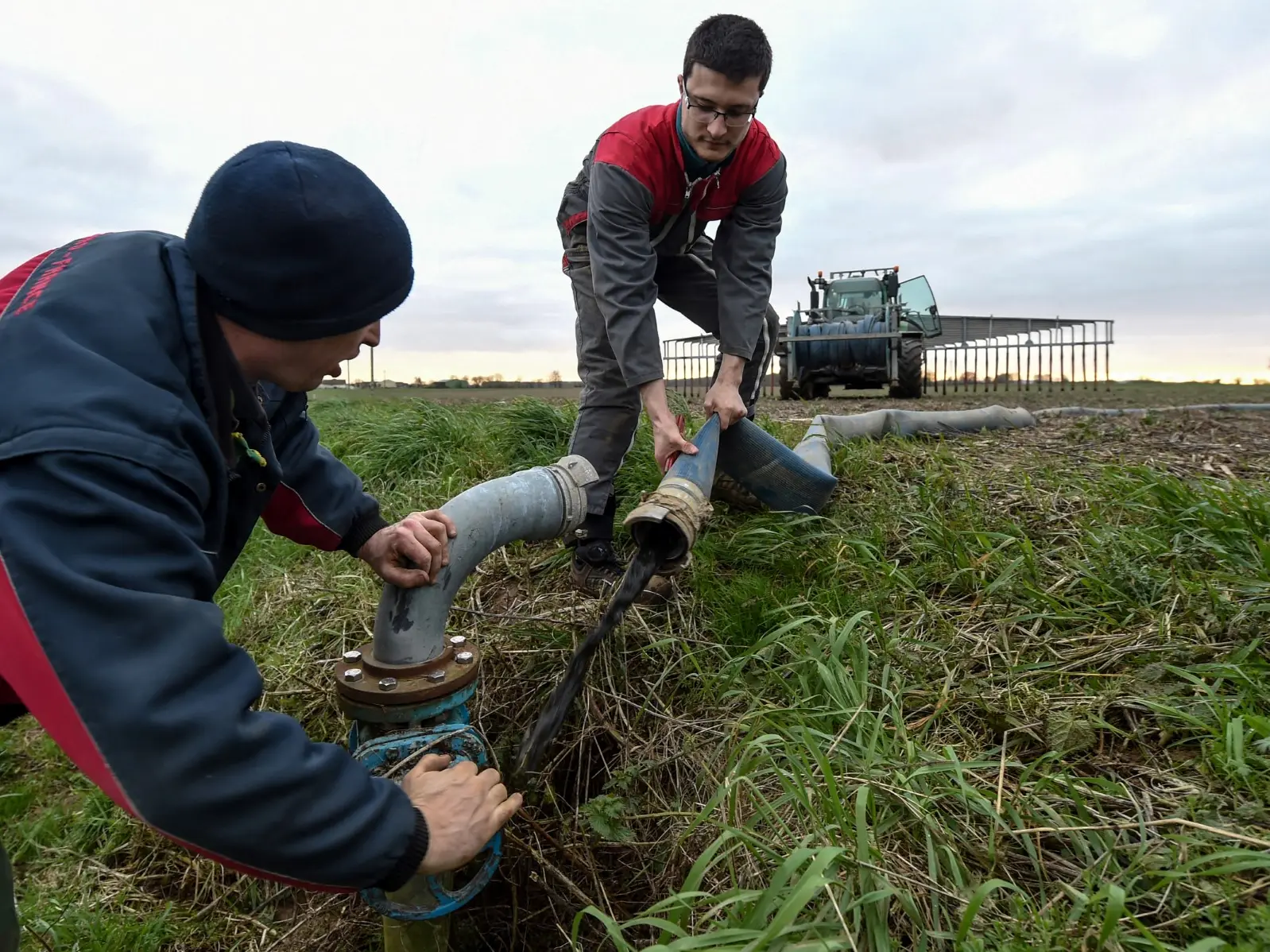
America’s sewage and manure could disrupt fertiliser industry Photograph: (AFP , Representative Image)
The research finds that sewage and manure in the US could theoretically supply 102 per cent of national nitrogen demand and 50 per cent of phosphorus requirements for agriculture, representing a potential value exceeding $5.7 billion annually.
Nutrients recovered from animal and human waste could significantly reduce the United States’ dependence on synthetic fertilisers, according to a Cornell University study published in Nature Sustainability, as reported by Phys.org. The research finds that sewage and manure in the US could theoretically supply 102 per cent of national nitrogen demand and 50 per cent of phosphorus requirements for agriculture, representing a potential value exceeding $5.7 billion annually. However, researchers stress that real-world constraints such as processing capacity and transportation logistics must be considered before large-scale deployment.
Geography mismatch and recovery potential
The study highlights a structural challenge: nutrient-rich waste is often concentrated in densely populated regions or livestock-heavy zones, while the highest agricultural demand lies elsewhere. Using high-resolution mapping across 15 major crops, researchers identified surpluses in the Northeast and parts of the Western America, while deficits were concentrated in the Midwest and southern Great Plains. Despite this mismatch, the analysis shows that 37 per cent of nitrogen and 46 per cent of phosphorus could be reused locally, while more than half of remaining surplus nutrients could be redistributed regionally at relatively low economic and environmental cost.
Infrastructure, coordination and environmental gains
Assistant professor Chuan Liao, the study’s corresponding author, described the issue to Phys.org and as “a coordination problem, not a resource problem,” emphasising that significant quantities of nutrients can still be economically repurposed. He noted that excessive reliance on synthetic fertilisers contributes to water pollution and high emissions due to energy-intensive production. The study also links fertiliser distribution patterns to broader social inequality, with poorer counties often located in both nutrient-surplus and nutrient-deficit zones. Researchers argue that better nutrient recovery systems could reduce pollution, improve soil health, and enhance environmental justice.
Trending Stories
&imwidth=280&imheight=210&format=webp&quality=medium)
&imwidth=280&imheight=210&format=webp&quality=medium)
&imwidth=280&imheight=210&format=webp&quality=medium)
&imwidth=280&imheight=210&format=webp&quality=medium)
&imwidth=280&imheight=210&format=webp&quality=medium)
&imwidth=280&imheight=210&format=webp&quality=medium)
&imwidth=280&imheight=210&format=webp&quality=medium)
&imwidth=280&imheight=210&format=webp&quality=medium)
&imwidth=280&imheight=210&format=webp&quality=medium)
&imwidth=280&imheight=210&format=webp&quality=medium)
&imwidth=280&imheight=210&format=webp&quality=medium)
&imwidth=280&imheight=210&format=webp&quality=medium)
&imwidth=280&imheight=210&format=webp&quality=medium)
&imwidth=280&imheight=210&format=webp&quality=medium)
&imwidth=280&imheight=210&format=webp&quality=medium)
&imwidth=280&imheight=210&format=webp&quality=medium)
&imwidth=280&imheight=210&format=webp&quality=medium)
&imwidth=280&imheight=210&format=webp&quality=medium)
&imwidth=280&imheight=210&format=webp&quality=medium)
&imwidth=280&imheight=210&format=webp&quality=medium)
&im=FitAndFill=(700,400)&imwidth=280&imheight=210&format=webp&quality=medium)
&imwidth=280&imheight=210&format=webp&quality=medium)
&imwidth=280&imheight=210&format=webp&quality=medium)
&imwidth=280&imheight=210&format=webp&quality=medium)
&imwidth=280&imheight=210&format=webp&quality=medium)
&imwidth=280&imheight=210&format=webp&quality=medium)
&imwidth=280&imheight=210&format=webp&quality=medium)
&imwidth=280&imheight=210&format=webp&quality=medium)
&imwidth=280&imheight=210&format=webp&quality=medium)
ALSO READ: ‘Very serious increase’: North Korea ramps up nuclear arms production at alarming pace, IAEA warns
Decentralised systems and policy challenge
The study proposes a decentralised model in which waste is processed locally and used nearby, such as integrating livestock farms with surrounding crop fields. “We’re advocating for a decentralized system,” Liao said, adding that implementation would require coordination across agriculture, waste management and energy sectors. While the necessary technology already exists, researchers emphasise that scaling it nationally will depend on infrastructure investment and policy alignment. The research outlined a blueprint for harnessing the untapped potential of animal and human waste to reduce US dependence on synthetic fertilisers, which are energy-intensive to produce, environmentally damaging, and often imported from overseas.