'Alien chemistry' discovered in meteorite that crashed into a New Jersey bedroom

&imwidth=600&imheight=450&format=webp&quality=medium "'Alien chemistry' discovered in meteorite that crashed into a New Jersey bedroom")
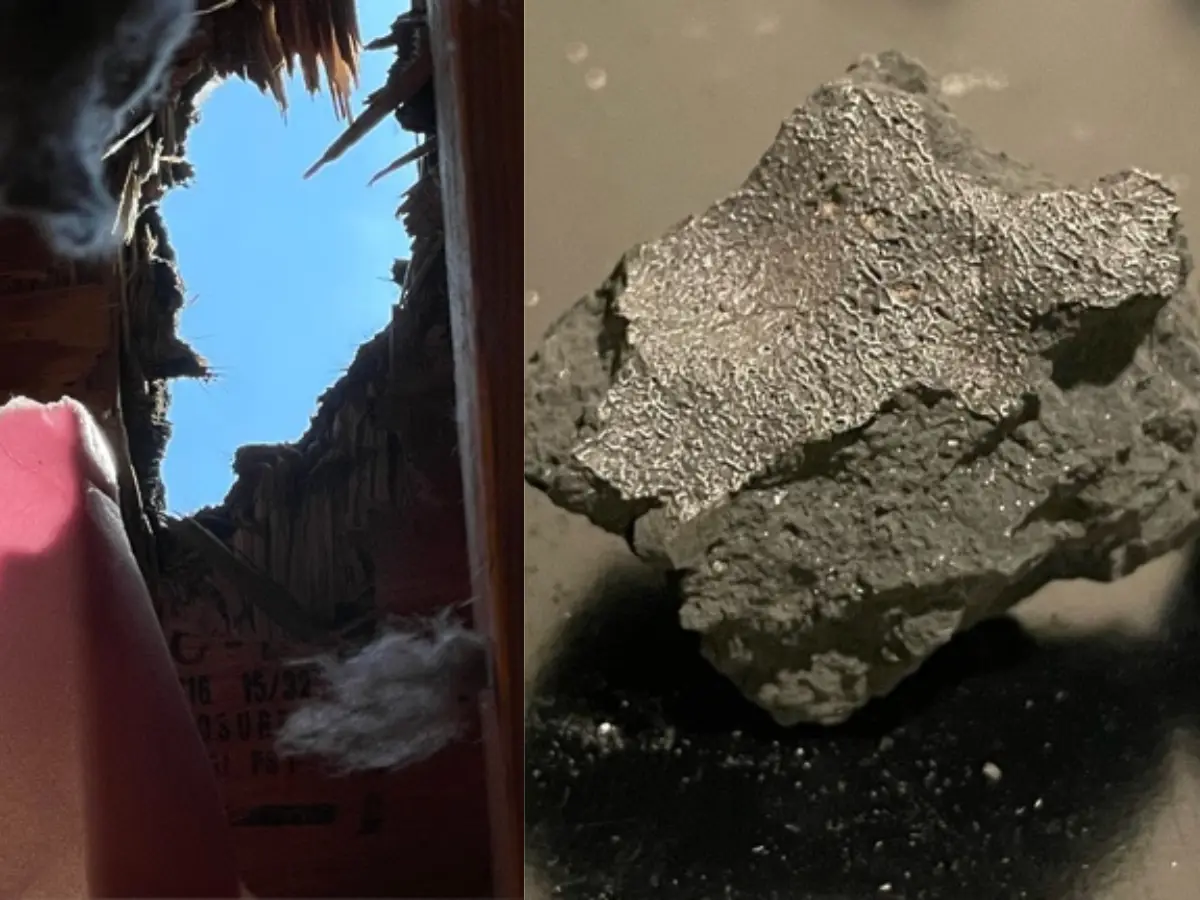
View of the impact site from inside. and Meteorite fragment with fusion crust. Photograph: (SETI)
Scientists have discovered previously unknown salty water chemistry and complex organic molecules inside the Hillsborough meteorite that crashed through a New Jersey home's roof, offering new clues about the origins of life on Earth.
The forensic laboratory analysis of a two-pound meteorite that crashed through the roof of a New Jersey home has revealed an unprecedented glimpse into the chemistry of an alien world. The extraordinary cosmic rock, now known as the Hillsborough meteorite, fell to Earth in 2024. Screaming through the atmosphere at 32,000 miles per hour (14.4 km/s) it triggered a massive sonic boom over New York before tearing through the ceiling of a Hillsborough home's master bedroom.
Clues to the origins of life
The forensic breakdown of the Hillsborough meteorite has revealed a highly altered environment rich in liquid water and complex organic matter, offering critical insights into how life may have been sparked on early Earth.
Researchers studying the two pound meteorite say it contains signs of an unusual salty water environment that has never before been identified in this class of asteroid. The findings, they say, could reshape scientists' understanding of how the building blocks of life formed billions of years ago.
"I was at home at the time, heard a loud crash and found a hole in the ceiling of the master bedroom," the homeowner recalled. "I smelled a strong sulphur-like odor and saw many black fragments... covering my bed."
Trending Stories
&imwidth=280&imheight=210&format=webp&quality=medium)
&imwidth=280&imheight=210&format=webp&quality=medium)
&imwidth=280&imheight=210&format=webp&quality=medium)
&imwidth=280&imheight=210&format=webp&quality=medium)
&imwidth=280&imheight=210&format=webp&quality=medium)
&imwidth=280&imheight=210&format=webp&quality=medium)
&imwidth=280&imheight=210&format=webp&quality=medium)
&imwidth=280&imheight=210&format=webp&quality=medium)
&imwidth=280&imheight=210&format=webp&quality=medium)
&imwidth=280&imheight=210&format=webp&quality=medium)
&imwidth=280&imheight=210&format=webp&quality=medium)
&imwidth=280&imheight=210&format=webp&quality=medium)
&imwidth=280&imheight=210&format=webp&quality=medium)
&imwidth=280&imheight=210&format=webp&quality=medium)
&imwidth=280&imheight=210&format=webp&quality=medium)
&imwidth=280&imheight=210&format=webp&quality=medium)
&imwidth=280&imheight=210&format=webp&quality=medium)
&imwidth=280&imheight=210&format=webp&quality=medium)
&imwidth=280&imheight=210&format=webp&quality=medium)
&im=FitAndFill=(700,400)&imwidth=280&imheight=210&format=webp&quality=medium)
&imwidth=280&imheight=210&format=webp&quality=medium)
&imwidth=280&imheight=210&format=webp&quality=medium)
&imwidth=280&imheight=210&format=webp&quality=medium)
&imwidth=280&imheight=210&format=webp&quality=medium)
&imwidth=280&imheight=210&format=webp&quality=medium)
&imwidth=280&imheight=210&format=webp&quality=medium)
&imwidth=280&imheight=210&format=webp&quality=medium)
&imwidth=280&imheight=210&format=webp&quality=medium)
&imwidth=280&imheight=210&format=webp&quality=medium)
&imwidth=280&imheight=210&format=webp&quality=medium)
&imwidth=280&imheight=210&format=webp&quality=medium)
&imwidth=280&imheight=210&format=webp&quality=medium)
&imwidth=280&imheight=210&format=webp&quality=medium)
&im=FitAndFill=(700,400)&imwidth=280&imheight=210&format=webp&quality=medium)
&imwidth=280&imheight=210&format=webp&quality=medium)
&imwidth=280&imheight=210&format=webp&quality=medium)
&imwidth=280&imheight=210&format=webp&quality=medium)
&imwidth=280&imheight=210&format=webp&quality=medium)
Tracing the rock back to the asteroid belt
Scientists traced the object to the lower asteroid belt, where they believe it originated from a primitive asteroid that experienced an unexpected episode of concentrated salty water activity.
"A forensic study of the fragments revealed that they contained preserved bits from near the surface of a primitive asteroid where it experienced concentrated salty fluids, a process not previously known from this type of protoplanet world," said lead author Peter Jenniskens of the SETI Institute and NASA's Ames Research Center.
Meteorite packed with life's building blocks
Laboratory analysis revealed that the meteorite contains a rich mixture of carbon, nitrogen, amino acids and dozens of soluble organic compounds. Researchers found evidence that many of these molecules formed through interactions between minerals and highly concentrated briny water, an environment capable of driving complex chemical reactions.
The meteorite contained about 1.8 per cent carbon and 0.07 per cent nitrogen, with isotope signatures matching those seen in primitive CM type carbonaceous chondrites, some of the oldest material in the Solar System.
Scientists also identified magnesium based organic compounds whose origin remains uncertain. They may have formed through the asteroid's salty water chemistry or during ancient impact events.
Could asteroids have helped spark life on Earth?
The discovery adds weight to the idea that primitive asteroids delivered key ingredients needed for life to emerge on the young Earth.
NASA astrobiologist Danny Glavin and colleagues concluded that amino acids, carboxylic acids and other organic molecules carried by meteorites like Hillsborough may have contributed to the chemical inventory that existed before life began.
Because the fragments were recovered within hours of impact and carefully preserved, researchers say they remain among the cleanest meteorite samples ever analysed. Several pieces will now be housed at the American Museum of Natural History in New York, where they will continue to be studied for clues about the origins of the Solar System and, perhaps, life itself.

