AI beats human forecasters in tournament predicting fate of 30 technology startups

&imwidth=600&imheight=450&format=webp&quality=medium "AI beats human forecasters in tournament predicting fate of 30 technology startups")
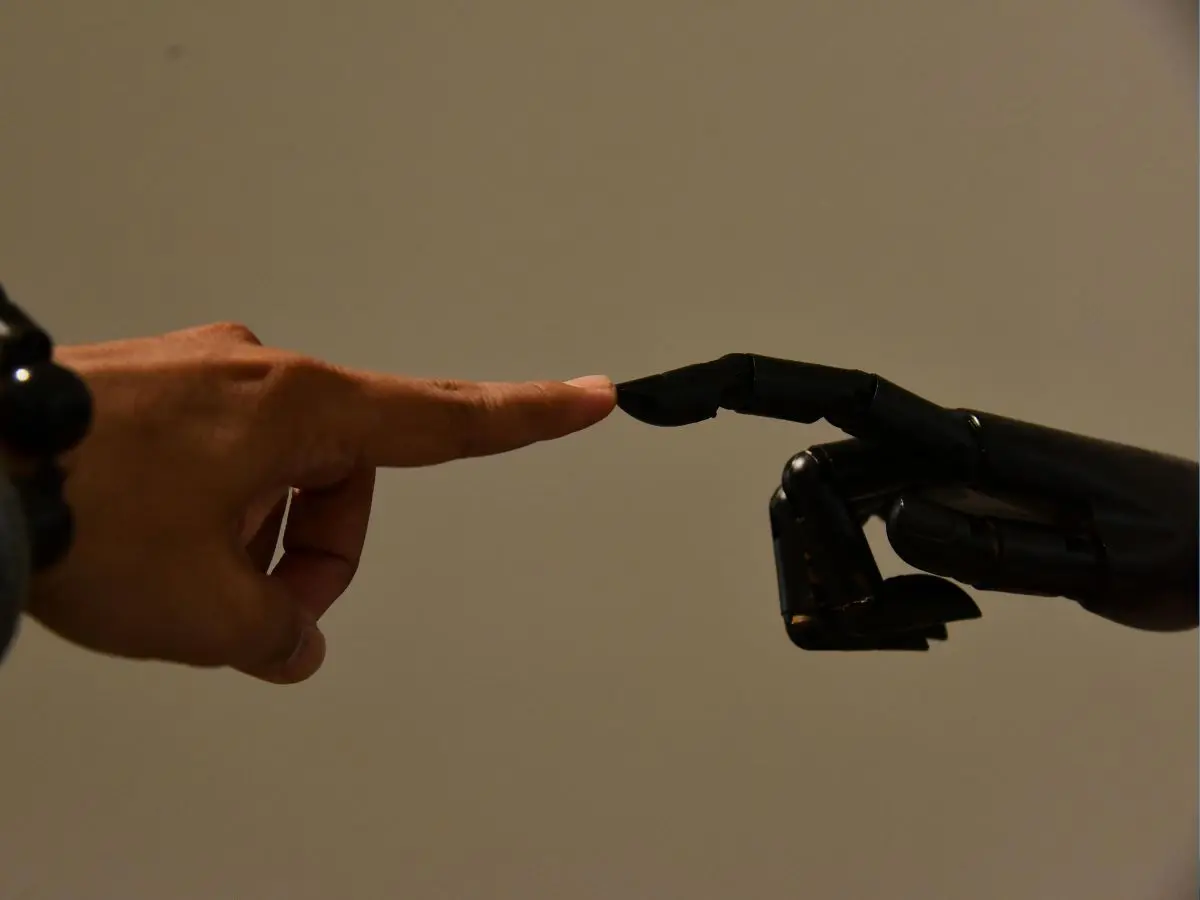
Study challenges long-held belief in human strategic judgement Photograph: (Pexels)
The study tested whether large language models (LLMs) could accurately predict the fundraising success of real-world technology startups.
Artificial intelligence has outperformed human forecasters in a live business prediction tournament involving 30 technology ventures, according to research led by the University of Michigan’s Ross School of Business. The findings suggest that AI systems are now moving beyond data processing tasks into areas long considered dependent on human intuition and strategic judgement.
The study tested whether large language models (LLMs) could accurately predict the fundraising success of real-world technology startups. Researchers evaluated 30 US-based crowdfunding ventures launched after the AI models’ training cut-off dates, ensuring the systems had no prior knowledge of the projects. The experiment involved 870 pairwise comparisons conducted by several frontier AI models and benchmarked against predictions made by 346 managers and three MBA-trained investors.
The strongest-performing system, Gemini 2.5 Pro, achieved a correlation score of 0.74, correctly ranking nearly four out of five venture pairs. Human participants, by comparison, managed accuracy rates ranging between 0.04 and 0.45. The findings were published on the arXiv preprint server and reported by Tech Xplore and the University of Michigan.
Researchers identify an ‘augmentation trap’
Trending Stories
&imwidth=280&imheight=210&format=webp&quality=medium)
&im=FitAndFill=(700,400)&imwidth=280&imheight=210&format=webp&quality=medium)
&imwidth=280&imheight=210&format=webp&quality=medium)
&imwidth=280&imheight=210&format=webp&quality=medium)
&imwidth=280&imheight=210&format=webp&quality=medium)
&imwidth=280&imheight=210&format=webp&quality=medium)
&im=FitAndFill=(700,400)&imwidth=280&imheight=210&format=webp&quality=medium)
&imwidth=280&imheight=210&format=webp&quality=medium)
&imwidth=280&imheight=210&format=webp&quality=medium)
&imwidth=280&imheight=210&format=webp&quality=medium)
&imwidth=280&imheight=210&format=webp&quality=medium)
&im=FitAndFill=(700,400)&imwidth=280&imheight=210&format=webp&quality=medium)
&imwidth=280&imheight=210&format=webp&quality=medium)
&imwidth=280&imheight=210&format=webp&quality=medium)
&imwidth=280&imheight=210&format=webp&quality=medium)
&imwidth=280&imheight=210&format=webp&quality=medium)
&imwidth=280&imheight=210&format=webp&quality=medium)
&imwidth=280&imheight=210&format=webp&quality=medium)
&imwidth=280&imheight=210&format=webp&quality=medium)
&imwidth=280&imheight=210&format=webp&quality=medium)
&imwidth=280&imheight=210&format=webp&quality=medium)
&imwidth=280&imheight=210&format=webp&quality=medium)
&imwidth=280&imheight=210&format=webp&quality=medium)
&imwidth=280&imheight=210&format=webp&quality=medium)
&imwidth=280&imheight=210&format=webp&quality=medium)
&imwidth=280&imheight=210&format=webp&quality=medium)
&imwidth=280&imheight=210&format=webp&quality=medium)
&imwidth=280&imheight=210&format=webp&quality=medium)
&imwidth=280&imheight=210&format=webp&quality=medium)
&imwidth=280&imheight=210&format=webp&quality=medium)
The research also found that combining AI and human judgement did not improve forecasting quality. Instead, hybrid decision-making often reduced accuracy, a phenomenon researchers described as the “augmentation trap”.
“In this case, the wisdom-of-the-crowd logic doesn't produce an improvement in accuracy,” said Felipe Csaszar, professor of strategy at the University of Michigan. “If you include a human in the mix, performance decreases.” Researchers concluded that human input introduced inconsistency and noise into forecasts generated by AI systems.
AI’s advantage lies in scale, memory and reasoning
Csaszar argued that AI’s performance stems from its ability to overcome what economists describe as “bounded rationality”, the limits humans face in time, memory and information processing. “No human has read as much as ChatGPT; no human has as much time to think about each project,” he said. The study also linked forecasting performance to broader reasoning capability, particularly models performing well on advanced knowledge benchmarks such as Humanity’s Last Exam.
The researchers stopped short of calling the development a definitive 'Deep Blue moment' for business strategy. However, Csaszar noted that “what AI can do in strategy has changed,” suggesting that strategic foresight may no longer remain an exclusively human strength.