4.4-million-year-old half human, half ape skeleton holds clues to mystery of humans walking on land

&imwidth=600&imheight=450&format=webp&quality=medium "4.4-million-year-old half human, half ape skeleton holds clues to mystery of humans walking on land")
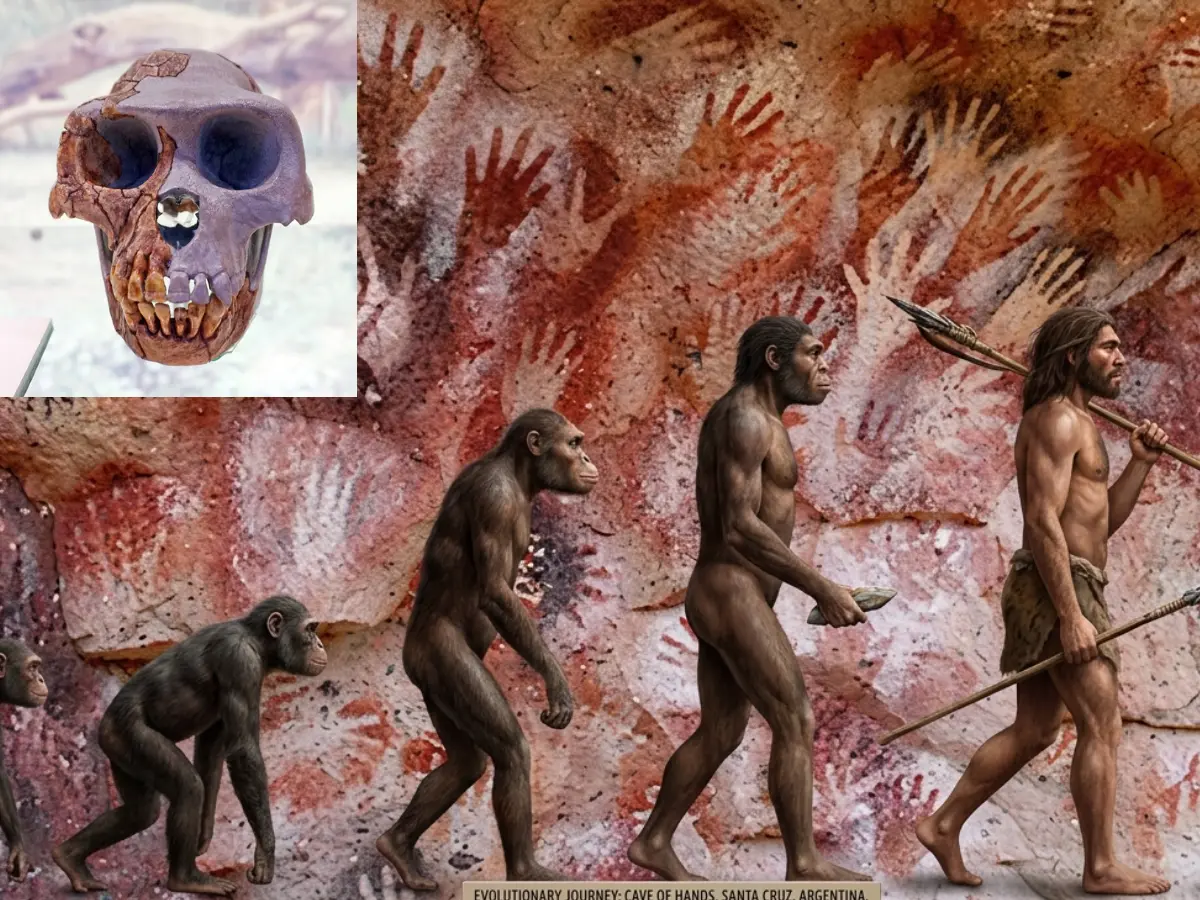
How and when did humans start walking on two legs? Photograph: (Wikimedia Commons - Gemini)
Ardi is a female skeleton that lived over 4 million years ago and could be the key to understanding how and when early humans started walking on two legs. Scientists are studying a bone in her foot, which can unravel the mystery of human walking.
A 4.4-million-year-old female skeleton named Ardi is revealing exactly how ancient humans transitioned from climbing to walking on two legs. She belongs to the species Ardipithecus ramidus and is a million years older than Lucy, one of the best-known early humans. Ardi was unearthed in Ethiopia in 1994 and is the oldest known partial hominin skeleton, meaning she is half ape and half human. In a study published in Communications Biology in 2025, scientists note that Ardi could walk on two legs but retained some of the features of apes, such as a grasping foot.
Biological anthropologist Thomas Prang of Washington University in St. Louis, who led the study, said, "Our results strongly imply that humans evolved from an African ape-like ancestor." Previous research has hypothesised that Ardipithecus ramidus was more humanlike than apelike, and had evolved to walk on its knuckles on land. Prang's team found that Ardi had both primitive and modern features. It had a big toe that could grasp branches, while the cranial base of its feet and pelvis suggest that it was adapting to bipedalism.
Studying a bone to understand how Ardi moved
The team looked at Ardi’s talus, a bone in the ankle, to understand more about how Ardi moved. This bone transfers body weight between the lower leg and foot and helps African apes to climb. It facilitated two movements that put the animal’s centre of mass in a position closer to support, so the apes don't fall backwards. Apes who climb trees have a shorter forefoot compared to bipeds and quadrupeds. So Prang's team looked at Ardi’s foot and also found her approximate body mass using the upper joint surface of the talus.
In Ardi, the top part of the ankle bone (the talar trochlea) is quite wide compared to her estimated body mass, but the back of the bone matches the width seen in both chimpanzees and humans. Some aspects of Ardi’s talus appeared in extant chimps, gorillas and monkeys. In these animals, it indicated the ability to walk on all fours with the soles of the feet. Ardi had some of these features, but her feet had improved mechanisms for propulsion needed to walk on two legs in the future. Hominins gradually developed feet suited that did not work much for grasping, but were suited for holding up their weight on land.
&im=FitAndFill=(700,400)&imwidth=280&imheight=210&format=webp&quality=medium)
&imwidth=280&imheight=210&format=webp&quality=medium)
&imwidth=280&imheight=210&format=webp&quality=medium)
&imwidth=280&imheight=210&format=webp&quality=medium)
&imwidth=280&imheight=210&format=webp&quality=medium)
&imwidth=280&imheight=210&format=webp&quality=medium)
&imwidth=280&imheight=210&format=webp&quality=medium)
&imwidth=280&imheight=210&format=webp&quality=medium)
&imwidth=280&imheight=210&format=webp&quality=medium)
&imwidth=280&imheight=210&format=webp&quality=medium)
&imwidth=280&imheight=210&format=webp&quality=medium)
&imwidth=280&imheight=210&format=webp&quality=medium)
&imwidth=280&imheight=210&format=webp&quality=medium)
&im=FitAndFill=(700,400)&imwidth=280&imheight=210&format=webp&quality=medium)
&imwidth=280&imheight=210&format=webp&quality=medium)
&imwidth=280&imheight=210&format=webp&quality=medium)
&imwidth=280&imheight=210&format=webp&quality=medium)
&imwidth=280&imheight=210&format=webp&quality=medium)
&imwidth=280&imheight=210&format=webp&quality=medium)
&imwidth=280&imheight=210&format=webp&quality=medium)
&im=FitAndFill=(700,400)&imwidth=280&imheight=210&format=webp&quality=medium)
&imwidth=280&imheight=210&format=webp&quality=medium)
&imwidth=280&imheight=210&format=webp&quality=medium)
&im=FitAndFill=(700,400)&imwidth=280&imheight=210&format=webp&quality=medium)
&imwidth=280&imheight=210&format=webp&quality=medium)
&imwidth=280&imheight=210&format=webp&quality=medium)
&imwidth=280&imheight=210&format=webp&quality=medium)
&imwidth=280&imheight=210&format=webp&quality=medium)
&imwidth=280&imheight=210&format=webp&quality=medium)
&imwidth=280&imheight=210&format=webp&quality=medium)
&imwidth=280&imheight=210&format=webp&quality=medium)
&imwidth=280&imheight=210&format=webp&quality=medium)
&imwidth=280&imheight=210&format=webp&quality=medium)
&imwidth=280&imheight=210&format=webp&quality=medium)

