

&imwidth=800&imheight=600&format=webp&quality=medium "The Verdict | Trump's Russia paradox: Peace in words, pressure in reverse?")
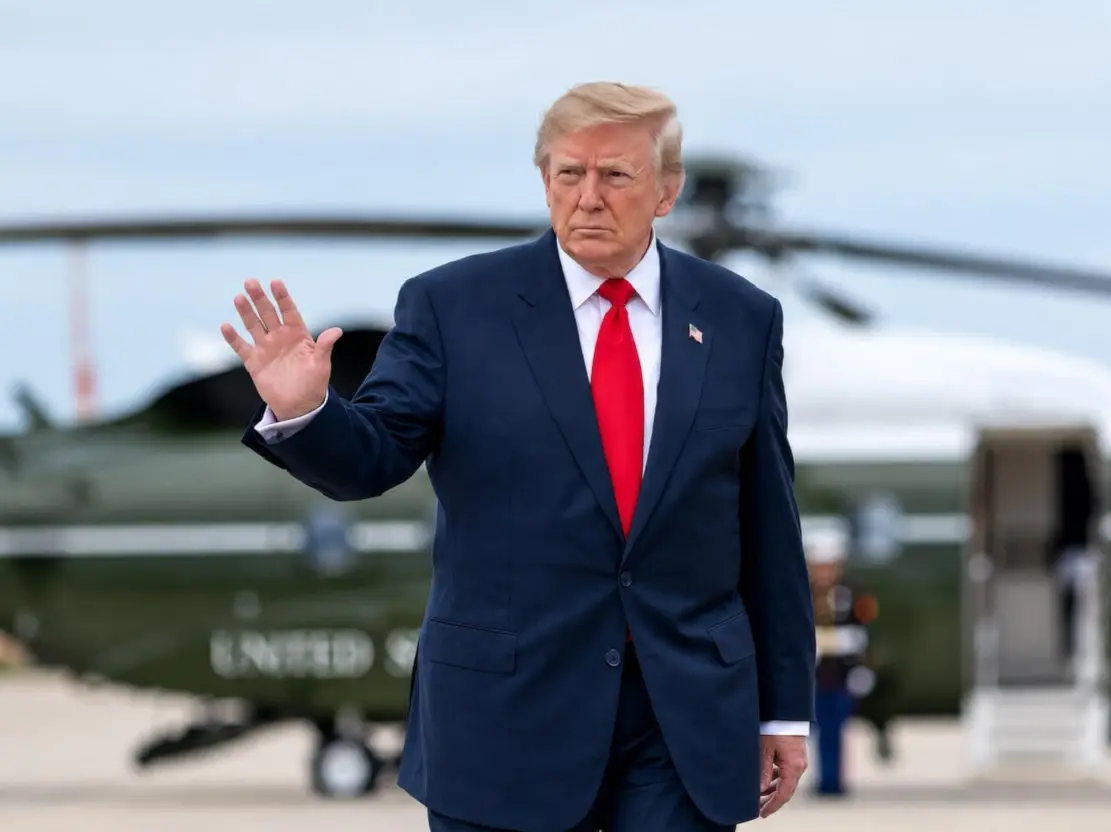
Donald Trump says he wants to end the war between Russia and Ukraine. But his latest energy decisions have raised questions about whether Washington's economic policies are reinforcing that diplomatic objective or complicating it.
The American president has announced what he describes as an energy ceasefire between Moscow and Kyiv, suggesting a breakthrough in efforts to halt attacks on critical infrastructure.
Yet Ukraine has reported continuing Russian strikes, while questions remain over Moscow's acceptance of the proposed arrangement.
The discrepancy illustrates a recurring challenge in international diplomacy: a ceasefire announced from Washington does not automatically become a ceasefire observed on the battlefield.
And the controversy does not end there.
The Russian diesel dilemma
Trending Stories
&imwidth=180&imheight=135&format=webp&quality=medium)
Other Mommy leads North American box Office as Verity, Resident Evil round out top four
&im=FitAndFill=(700,400)&imwidth=180&imheight=135&format=webp&quality=medium)
Navratri 2026: 9 days, 9 forms of Goddess Durga and 9 colours- Check the complete list
&im=FitAndFill=(700,400)&imwidth=180&imheight=135&format=webp&quality=medium)
Is sending robots to Mars easier than sending humans?
&imwidth=180&imheight=135&format=webp&quality=medium)
A watchdog rated 'ChatGPT for Teens' an unacceptable risk and says keep under-18s off it
&imwidth=180&imheight=135&format=webp&quality=medium)
1,500 drones illuminate Mumbai sky as Cordelia Cruises unveils second ship, Cordelia Sky
&imwidth=180&imheight=135&format=webp&quality=medium)
'Just coincidence': Police mistakes protester as AISA chief Neha Bora, arrests her from site
&imwidth=180&imheight=135&format=webp&quality=medium)
Anthropic's AI invented a murder witness and sent the fake tip to Philadelphia police
&imwidth=180&imheight=135&format=webp&quality=medium)
CJI Surya Kant declines INDIA bloc leaders’ request for meeting ahead of march to SC, asks them to file petition
&imwidth=180&imheight=135&format=webp&quality=medium)
'Turn approver, resign, we'll forgive you': Rahul Gandhi claims receiving messages from CEC Gyanesh Kumar
&imwidth=180&imheight=135&format=webp&quality=medium)
One Indian killed in Riyadh airport attack; 11 others injured : MEA
&imwidth=180&imheight=135&format=webp&quality=medium)
Top AI models flunked a test of inventing new AI research, so much for self-improving AI
&imwidth=180&imheight=135&format=webp&quality=medium)
Wasim Jaffer blames Ajit Agarkar-led selection panel for Virat Kohli’s Test retirement
&imwidth=180&imheight=135&format=webp&quality=medium)
'Ouch!!! That must hurt': Kangana Ranaut hails Kamal Haasan's sharp reply to Elon Musk over Starlink row
&imwidth=180&imheight=135&format=webp&quality=medium)
Sidhu Moose Wala’s younger brother wins hearts by recreating late singer’s signature move at Toronto Hologram Show
&imwidth=180&imheight=135&format=webp&quality=medium)
Meta's Muse AI could be a security nightmare for India's billion-plus users
&imwidth=180&imheight=135&format=webp&quality=medium)
UK school ditches technology, shifts from screen to pen and paper for learning
&imwidth=180&imheight=135&format=webp&quality=medium)
Telangana ATM heist: Thieves in nighties arrive in ambulance, break into SBI ATM in Kamareddy - VIDEO
&imwidth=180&imheight=135&format=webp&quality=medium)
IND vs WI, 3rd T20I: Abhishek Sharma smashes 18-ball fifty, sets record for fastest to 2,000 T20I runs
&imwidth=180&imheight=135&format=webp&quality=medium)
Prince Harry and Meghan Markle to spend Christmas away from royal family
&imwidth=180&imheight=135&format=webp&quality=medium)
Houthis claim Riyadh airport attacks, Aramco strikes; issue fresh warning to airlines, travellers and workers
&imwidth=180&imheight=135&format=webp&quality=medium)
Portugal Federation confirms Cristiano Ronaldo’s return to national team despite suspension
&imwidth=180&imheight=135&format=webp&quality=medium)
Delhi protests: 'Court should not be dragged into political activity', says CJI Surya Kant
&im=FitAndFill=(700,400)&imwidth=180&imheight=135&format=webp&quality=medium)
New OTT releases this week (October 12-18, 2026): Sacrifice, Koffee with Karan S9, Roadies Rebirth- 6 titles coming on Netflix, JioHotstar and more
&imwidth=180&imheight=135&format=webp&quality=medium)
Microsoft's Nadella says treat every AI model as already hacked, and build an 'emergency brake'
&imwidth=180&imheight=135&format=webp&quality=medium)
Delhi protest: CJI Surya Kant declines to meet India Bloc leaders
&imwidth=180&imheight=135&format=webp&quality=medium)
Telangana man allegedly recruited into Russian military dies near Ukraine border
&imwidth=180&imheight=135&format=webp&quality=medium)
China imposes first-ever sanctions on ministers from Taiwan allies: What this means
&imwidth=180&imheight=135&format=webp&quality=medium)
McSweeney reveals how studying Virat Kohli’s YouTube clips helped Australia A conquer India
&imwidth=180&imheight=135&format=webp&quality=medium)
Maharashtra appoints FDA commissioner Tukaram Mundhe as secretary of committee for MPSC overhaul amid stir
&imwidth=180&imheight=135&format=webp&quality=medium)
Iran: US accepted some conditions, Clarity needed on others
&imwidth=180&imheight=135&format=webp&quality=medium)
Nana Patekar's cause of death confirmed; here's what his postmortem report says
&imwidth=180&imheight=135&format=webp&quality=medium)
iPhone Duo price index: Tracking Apple’s latest pricing trends
&imwidth=180&imheight=135&format=webp&quality=medium)
'Say no to Muse': Meta has no control over its own moderation AI while it forces a security nightmare on everyone
&imwidth=180&imheight=135&format=webp&quality=medium)
Delhi wakes up to heavy rain, thunderstorms; yellow alert in place; temperature drops
Trump's administration has also moved towards easing restrictions on Russian diesel, arguing that additional fuel supplies could help American consumers facing high energy prices.
The decision has generated criticism from lawmakers concerned about its implications for sanctions against Moscow.
For years, Washington and its Western partners have attempted to restrict Russian energy revenues as part of their response to the invasion of Ukraine.
The objective has been to increase the economic cost of continuing the war.
Now the administration faces a difficult question.
Can the United States maintain meaningful economic pressure on Russia while simultaneously reopening channels for Russian energy?
The White House argues that energy affordability and national economic interests must also be considered.
Critics counter that easing restrictions risks weakening the leverage Washington has sought to build.
Both arguments point towards the same underlying dilemma: energy security and foreign policy objectives do not always move in the same direction.
A ceasefire announced, but not yet established
Trump's announcement of an energy ceasefire has also placed renewed attention on the difference between diplomatic declarations and verified agreements.
Ukraine has indicated its willingness to consider reciprocal restrictions on attacks against energy infrastructure.
But Kyiv has also reported continuing Russian strikes, raising questions about the status and practical implementation of the proposal.
Any durable agreement would require clearly defined commitments from both sides, credible monitoring and mechanisms for addressing alleged violations.
Without those elements, competing announcements risk creating the appearance of progress without establishing meaningful changes on the ground.
For Ukrainians facing repeated disruptions to electricity and other essential services, that distinction is far from academic.
Is Washington weakening its own leverage?
Economic sanctions are intended to influence behaviour by imposing costs.
Their effectiveness depends partly on enforcement, international coordination and the willingness of governments to maintain restrictions despite domestic economic pressures.
Trump's energy policy now highlights the tension between those priorities.
Allowing additional Russian fuel into international markets could contribute to supply and price objectives.
But whether it would materially reduce prices, or provide Moscow with meaningful additional revenue, depends on the details of the arrangement.
Those questions deserve scrutiny rather than assumptions.
The broader diplomatic concern is equally significant.
If Washington eases economic pressure before securing enforceable commitments, critics fear it could surrender negotiating leverage.
Supporters of a more flexible approach argue that selective economic measures can form part of a wider negotiating strategy.
Ultimately, the relevant test is whether the policy produces measurable diplomatic results.
Peace requires more than announcements
Trump has repeatedly presented himself as a leader capable of resolving international conflicts through direct negotiation.
His administration's diplomatic initiatives should be judged by their results, including whether they reduce violence and establish sustainable agreements.
But the Russia-Ukraine conflict presents exceptionally difficult conditions.
The two governments remain divided over territory, security guarantees, sovereignty and the terms of any lasting settlement.
Energy infrastructure has become an important dimension of the conflict, both as a military target and as a source of economic pressure.
That makes an energy ceasefire potentially valuable.
It also makes the terms of such an agreement critically important.
A temporary reduction in attacks could offer civilians immediate relief.
A verified, reciprocal and sustained cessation would represent more substantial progress.
But neither should be confused with a comprehensive peace settlement.
The test of Trump's Russia strategy
Washington's challenge is not simply to persuade Russia and Ukraine to discuss peace.
It is to ensure that America's economic, diplomatic and security policies work towards a coherent objective.
That means explaining how sanctions relief fits into negotiations, what concessions are expected in return and how compliance with any ceasefire would be verified.
Trump's supporters argue that his willingness to depart from conventional diplomatic approaches creates opportunities for breakthroughs.
His critics warn that unpredictable changes in economic pressure could undermine the credibility of American commitments.
The consequences will depend on what happens next.
Will attacks on energy infrastructure stop?
Will Russia and Ukraine accept reciprocal obligations?
Will changes to energy restrictions contribute to a settlement, or merely alter the economics of a continuing war?
Those are the questions that will determine whether Washington's latest initiatives represent progress.
Because announcing peace is not the same as securing it.
And changing the economics of war is not necessarily the same as ending one.