

&imwidth=800&imheight=600&format=webp&quality=medium "The Verdict | Trump, Modi and the price of a deal: Is India finally getting a fair bargain?")
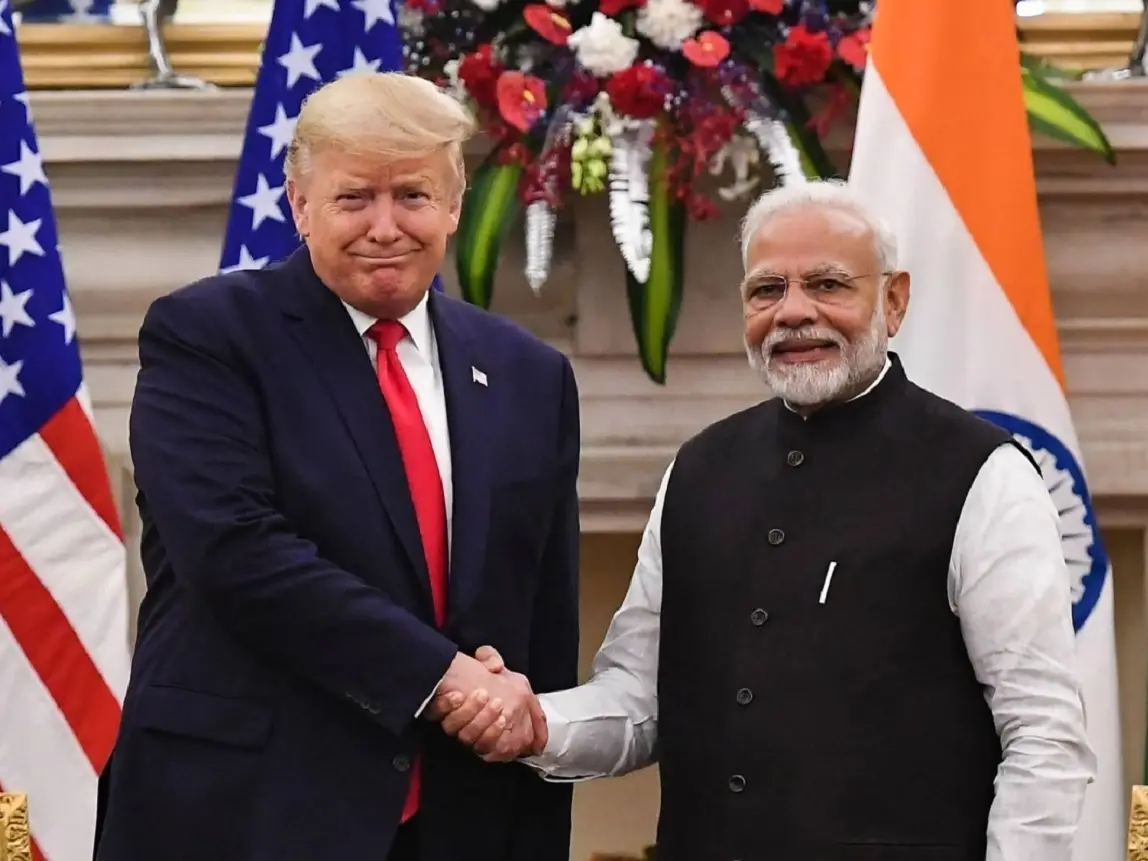
After months of tariff disputes and diplomatic tensions, India and the United States have announced significant progress towards a trade agreement. But the real question is not simply whether the two countries can reach a deal. It is whether the terms will deliver meaningful benefits without compromising their respective economic priorities.
India and the United States appear closer to concluding the first phase of a long-awaited bilateral trade agreement.
On Thursday, India's Trade Secretary Rajesh Agrawal announced that the initial phase had been finalised at the negotiating level and was undergoing legal drafting.
Commerce Minister Piyush Goyal also expressed optimism, while stressing the importance of securing a competitive advantage for India before the arrangement becomes operational.
The announcement represents a significant change in tone.
Only ten days earlier, Finance Minister Nirmala Sitharaman had described negotiations as having reached a plateau, with limited room for further concessions.
Trending Stories
&im=FitAndFill=(700,400)&imwidth=180&imheight=135&format=webp&quality=medium)
Navratri 2026: 9 days, 9 forms of Goddess Durga and 9 colours- Check the complete list
&imwidth=180&imheight=135&format=webp&quality=medium)
Is America trying to ‘destabilise’ India or change its regime? How influence operations became a recurring theme in political rhetoric
&imwidth=180&imheight=135&format=webp&quality=medium)
Researchers believe AI could cure cancer patients around the world
&imwidth=180&imheight=135&format=webp&quality=medium)
US considering use of ‘mother of all bombs’ in its war with Iran: Report
&imwidth=180&imheight=135&format=webp&quality=medium)
Russian woman and Bihar boy's love story goes viral after she reaches India to marry him
&imwidth=180&imheight=135&format=webp&quality=medium)
Arijit Singh 9-city India stadium tour to start from January: Check venue and ticket prices
&imwidth=180&imheight=135&format=webp&quality=medium)
Leave India notice to Imran Khan explained: What are OCI rules and why can't foreigners protest in India?
&imwidth=180&imheight=135&format=webp&quality=medium)
'Don't ever mess with nature!': Trump’s tiger attack post triggers social media backlash as victim's family issues heartbreaking tribute
&imwidth=180&imheight=135&format=webp&quality=medium)
Ankita Bhandari’s parents detained after overnight India Gate protest; released later: Why are they protesting
&imwidth=180&imheight=135&format=webp&quality=medium)
US judge blocks Trump administration sanctions on human rights groups supporting Gaza war crimes investigation
&imwidth=180&imheight=135&format=webp&quality=medium)
Washington calls for 'de-escalation' as Ethiopia-Eritrea tensions fuel war fears
&imwidth=180&imheight=135&format=webp&quality=medium)
US midterms: Trump rallies behind Husted as Brown mounts challenge in crucial Ohio race
&imwidth=180&imheight=135&format=webp&quality=medium)
US police foil alleged mass shooting plot targeting Illinois Hindu temple during Navratri; 19-year-old’s manifesto called Indians ‘subhumans’
&imwidth=180&imheight=135&format=webp&quality=medium)
Group of men cheered and asked 'when’s it my turn?' as woman was assaulted inside bathroom at University of Chicago frat party
&imwidth=180&imheight=135&format=webp&quality=medium)
‘Rise up, young patriots!’: American singer Mary Millben says US donors funding CJP, backs Modi govt
&imwidth=180&imheight=135&format=webp&quality=medium)
Nobel Peace Prize winner Navi Pillay calls on US to 'get back to' being defender of human rights
&imwidth=180&imheight=135&format=webp&quality=medium)
Who is Abu Dhabi royal Mahrah Al Nahyan, found unconscious on London street with toddler after cocaine use
&imwidth=180&imheight=135&format=webp&quality=medium)
Iranian woman, 23, handed death sentence for ‘blasphemy’ in social media post; appeals for help
&imwidth=180&imheight=135&format=webp&quality=medium)
'Turn approver, resign, we'll forgive you': Rahul Gandhi claims receiving messages from CEC Gyanesh Kumar
&imwidth=180&imheight=135&format=webp&quality=medium)
'Leakers should be shot': Trump rages over leak of US military plans to attack Iran, slams media
&imwidth=180&imheight=135&format=webp&quality=medium)
Bangladesh man killed after mob storms hospital, drags him away over blasphemy allegations
&imwidth=180&imheight=135&format=webp&quality=medium)
‘My president, I mean my husband’: Trump's new press secretary Katie Zacharia's first briefing goes off the rails in 14 minutes
&imwidth=180&imheight=135&format=webp&quality=medium)
Mars is not for man: Human heart is too weak to survive the trip, study shows
&imwidth=180&imheight=135&format=webp&quality=medium)
Girl 'dead' for 8 hours wakes up at her own funeral, dad insists she wasn't breathing
&imwidth=180&imheight=135&format=webp&quality=medium)
India-Afghanistan relations: Growing India-Kabul ties to rattle Islamabad?
&im=FitAndFill=(700,400)&imwidth=180&imheight=135&format=webp&quality=medium)
New OTT releases this week (October 12-18, 2026): Sacrifice, Koffee with Karan S9, Roadies Rebirth- 6 titles coming on Netflix, JioHotstar and more
&imwidth=180&imheight=135&format=webp&quality=medium)
Actor Imran Khan asked to leave India by the Mumbai Police days after participating in CJP-led protest
&imwidth=180&imheight=135&format=webp&quality=medium)
Did the US withhold missile warnings? Ukraine questions Washington's 'bad weather' explanation after Russian strikes kill six, cut power to 600,000
&imwidth=180&imheight=135&format=webp&quality=medium)
'Troubling pattern of threats': Hindu groups issue advisory after man arrested for alleged plot to target Illinois temple
&imwidth=180&imheight=135&format=webp&quality=medium)
Hidden video recording device found on Australian Navy ship amid claims of secret filming
&imwidth=180&imheight=135&format=webp&quality=medium)
'White supremacist' terror plot against Illinois Hindu temple foiled by jammed gun: Who is Alexandros Paporakis?
&imwidth=180&imheight=135&format=webp&quality=medium)
Zelensky feels betrayed by Trump, urges Musk to restore Starlink in Ukraine; Musk responds
&imwidth=180&imheight=135&format=webp&quality=medium)
'Girls are uncomfortable': Salman Khan calls out paparazzi for bad angles, speaks on PR on Koffee With Karan
&imwidth=180&imheight=135&format=webp&quality=medium)
After flydubai co-pilot attack, Air France bans Pakistani, Muslim-majority crew on Israel flights
&imwidth=180&imheight=135&format=webp&quality=medium)
Indonesia Wildfires: Thousands deployed to fight massive wildfire
&imwidth=180&imheight=135&format=webp&quality=medium)
US midterms 2026: Trump under election watch? Democrats deploy 100 observers across nine states
Now, the two governments are signalling progress.
But what changed? And what will each side ultimately receive?
The tariff battle
At the centre of negotiations is a familiar disagreement over market access.
Washington wants greater opportunities for American businesses and exporters in India.
New Delhi wants more favourable and predictable access to the US market, which remains a critical destination for Indian exports.
American tariffs have complicated that relationship, creating uncertainty for Indian manufacturers and exporters competing internationally.
For businesses, tariff stability matters almost as much as tariff reductions.
Companies need predictable costs before making decisions about production, hiring and investment.
A trade agreement that improves market access could strengthen commercial ties and encourage greater bilateral investment.
But those benefits depend on the precise commitments made by both governments.
The Russian oil contradiction
Energy security remains one of the most sensitive issues in India-US relations.
Washington has repeatedly raised objections to India's purchases of Russian crude, arguing that energy revenues help sustain Moscow's war in Ukraine.
India maintains that its energy decisions must reflect national requirements, affordability and supply security.
The disagreement has become more complicated following Washington's own move towards purchasing Russian diesel.
Critics have questioned the consistency of threatening penalties against Russian energy buyers while pursuing a separate arrangement involving Russian fuel.
However, the commercial and legal circumstances of those transactions may differ.
The relevant question is whether Washington's energy policy will translate into additional trade demands on New Delhi.
So far, the final agreement's provisions have not been publicly disclosed.
That uncertainty makes it premature to conclude that India has either conceded or prevailed on the Russian oil issue.
Strategic autonomy meets economic reality
For India, the negotiations extend beyond tariffs.
New Delhi has long sought to maintain relationships with competing global powers without becoming dependent on any single partner.
The United States is important for technology, defence cooperation, investment and access to global markets.
Russia remains relevant to India's energy and defence interests.
China, meanwhile, continues to shape the wider strategic environment in which India operates.
Balancing those relationships is not always straightforward.
A trade agreement with Washington could strengthen India's economic position.
But policymakers must also consider whether its terms preserve flexibility in other areas of foreign policy.
For the Trump administration, the negotiations offer an opportunity to demonstrate that its tariff strategy can produce commercial concessions and stronger economic partnerships.
For the Modi government, the objective is to secure tangible benefits for Indian exporters and businesses while protecting sensitive domestic interests.
Neither outcome can be assessed properly without examining the final text.
Rubio's visit and the next diplomatic test
US Secretary of State Marco Rubio is scheduled to visit India as part of an October 17–22 trip that also includes Uzbekistan.
His discussions are expected to cover energy cooperation, commercial investment and the broader strategic partnership.
The timing adds diplomatic significance to the trade announcement.
But Rubio's visit should not be confused with the formal conclusion of the agreement.
Legal drafting, approval procedures and implementation arrangements remain important steps.
Businesses will be watching for clarity on tariffs, sector-specific commitments and the timetable for implementation.
The Verdict
India and the United States have strong reasons to deepen their economic partnership.
Both countries benefit from trade, investment, technology cooperation and more resilient supply chains.
Yet a successful agreement must be judged by more than diplomatic announcements or political celebrations.
Will Indian exporters gain meaningful access to the American market?
Will businesses receive the tariff stability they need?
Will the agreement strengthen economic cooperation without creating unnecessary constraints on India's policy choices?
And will American companies gain the opportunities Washington has been seeking?
Those questions matter more than which leader claims credit.
Because the measure of a successful trade agreement is not how quickly it is announced, but whether its terms produce lasting, measurable benefits.
The real price of the Trump–Modi deal will become clear when the fine print is made public.

