

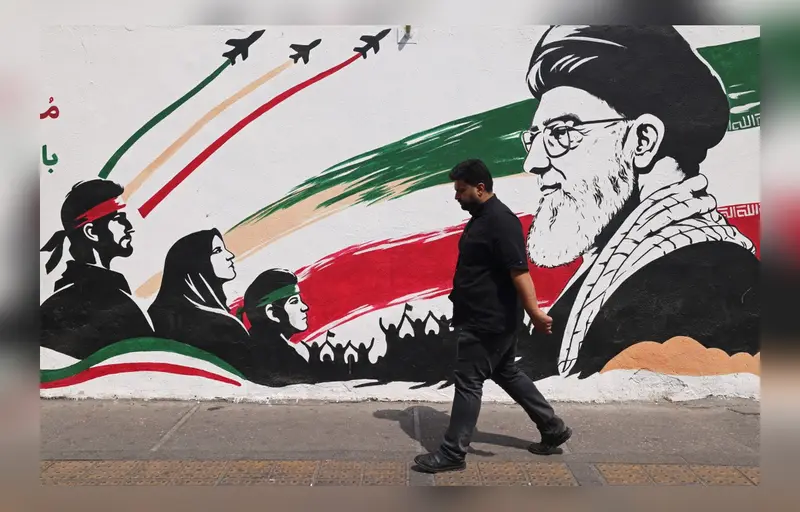
For decades, regime change in Iran was the ambition nobody in Washington or Jerusalem quite wanted to admit openly.
Not anymore.
Donald Trump is again asking when Iranians will “rise up and fight.” Israeli Prime Minister Benjamin Netanyahu has declared toppling Iran's government a “central mission” and says the objective is “within reach.” US Senator Ted Cruz has gone further, advocating that Iranian opponents of the government be armed to overthrow it themselves.
The message is unmistakable: the Islamic Republic is wounded. Now, its enemies want Iranians to finish the job.
But revolutions cannot simply be commissioned from abroad.
Iran has already suffered something approaching political and military decapitation. Ayatollah Ali Khamenei is gone. Senior commanders and political figures have been eliminated. The old hierarchy has been ripped apart.
Trending Stories
&imwidth=180&imheight=135&format=webp&quality=medium)
Brendan Taylor overtakes Andy Flower to become Zimbabwe’s leading ODI run-scorer
&imwidth=180&imheight=135&format=webp&quality=medium)
Researchers name newly discovered Andean plant after Argentina legend Lionel Messi
&imwidth=180&imheight=135&format=webp&quality=medium)
Lawrence Bishnoi gang claims responsibility for firing at Tiger Shroff over ties to Salman Khan
&imwidth=180&imheight=135&format=webp&quality=medium)
Flying car race: Alef Aeronautics welcomes Tesla Roadster '11 years' later, but are the two models the same?
&imwidth=180&imheight=135&format=webp&quality=medium)
KATSEYE performs at Victoria’s Secret show, teases Sophia Laforteza’s return
&imwidth=180&imheight=135&format=webp&quality=medium)
Shastri backs Shami comeback; lauds Bhuvi and warns Bumrah on format workload ahead of World Cup
&imwidth=180&imheight=135&format=webp&quality=medium)
Saudi Arabia asks skyscraper employees to work from home amid Houthi threats
&imwidth=180&imheight=135&format=webp&quality=medium)
Tiger Shroff shows injuries after Juhu firing incident; Eknath Shinde says Mumbai won’t tolerate gang wars
&imwidth=180&imheight=135&format=webp&quality=medium)
NFl 2026/27 - Saints vs Steelers to go ahead in Paris next week despite protest
&imwidth=180&imheight=135&format=webp&quality=medium)
4 killed, 19 critically injured in grass fire at Canada's largest military base
&imwidth=180&imheight=135&format=webp&quality=medium)
Nobel laureate Machado, who dedicated prize to Trump, confirmed as Venezuela opposition leader
&imwidth=180&imheight=135&format=webp&quality=medium)
After Kennedy Center and reflecting pool disputes, Trump turns to Washington golf course plan amid legal battle
&imwidth=180&imheight=135&format=webp&quality=medium)
Why France looks the most fragile in the G7 amid protests and budget deadlock
&imwidth=180&imheight=135&format=webp&quality=medium)
China responds to Trump's Press Secretary Katie Zacharia after toilet remark: 'Visit China more often'
&imwidth=180&imheight=135&format=webp&quality=medium)
Cattle feed found in biscuits of Indian company, FSSAI sends legal notice
&imwidth=180&imheight=135&format=webp&quality=medium)
Anthropic’s public benefit plan: What its 5% share commitment means for AI’s future
&imwidth=180&imheight=135&format=webp&quality=medium)
Girl 'dead' for 8 hours wakes up at her own funeral, dad insists she wasn't breathing
&imwidth=180&imheight=135&format=webp&quality=medium)
MI5 is opening an AI threat centre, and OpenAI just told MPs the worst isn't over
&imwidth=180&imheight=135&format=webp&quality=medium)
Elon Musk features on Lucknow's 'anti-India' Ravan poster alongside Rahul Gandhi, Akhilesh
&im=FitAndFill=(700,400)&imwidth=180&imheight=135&format=webp&quality=medium)
New OTT releases this week (October 19-25, 2026): Gajab Raat to Chaar Yaar-8 titles to watch during Dussehra week on Netflix, Prime Video and more
&imwidth=180&imheight=135&format=webp&quality=medium)
Kylie Jenner makes Victoria’s Secret debut in $50 million diamond-encrusted design as Timothée Chalamet cheers
&imwidth=180&imheight=135&format=webp&quality=medium)
Putin wants joint meeting with Trump-Xi summit on Ukraine war, proposes talks alongside APEC: Report
&imwidth=180&imheight=135&format=webp&quality=medium)
No Ravindra Jadeja, Yashasvi Jaiswal in India’s 2027 ODI World Cup plans: Report
&imwidth=180&imheight=135&format=webp&quality=medium)
India moves to buy 10,000 more AI chips for a national compute pool open to startups
&imwidth=180&imheight=135&format=webp&quality=medium)
Tiger Shroff attacked by three gunmen in Mumbai, actor safe, two injured
&imwidth=180&imheight=135&format=webp&quality=medium)
Anirudh Ravichander-Kavya Maran wedding: Telangana CM reveals Chennai reception date
&im=FitAndFill=(700,400)&imwidth=180&imheight=135&format=webp&quality=medium)
Tesla Roadster engineering: The hidden hardware behind its flying demonstration
&imwidth=180&imheight=135&format=webp&quality=medium)
US to review Russia sanctions waiver within 60 days as Rubio cites India’s ‘substantial’ Russian energy imports
&imwidth=180&imheight=135&format=webp&quality=medium)
'Grassroots leagues help bridge the gap': India's ODI WC winner Suresh Raina lauds ISCL ahead of Season 2
&imwidth=180&imheight=135&format=webp&quality=medium)
'We feel like Mr India': Gujarat’s undercover SHE team guard garba nights at Navratri
&imwidth=180&imheight=135&format=webp&quality=medium)
Cattle-feed bran in biscuits, detergent in milk: FSSAI acts against 3 companies
&im=FitAndFill=(700,400)&imwidth=180&imheight=135&format=webp&quality=medium)
5 technologies that could make the Tesla Roadster one of the most unusual cars ever built
&imwidth=180&imheight=135&format=webp&quality=medium)
'It's a joy to see the makers bring it on such a grand scale': SS Rajamouli on Ramayana
&imwidth=180&imheight=135&format=webp&quality=medium)
Priest dies after crucifix falls on his head during livestreamed Mass in Ecuador | VIDEO
And yet, the Islamic Republic remains.
That may be the greatest problem confronting the regime-change strategy.
Destroying leaders is not the same as destroying institutions.
Iran's political system was constructed precisely to withstand enormous pressure. The Revolutionary Guards, clerical establishment, security apparatus and overlapping centres of authority mean that when one powerful figure disappears, another can occupy the space.
And the replacements are not necessarily moderates.
Iran has elevated veteran hardliner Mohsen Rezaei to a crucial national-security position. Meanwhile, President Masoud Pezeshkian may favour negotiations and de-escalation, but Iran's presidency has never possessed absolute authority over the country's military-security establishment.
That leaves Washington confronting an uncomfortable possibility: it can decapitate Iran's leadership without liberalising Iran.
There is no denying the fury inside the country.
Economic pressure is enormous. Oil exports have collapsed under the American blockade. Inflation and economic isolation are squeezing ordinary Iranians. Years of demonstrations have already exposed deep frustration with clerical rule.
But asking Iranians to revolt from Washington is very different from Iranians deciding independently to revolt.
Every call from an American president or Israeli prime minister risks handing Tehran another propaganda weapon: the argument that dissent is not an indigenous demand for freedom but a foreign-backed attempt to dismantle the Iranian state.
And there is another question Washington cannot escape.
What happens the morning after?
Ted Cruz says the objective should be regime collapse and has argued for giving opponents of Tehran the weapons to achieve it.
But collapse is not a political settlement.
Iraq should have permanently buried the assumption that removing a hated government automatically produces a stable successor. Saddam Hussein's government was destroyed rapidly. The political, sectarian and security consequences outlived the invasion itself.
Iran — with more than 90 million people, powerful security institutions, ethnic and regional fault lines and an enormous strategic footprint — would present an even more consequential challenge.
None of this absolves Tehran.
The Islamic Republic has brutally suppressed opposition. Iranians have repeatedly risked imprisonment and death demanding political and social change. Their grievances are real, and their right to determine their government belongs to them.
That is precisely why their future cannot simply become another strategic objective written in Washington or Jerusalem.
Trump can call for an uprising.
Netanyahu can declare regime change within reach.
Cruz can advocate putting weapons into Iranian hands.
But none of them can manufacture the legitimacy required to govern Iran the day after the Islamic Republic falls.
The Verdict
America and Israel may have succeeded in changing many of the men who rule Iran.
They have not yet changed the system that rules Iran.
And perhaps that is the lesson being forgotten amid all the talk of imminent victory.
You can bomb a command centre. You can eliminate a commander. You can even decapitate a government.
But a revolution belongs to the people who must live with what replaces it.
And if Washington and Jerusalem confuse regime destruction with nation-building, Iran could become another brutal reminder that in the Middle East, removing the old order is sometimes the beginning of the war — not the end of it.