Race to power: 7 dead, Satya Niketan collapse exposes student housing crisis

&imwidth=600&imheight=450&format=webp&quality=medium "Race to power: 7 dead, Satya Niketan collapse exposes student housing crisis")
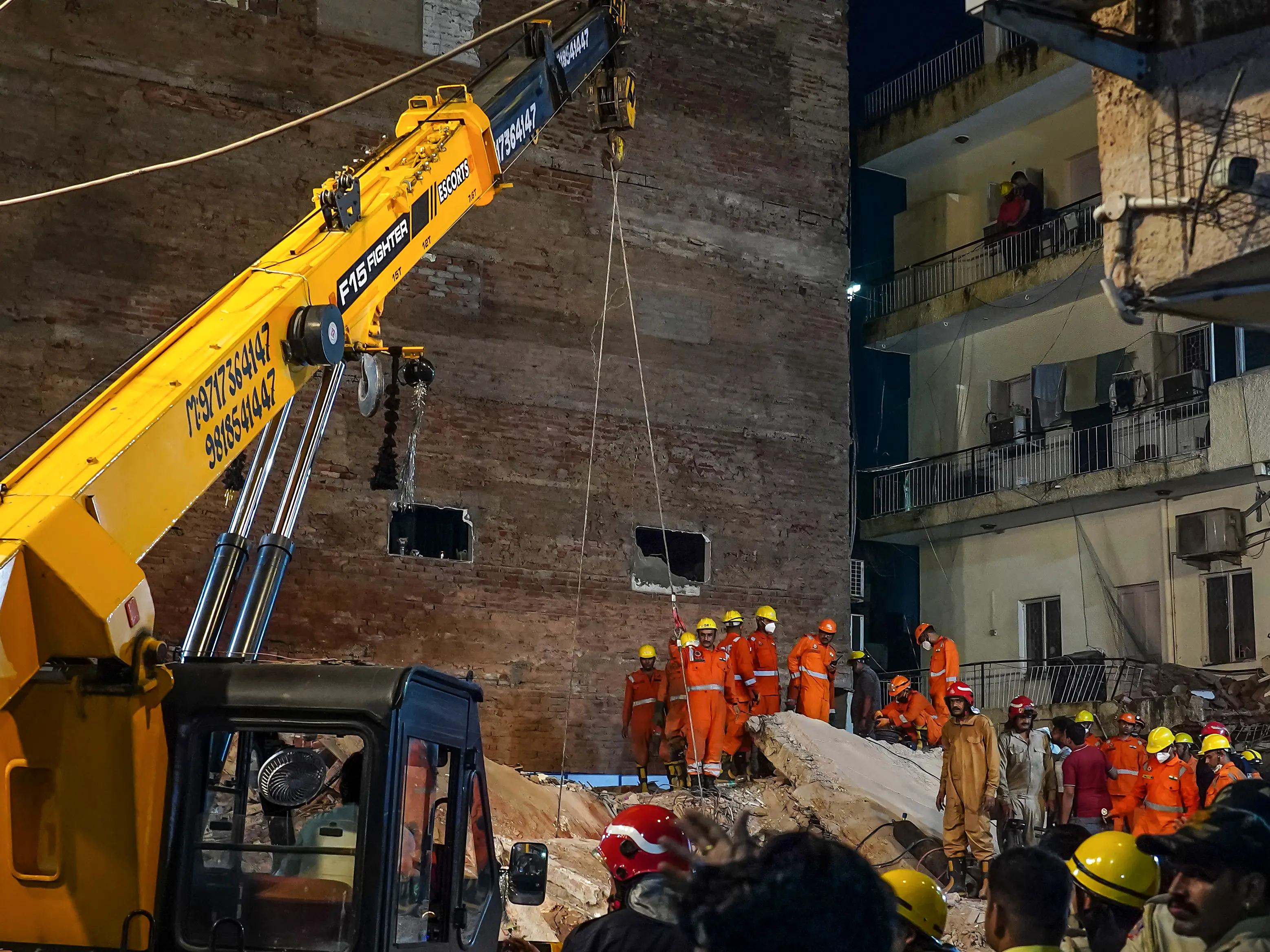
JCB machines carry out rescue operations at the site of a building collapse at Satya Niketan in South-West Delhi, in New Delhi on Sunday Photograph: (ANI)
The Satya Niketan building collapse that killed seven people has raised questions over unauthorised construction, safety enforcement and Delhi's student housing crisis.
Today, we are not going to begin with the usual race to power story.
We are going to talk about a far more grim reality — years of neglect, corruption, governance failure, and the blatant flouting of rules that have left innocent people paying with their lives in India’s national capital.
Because in Delhi, tragedy has become a familiar cycle.
A disaster strikes. A few officers are suspended or sacked. Compensation is announced. Promises are made. And then, silence. Until the next tragedy.
This time, it began like any other Sunday for students living in a PG hostel in Satya Niketan, a student hub next to South Delhi's most expensive neighbourhoods. An area surrounded by Delhi University colleges and home to thousands of young students.
And then, in a matter of seconds, their world came crashing down, literally.
Trending Stories
&imwidth=280&imheight=210&format=webp&quality=medium)
&imwidth=280&imheight=210&format=webp&quality=medium)
&im=FitAndFill=(700,400)&imwidth=280&imheight=210&format=webp&quality=medium)
&imwidth=280&imheight=210&format=webp&quality=medium)
&imwidth=280&imheight=210&format=webp&quality=medium)
&imwidth=280&imheight=210&format=webp&quality=medium)
&imwidth=280&imheight=210&format=webp&quality=medium)
&imwidth=280&imheight=210&format=webp&quality=medium)
&imwidth=280&imheight=210&format=webp&quality=medium)
&imwidth=280&imheight=210&format=webp&quality=medium)
&imwidth=280&imheight=210&format=webp&quality=medium)
&imwidth=280&imheight=210&format=webp&quality=medium)
&imwidth=280&imheight=210&format=webp&quality=medium)
&imwidth=280&imheight=210&format=webp&quality=medium)
&imwidth=280&imheight=210&format=webp&quality=medium)
&imwidth=280&imheight=210&format=webp&quality=medium)
&imwidth=280&imheight=210&format=webp&quality=medium)
&imwidth=280&imheight=210&format=webp&quality=medium)
&imwidth=280&imheight=210&format=webp&quality=medium)
&imwidth=280&imheight=210&format=webp&quality=medium)
&imwidth=280&imheight=210&format=webp&quality=medium)
&im=FitAndFill=(700,400)&imwidth=280&imheight=210&format=webp&quality=medium)
&imwidth=280&imheight=210&format=webp&quality=medium)
&imwidth=280&imheight=210&format=webp&quality=medium)
&imwidth=280&imheight=210&format=webp&quality=medium)
&imwidth=280&imheight=210&format=webp&quality=medium)
&imwidth=280&imheight=210&format=webp&quality=medium)
&imwidth=280&imheight=210&format=webp&quality=medium)
&imwidth=280&imheight=210&format=webp&quality=medium)
&imwidth=280&imheight=210&format=webp&quality=medium)
&imwidth=280&imheight=210&format=webp&quality=medium)
&imwidth=280&imheight=210&format=webp&quality=medium)
&imwidth=280&imheight=210&format=webp&quality=medium)
The building collapsed, turning the hostel into a death trap. At least seven people have lost their lives. Twelve have been rescued. And more than 24 hours later, there is still no clear answer to the most basic, most terrifying question: how many people are still buried under the debris?
This is not just a story about a building that collapsed. It is a story about a system that collapsed long before the building did.
Police nabbed the owner of the building, Hariram Bansal, from Bhiwadi in Rajasthan.
The Delhi civic body suspended five officials with immediate effect: Deputy Commissioner, South Zone, Rakesh Kumar; Superintending Engineer Ranvir Singh; Executive Engineer Lalit Kumar Goel; Assistant Engineer Sunil Chauhan; and Junior Engineer Ashish Kumar of the South Zone.
The Delhi High Court called for a high-level probe into the incident.
The court said hostel facilities for students who come from outside the city to study are in a pathetic condition. The judges issued strong remarks against the Delhi government and the civic body, directing one to increase the number of hostels and ordering the other to ensure that building by-laws are maintained, their condition is examined, and a report is submitted within a week.
Notices have been issued to Delhi University, the civic body, the National Human Rights Commission, the Delhi government, the Central government, and the Delhi Police.
After the High Court rap, the DU Vice Chancellor urged college principals to review student accommodation and explore plans to construct new hostels.
The incident has triggered questions over the safety of buildings used as PG accommodation and the enforcement of construction and fire safety norms in densely populated parts of the national capital.
According to the MCD's preliminary assessment, the property had no sanctioned building plan for the existing structure, unauthorised construction in its basement, and no fire NOC.
Yet the report also said there was no record of the property having been booked or sealed before the collapse.
However, locals living in the area claim that authorities had earlier issued a notice against the now-collapsed building. This has once again put the civic body’s building-safety enforcement under scrutiny.
In 2020, following directions from the Delhi High Court, the three erstwhile municipal corporations set a six-month deadline for structural safety certificates for specified categories of high-risk and older buildings, including structures built before seismic provisions were incorporated into Delhi’s building bye-laws.
Six years later, the compliance figures remain limited.
According to figures reported by Hindustan Times, the MCD identified 4,762 high-risk and old structures and issued notices to 4,571. Structural audit reports were received for only 1,155, with demolition being carried out in 56 cases and retrofitting in 47.
Delhi has seen deadly building collapses for years.
They happen when multiple failures converge: poor construction practices, illegal land use, inadequate safety systems, weak enforcement, administrative negligence, and a lack of public awareness.
Preventing future tragedies requires more than arrests.
It demands a culture of compliance, regular audits, strict accountability, and active participation from building owners, authorities, and occupants alike.
Because if systemic failures remain unaddressed, the cycle will continue.
There will be outrage after every tragedy. A few arrests. Promises of action. And then silence, until another building turns into a death trap.