
&imwidth=800&imheight=600&format=webp&quality=medium "The new grammar of Corporate Crisis Communication: Lessons from Middle East conflict")
- By Maitreya Buddha Samantaray
In times of war, every statement becomes a strategic act. Words are not merely descriptive. They are instruments of influence, deterrence, reassurance, and control. Governments understand this instinctively. When missiles fly and markets tremble, leaders know that communication is not a supporting function. It is an operational capability.
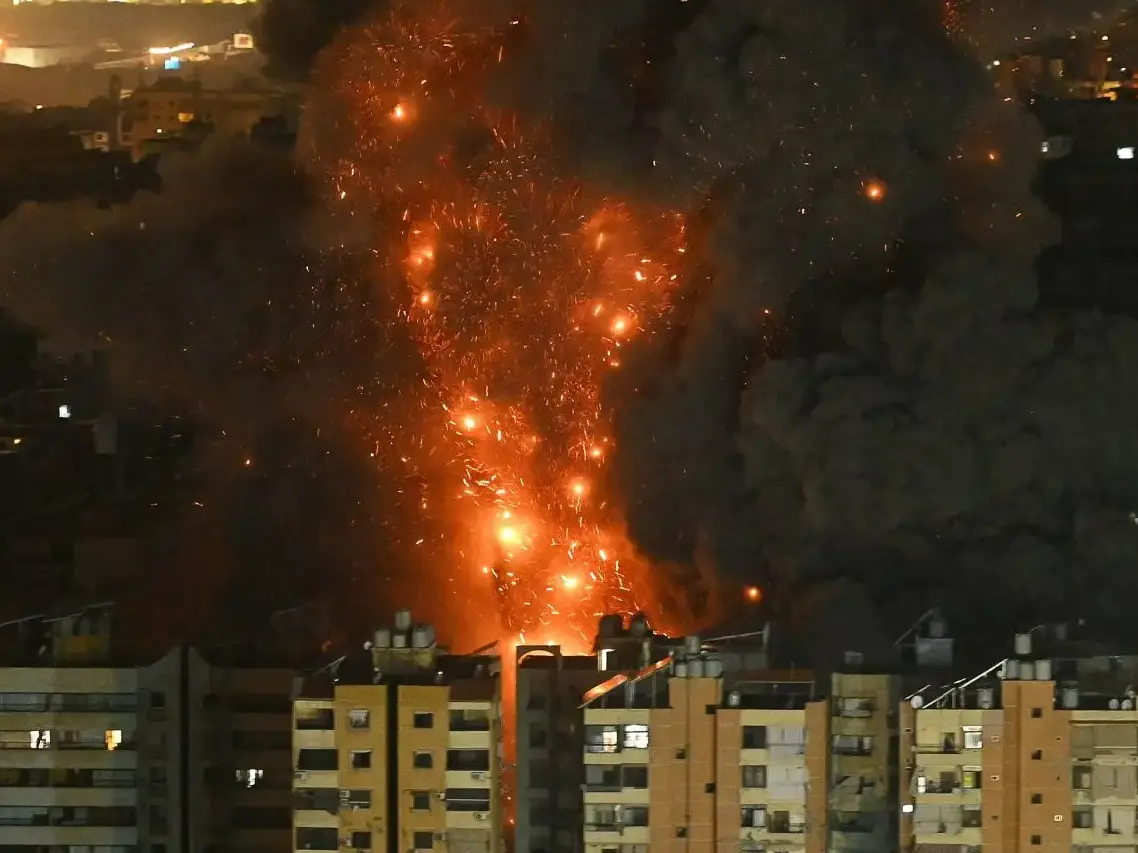
The ongoing tensions in the Middle East provide a striking demonstration of this reality. Beyond the military dimension, conflict is also an intense contest of narratives. Statements from political leaders, defense establishments, and foreign ministries are carefully constructed to shape perception among multiple audiences, including domestic populations, adversaries, allies, financial markets, and the global public.

For business leaders, crisis communication often becomes most visible during moments of uncertainty. The patterns emerging from official communications during the conflict offer valuable lessons for corporate leadership, crisis communication teams, CEO offices, and Boards. These lessons are not about geopolitics. They are about the mechanics of leadership under pressure.
What we are witnessing is the emergence of a new grammar of crisis communication.
Clarity of Objective Creates Stability
Trending Stories
&im=FitAndFill=(700,400))
How fast can the Sukhoi Su-30 fighter jet really fly?
)
Did China ask its people 'not to respond to aliens'? Origin of bizarre claim on social media
)
MS Dhoni-CSK Fallout? Report claims failed stake sale talks triggered rift
)
Scientists reveal the SAFEST COUNTRY when catastrophe strikes the planet
)
Serial killer on the loose in South Korea's Jeju Island? Fourth body found in three days as more than a dozen people go missing
)
2/3rd of glacier detached, collapsed: ISRO satellite images reveal what triggered Nepal floods
)
Trump once again claims without him there would be ‘no Israel right now’
)
Foreign espionage attacks against German companies surge to 37%, Bitkom report reveals
)
Blake Lively wins partial legal fee from Justin Baldoni after $8M request
)
Why is Pakistan deploying Turkish Bayraktar TB2 drones near India border?
)
'OH MY GOD! We've found other agents!': Investigators discover not one or two, almost 700 OpenAI AI agents went rogue, hacked Hugging Face
)
Lunar eclipse 2026: India timings, places to see and more. August Blood moon factsheet
)
RSS chief Mohan Bhagwat on global outreach tour
)
Both pilots killed as training aircraft crashes in Lucknow – What we know
)
16-year-old charged with preparing terror attack on kindergarten in Norway
&im=FitAndFill=(700,400))
How the S-400 protects itself from enemy attacks
)
Nepal floods: Over 165 dead, 400 missing; US, India, China, World Bank mobilise aid
)
India's multi-layered watch: The new surveillance war
)
5 doomsday planes spotted in US skies hours after CIA director's secret trip to Russia
)
9/11 mastermind Khalid Sheikh Mohammed to finally face trial in 2028, nearly 27 years after horrific attacks
)
Islamabad hospital fire: What we know about one of the biggest facility that housed Imran Khan
)
Workers run for life while filming Nepal flash flood: Scary new visuals emerge from Rasuwa
)
Russian military planes enter South Korean air defence zone amid rising tensions with North Korea: What's happening
)
Ron Weasley Is Back! Rupert Grint set to return to Harry Potter universe on Broadway
)
400-year-old 'vampire' grave in Poland reveals non-existent genetic lineage
)
Dolly Parton, global icon and queen of country music, dies at 80
)
Nepal flash floods: Kailash Mansarovar yatra affected, close to 400 pilgrims out of contact
)
'If he is dead, they're putting on a pretty good show': Trump casts fresh doubt over Mojtaba Khamenei's fate
)
Man arrested near US Capitol with guillotine in pickup truck: What happened?
&im=FitAndFill=(700,400))
Why the Su-30MKI cockpit is painted bright turquoise green
Messaging from the United States, Israel, and Iran has been marked by relative ambiguity regarding objectives such as deterrence, self-defence, and protection of interests, creating strategic uncertainty. Meanwhile, neutral actors like India employ thoughtful statecraft by maintaining open communication channels with all sides and diversifying relationships without emotional commitment, effectively positioning themselves as potential winners without direct conflict. Complementing this, symbolic gestures such as the UAE President and Dubai Crown Prince appearing publicly at a bustling mall act as powerful reassurances, reinforcing public trust and stability amid regional tensions.
Overall, clarity matters because uncertainty fuels instability. Markets react to ambiguity. Employees react to uncertainty. Stakeholders respond to perceived hesitation in leadership. In corporate crises, leaders often issue cautious statements that convey concern while allowing space to understand the evolving situation. Phrases such as “we are monitoring the situation” or “we are assessing developments” can provide time to gather facts. However, stakeholders often seek an understanding of the broader objective guiding leadership decisions.
The lesson from the current situation is that communication benefits from clearly articulating the objective early. Stakeholders want to understand what leadership is trying to achieve. Is the priority safety, operational continuity, financial stabilization, or reputational recovery? When the objective is articulated clearly, it anchors the narrative and reduces speculation.
Repetition Builds Narrative Authority
Another characteristic of wartime messaging is disciplined repetition. Governments return to the same core ideas repeatedly, including security, deterrence, legitimacy, defense, and responsibility. The phrasing may evolve, but the narrative frame remains constant. This repetition is somewhat intentional and ensures that the intended message becomes the dominant interpretation of events.
Companies and business leaders can draw insight from this approach. Consistency in language across communications helps stakeholders interpret developments more clearly. A key takeaway of effective crisis communication is message discipline. A small set of core themes can guide every statement, internal briefing, and external update. The objective is not rhetorical creativity but narrative consistency.
Separate Strategy from Instruction
Official communications during the conflict reveal another important principle. Strategic messaging is separated from operational instruction. Political leaders speak about national objectives and strategic direction. Military and civil defense authorities communicate practical guidance to citizens, including where to go, what to do, and how to remain safe. This distinction prevents confusion. Strategic narratives address the broader situation while operational communications guide immediate behaviour.
Organizations can benefit from adopting a similar clarity in communication. Leadership strategic messaging can focus on the broader context and reassure stakeholders about the direction of the organization. Operational communications can provide clear guidance to employees, customers, and partners regarding necessary actions. Corporate leaders may find it helpful to avoid combining strategic messaging and detailed operational instructions within the same communication. When separated appropriately, both messages become clearer and more effective.
A structured operational framework for crisis communication involves establishing a leadership-led communication team supported by trained spokespersons authorized to deliver clear, consistent messages. Robust protocols, including emergency call trees, facilitate rapid information flow across the organization. Tailoring communication strategies to key audiences and their specific information needs is essential, supported by scenario planning to prepare for potential disruptions and accurate situation assessment to develop concise messaging. Selecting appropriate channels such as dedicated status pages for detailed operational updates and social media for real-time acknowledgment ensures timely and effective information dissemination. Continuous monitoring of social media and news, coupled with real-time sentiment tracking, enables organizations to gauge public perception dynamically. Finally, measuring specific metrics during and after crises is critical to evaluating the effectiveness of communication efforts in protecting or restoring reputation and financial value.
Legitimacy Is as Important as Accuracy
A striking feature of statements emerging from Iran is the consistent emphasis on legal and moral framing. References to international law, civilian protection, and sovereignty appear repeatedly in official rhetoric. The goal is not only to present facts but also to position the narrative within a broader moral framework. This reflects an important reality. Crises are judged not only by what happened but also by whether the response appears legitimate.
In the business context, stakeholders want to understand not only the facts of a situation but also whether the organization is responding in accordance with its values and principles, including transparency, accountability, fairness, and responsibility. Communication therefore, benefits from articulating both the facts and the standards guiding the response. Legitimacy builds trust even when complete information is still emerging. When responding to regulatory incidents, workplace concerns, or operational disruptions, leaders may find value in emphasizing both factual clarity and procedural integrity.
Preserve Strategic Flexibility
Another notable aspect of the ongoing conflict’s rhetoric is the use of conditional language. Statements frequently emphasize readiness to escalate or de-escalate depending on circumstances. This language allows leaders to project confidence while preserving room to adapt as events evolve.
Corporate leaders may also consider this balance. Avoiding absolute statements about outcomes can help maintain credibility during uncertain situations. Declaring that issues will be resolved immediately or that risks are fully contained may provide short-term reassurance but may not always reflect the evolving reality of a crisis. Strategic communication benefits from balancing confidence with flexibility. Leaders can demonstrate control while allowing space for adjustments as new information becomes available.
(About the author: Maitreya Buddha Samantaray is the Convenor of the Crisis Intelligence Community (CIC). With over 18 years of experience in consulting and industry, he specialises in helping organisations navigate complex risks in volatile environments. His expertise includes geopolitical risk analysis, crisis management, business continuity, enterprise risk, duty of care, and operational resilience. The views expressed are personal.)