

&imwidth=800&imheight=600&format=webp&quality=medium "Reversing course, Trump pushes for regime change in Venezuela")
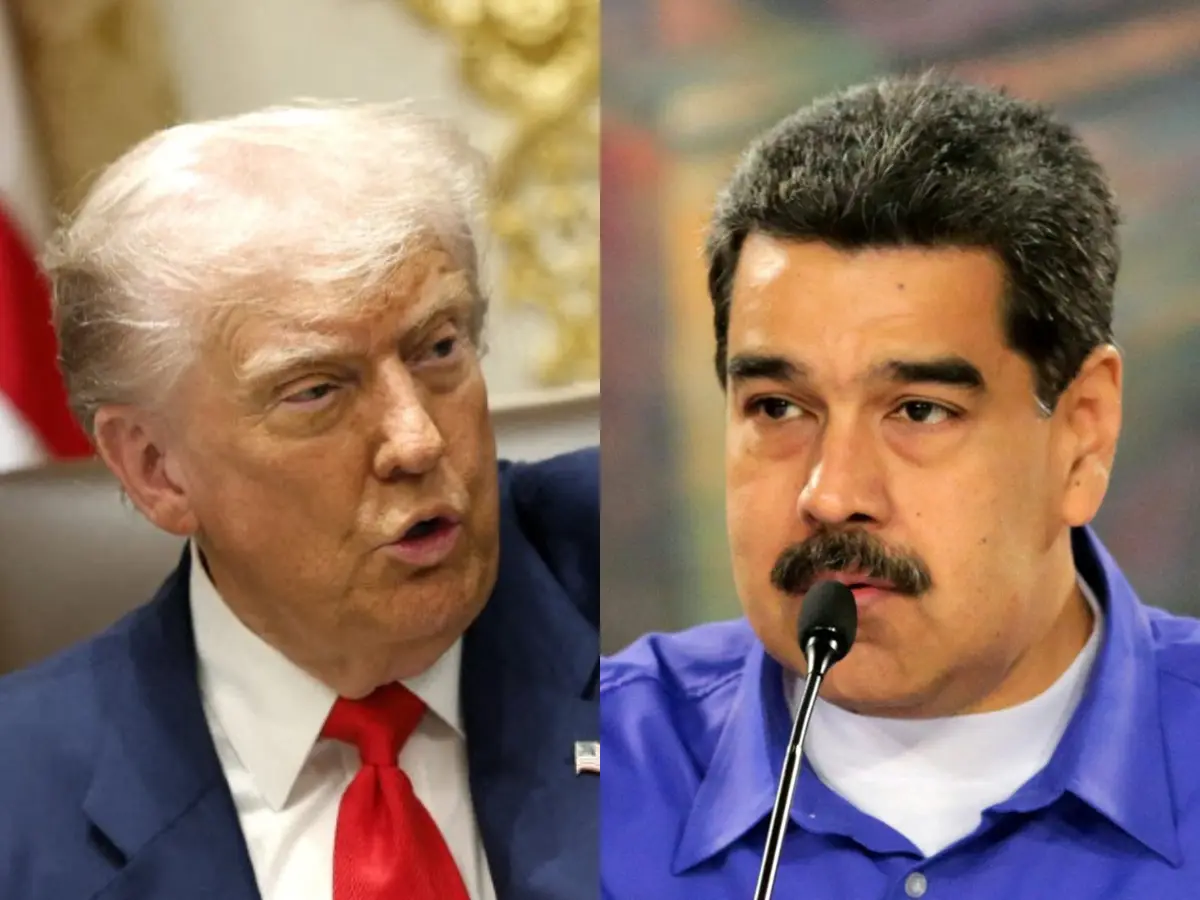
Over the past three months, the United States has assembled the biggest naval force in six decades in the Caribbean, a move that prompted a pithy analysis from Venezuela’s dictatorial president, Nicolás Maduro: “regime change through military threat.”
The threat is awe-inspiring. In the blue waters off Venezuela, you have America’s biggest aircraft carrier, the Gerald R. Ford, along with six guided missile destroyers and cruisers, two amphibious readiness vessels carrying 2,200 Marines, at least one nuclear submarine, and a ship used for special operations forces.
Reminiscent of the 19th-century gunboat diplomacy, the big naval powers of the time used to bend smaller countries to their will, the Caribbean operation is the biggest since the 1962 Cuban missile crisis. It involves around 15,000 sailors and marines.
The first strike in what a cynic might describe as a phoney war against a non-existent drug cartel led by Maduro came on September 2, when a missile fired from a US Reaper drone blew to bits a speedboat in international waters off Venezuela. US officials said the strike was necessary to prevent the boat from carrying drugs to the US.
Since everybody on board died and the cargo sank to the bottom of the sea, what or who was on board remains a mystery. With one exception, that is true for 11 strikes on boats allegedly loaded with drugs in the Caribbean and another 11 in the Eastern Pacific.
The one exception was an American strike on a semi-submersible on October 16. Two of the crew were killed, and two survived. One was an Ecuadorian national, the other Colombian. They were rescued by helicopter, taken to a Navy ship, swiftly repatriated to their home countries, and released there without charges.
Trending Stories
&imwidth=180&imheight=135&format=webp&quality=medium)
ENG vs SL: Harry Brook breaks Shubman Gill’s record for fastest ODI double century
&imwidth=180&imheight=135&format=webp&quality=medium)
450 villagers in UP rush to take anti-rabies shots after consuming 'charnamrit'
&imwidth=180&imheight=135&format=webp&quality=medium)
'This is humiliation': Vijay Deverakonda under fire over controversial marriage proposal remark on Koffee With Karan 9
&imwidth=180&imheight=135&format=webp&quality=medium)
India-China face-off continues near Arunachal’s Taksing, reveals ITBP chief in first official confirmation of tensions
&imwidth=180&imheight=135&format=webp&quality=medium)
India’s 2022 CWG silver medallist Sabbhineni Meghana announces international retirement
&imwidth=180&imheight=135&format=webp&quality=medium)
Ilhan Omar breaks silence over alleged marriage to her brother; Trump thinks it's 'really good answer'
&imwidth=180&imheight=135&format=webp&quality=medium)
IND-W vs ZIM-W, 1st ODI: Rawal, Charani star in India’s nine-wicket win over Zimbabwe
&imwidth=180&imheight=135&format=webp&quality=medium)
Two BrahMos missiles on Tejas, triple the range and 100% indigenisation, says former BrahMos CEO
&imwidth=180&imheight=135&format=webp&quality=medium)
Finance influencer dies by suicide in Chennai; father accuses tech CEO, who denies charge
&imwidth=180&imheight=135&format=webp&quality=medium)
'Vivek should keep it up': Trump defends Ramaswamy's controversial campaign ad targeting Amy Acton
&imwidth=180&imheight=135&format=webp&quality=medium)
Watch: India rejects ‘imprecise and unsupported’ references in UN migrant rights report
&imwidth=180&imheight=135&format=webp&quality=medium)
China's dancing robot turns violent bodyguard, lifts cars and fights intruders - Watch
&imwidth=180&imheight=135&format=webp&quality=medium)
Did Neha Bora call for Bangladesh-like GenZ protest, 'anarchy' in India? WION Fact-checks viral claim
&imwidth=180&imheight=135&format=webp&quality=medium)
WATCH: Trump demands Ilhan Omar removal from Congress for 'using fake name to be sworn in'. So what is her real name?
&imwidth=180&imheight=135&format=webp&quality=medium)
First Lady Melania Trump secures ceasefire between Russia, Ukraine in Oleshky: White House
&imwidth=180&imheight=135&format=webp&quality=medium)
Trump ordered to answer questions under oath in BBC defamation lawsuit by December 11
&imwidth=180&imheight=135&format=webp&quality=medium)
GRAVITAS | Putin fires nuclear-capable hypersonic missiles, Zelensky ready to surrender 25% territory
&imwidth=180&imheight=135&format=webp&quality=medium)
'It's a crime not to see this scene': Tehran puts Trump 'behind bars'
&imwidth=180&imheight=135&format=webp&quality=medium)
US midterms 2026: Elon Musk’s political spending hits $445 million as Republicans battle to retain Senate control
&imwidth=180&imheight=135&format=webp&quality=medium)
US to get 850 F-35 stealth fighter jets under 10-year Pentagon-Lockheed deal
&imwidth=180&imheight=135&format=webp&quality=medium)
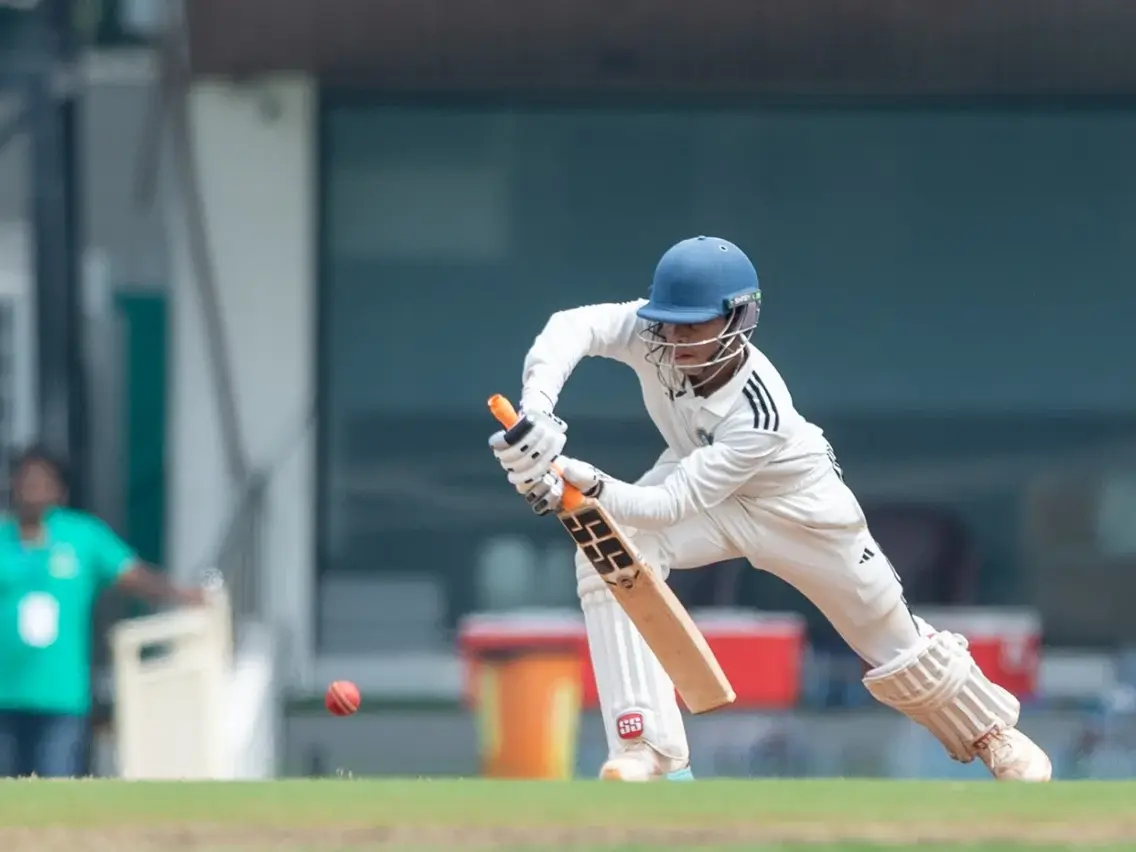
Shikhar Mohan earns maiden India A call-up, replaces KL Rahul
&imwidth=180&imheight=135&format=webp&quality=medium)
US midterms 2026: US Supreme Court allows New Hampshire to restrict student IDs for voting
&imwidth=180&imheight=135&format=webp&quality=medium)
Meghan Markle’s father Thomas under investigation over alleged child abuse images: Report
&imwidth=180&imheight=135&format=webp&quality=medium)
Christa Pike's failed execution: Tennessee team struggled to insert IV lines, lawyer says
&imwidth=180&imheight=135&format=webp&quality=medium)
SA vs AUS 2nd Test: Temba Bavuma reveals 'Tendulkar inspiration' behind career-best 179
&imwidth=180&imheight=135&format=webp&quality=medium)
Putin says Russia is ready to resume Ukraine-US peace talks but rejects 'short ceasefire' amid deadly attacks
&imwidth=180&imheight=135&format=webp&quality=medium)
Netanyahu dials PM Modi, invites him and Capt Smit Machchhar to light torch on Israel’s Independence Day
&imwidth=180&imheight=135&format=webp&quality=medium)
BCCI’s CoE cautious over Hardik Pandya’s fitness, sets expected comeback timeline
&im=FitAndFill=(700,400)&imwidth=180&imheight=135&format=webp&quality=medium)
New Friday OTT releases (October 23, 2026): Gajab Raat, Dorothy, Chaar Yaar- Watch these 6 new movies and TV shows on Netflix, Prime Video and more
&imwidth=180&imheight=135&format=webp&quality=medium)
Horrific video shows the moment 18-year-old fell to her death from Mexico amusement park ride
&imwidth=180&imheight=135&format=webp&quality=medium)
AI slop or smart strategy? South African author Coral Hart defends Her 370 AI- assisted books in 20 months
&im=FitAndFill=(700,400)&imwidth=180&imheight=135&format=webp&quality=medium)
Serbia elections: Nearly 150,000 people take to streets in massive rally against Aleksandar Vucic | In pics
&imwidth=180&imheight=135&format=webp&quality=medium)
Pakistan airline PIA unveils new crew uniforms, faces online criticism
&imwidth=180&imheight=135&format=webp&quality=medium)
One man, 8 months of work, and a river dirty again: Why Bittu Tabahi may quit
&imwidth=180&imheight=135&format=webp&quality=medium)
A secret code, a midnight escape and 300 deaths: The Russian officer who turned on Putin
Blowing up suspected drug-carrying boats is in sharp contrast to decades of previous practice. That provided for suspect vessels to be intercepted by US Coast Guard vessels and boarded by Coast Guard officers, who would arrest the crew and take them to the US to be charged and tried.
The campaign to intimidate the Venezuelan dictatorship gathered pace in February when the US government designated eight international drug cartels as Foreign Terrorist Organisations (FTOs). Five were groups based in Mexico, one in Colombia, one in El Salvador and one in Venezuela (Tren de Aaragua).
On November 24, the government added an additional FTO it identified as the Cartel de los Soles and designated Maduro as its leader. Asked in a television interview whether he thought Maduro’s days were numbered, Trump replied: “I would say yeah. I think so, yeah.”
Drug experts promptly pointed out that there is no Cartel de los Soles in the sense of a structured organisation. Venezuelans use the phrase to describe corrupt army officers and government officials who enrich themselves by taking bribes from drug traffickers. The label refers to the sun insignia on military uniforms.
The administration’s new tactic of killing suspected drug traffickers without legal proceedings is deeply unpopular with the American public. A recent Reuters poll found that only 29 per cent supported the concept. The strikes on suspected drug boats have also been greeted with unease by the country’s military.
As the campaign gathered momentum in October, the top official overseeing the strikes abruptly announced that he would retire at the end of the year. Admiral Alvin Holsey, the four-star head of the US Southern Command, gave no reason for stepping down less than a year after he took command. But you don’t need to be a clairvoyant to figure out why he did.
A month later, a brief video put together by six Democratic members of Congress, including Arizona Senator Mark Kelly, a retired Navy captain and former astronaut, stressed that military personnel not only had the right but an obligation to refuse following illegal orders.
Again, they gave no specific incidents that prompted them to produce the highly unusual message – which is also part of the syllabus of military academies. Trump accused the six – all with background in the military and the CIA – of “seditious behaviour, punishable by death.”
That over-the-top reaction coincided with a flood of opinions from legal experts of both political parties that the boat strikes amounted to “extrajudicial killings,” the legal term for murder.
Vice President JD Vance waded into the debate with a posting on X saying that “killing cartel members who poison our fellow citizens is the highest and best use of our military.” Brian Krassenstein, an anti-Trump influencer and podcaster, responded that “killing the citizens of another nation who are civilians without any due process is called a war crime.” Vance’s response: “I don’t give a shit what you call it.”
His remarks reflect the disdain of Trump and many of his close associates for laws, domestic and international, that run counter to their agenda and their view that might is right.
As for Trump’s musing that Maduro’s days are numbered, they bring to mind a string of public calls by then-President Barack Obama or Syria’s dictator, Bashar al-Assad, to step aside, and the view expressed by the State Department’s top official on Syria that al-Assad was a dead man walking.
Assad stayed in power for another 13 years, from the “dead man walking” prediction until an anti-government rebellion forced him to flee into exile in Russia last December.
What would happen if Maduro were ousted is subject to considerable debate within America’s national security establishment. Judging from a war game conducted during Trump’s first term, one outcome would be chaos and violence as rival political factions, military units and drug gang members jostled for control.
“The thing that really worries us is that they (the US government) don’t appear to have any serious plan for what happens afterwards,” Paul Gunson, a senior analyst at the International Crisis Group, said in a new report. It added that a new government installed in Caracas with US backing might face “a potentially protracted low-intensity conflict.”
Maria Corina Machado, Venezuela’s charismatic opposition leader and winner of this year’s Nobel Peace Prize, has said she has plans for a smooth transition and can assert full control of the country after Maduro.
Transitions from dictatorships to peaceful rule are easier said than done. Just ask Iraqis, Libyans, and Iranians.
