WION Edit: Attacking the media, a tool for diplomatic retaliation?

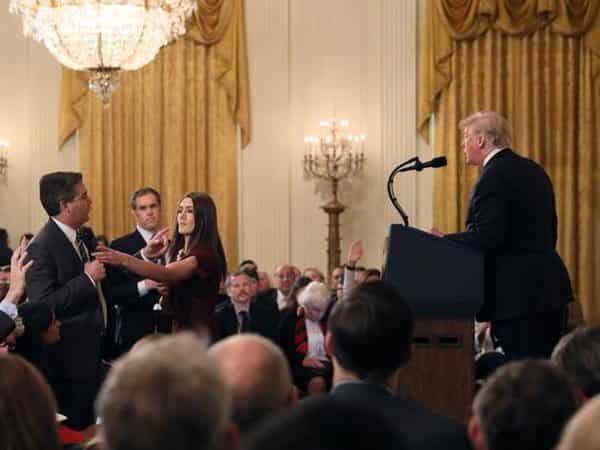
"CNN should be ashamed of itself, having you working for them," Trump told CNN correspondent Jim Acosta, who wrestled with a White House staffer who forcibly pulled the microphone from his hands.
Today, we lament the loss of the media's credibility, but the fact is that it has often been questioned in the past too.
The line between News and propaganda is a fine one. When states target News outfits in a proxy battle, then it's time to revisit the rules.
Let's discuss how the media can tread this fine line in the age of nationalistic politics and trigger happy diplomacy? How can the media safeguard its Independence?

Is the media really independent or is it a handmaiden of political powers? Is it only corporate or government ownership that compromises the media? or do obvious political biases play a role?
There's a lot of ground to cover, as always we start with some figures - just 9 per cent of the world's population live in countries where journalists can operate freely and independently.
This is according to a report by reporters without borders, in the rest of the world, strongmen are rising and press freedoms are eroding.
&imwidth=180&imheight=135&format=webp&quality=medium)
West Bengal govt forms SIT to probe Kolkata Durga Puja stampede that killed 19
&im=FitAndFill=(700,400)&imwidth=180&imheight=135&format=webp&quality=medium)
What is the real meaning behind Pete Hegseth's tattoos?
&imwidth=180&imheight=135&format=webp&quality=medium)
Zohran Mamdani's Garba dance goes viral as he joins Indian community's Navratri celebrations | WATCH
&imwidth=180&imheight=135&format=webp&quality=medium)
Rafale Marine fighter begins flight trials in Goa ahead of Indian Navy induction
&imwidth=180&imheight=135&format=webp&quality=medium)
Explosions heard in Iran’s Hormozgan province near Strait of Hormuz: State media
&imwidth=180&imheight=135&format=webp&quality=medium)
Shock, anger and despair in Bangladesh over the executions
&imwidth=180&imheight=135&format=webp&quality=medium)
Americans told to prepare their will before visiting this country
&imwidth=180&imheight=135&format=webp&quality=medium)
WATCH | Mysterious haze grips Ohio city as toxic chemical leak forces mass evacuation – What is happening?
&imwidth=180&imheight=135&format=webp&quality=medium)
Kim Jong Un death rumors explode | China accused of secretly sending troops to Pyongyang
&imwidth=180&imheight=135&format=webp&quality=medium)
James Bond auction: Own Daniel Craig's Skyfall suit, Ana de Armas' dress and 300+ rare 007 collectibles
&imwidth=180&imheight=135&format=webp&quality=medium)
Trump says end to Ukraine war is 'closer than ever'; Witkoff's Putin remarks spark criticism
&imwidth=180&imheight=135&format=webp&quality=medium)
Trump waves at 'empty space' in viral video,' critics claim 'mental decline getting worse' | WATCH
&imwidth=180&imheight=135&format=webp&quality=medium)
IND vs NZ T20Is: Will Sooryavanshi play? Skipper Shreyas Iyer clears the air on Samson vs Vaibhav debate
&imwidth=180&imheight=135&format=webp&quality=medium)
US midterms: Democrats sue Trump administration over alleged 'threats and intimidation' ahead of election, Musk issues warning to Dems
&imwidth=180&imheight=135&format=webp&quality=medium)
‘Her heart and mind in good shape’: What Helen Haines’ husband said after MP loses both legs in ‘targeted’ attack
&imwidth=180&imheight=135&format=webp&quality=medium)
Israel election 2026: Three possible scenarios after October 27 polls
&imwidth=180&imheight=135&format=webp&quality=medium)
US midterms 2026: What polls and prediction markets indicate about Congress
&imwidth=180&imheight=135&format=webp&quality=medium)
US Midterms 2026 and money: From Bloomberg to Musk, corporate donors, super PACs and lobbies, it's all about the cash
&imwidth=180&imheight=135&format=webp&quality=medium)
Ramayana promotion takes a funny turn after Ranbir Kapoor's verbal blunder, leaves fans in splits | Watch
&imwidth=180&imheight=135&format=webp&quality=medium)
US orders embassy staff, families to leave Saudi Arabia amid Houthi attacks: Report
&imwidth=180&imheight=135&format=webp&quality=medium)
Priyanka Chopra celebrates Dussehra 2026 with Nick Jonas and daughter Malti Marie | See pics
&im=FitAndFill=(700,400)&imwidth=180&imheight=135&format=webp&quality=medium)
New OTT releases this week (October 19-25, 2026): Gajab Raat to Chaar Yaar-8 titles to watch during Dussehra week on Netflix, Prime Video and more
&imwidth=180&imheight=135&format=webp&quality=medium)
US business activity grows in June, but tariffs and inflation cloud outlook
&imwidth=180&imheight=135&format=webp&quality=medium)
'I’m not saying it’s extraterrestrial' - 'Mutant' creature forces Mexicans to flee their homes
&imwidth=180&imheight=135&format=webp&quality=medium)
‘I caution the president...’: Trump’s ex-press secretary warns after Zacharia’s exit
&imwidth=180&imheight=135&format=webp&quality=medium)
Hunger makes alcohol more appealing, study finds
&imwidth=180&imheight=135&format=webp&quality=medium)
Finance influencer dies by suicide in Chennai; father accuses tech CEO, who denies charge
&imwidth=180&imheight=135&format=webp&quality=medium)
France protests: 'Block everything' movement escalates as public fury over austerity grows; over 200 arrested. Here's all you to need to know
&imwidth=180&imheight=135&format=webp&quality=medium)
Kolkata airport: CISF detects ₹1.13 crore in US dollars hidden in bags of 2 Bangkok-bound passengers
&imwidth=180&imheight=135&format=webp&quality=medium)
Feds obtain DNA evidence that could prove Ilhan Omar married her brother: Report
&imwidth=180&imheight=135&format=webp&quality=medium)
US midterms 2026: Trump's approval rating hits record low as Democrats gain ground
&imwidth=180&imheight=135&format=webp&quality=medium)
French military plane crashes in northeast France, one dead
&imwidth=180&imheight=135&format=webp&quality=medium)
Turkey, Qatar, Pakistan and Indonesia sign 'Badr' defence cooperation pact in Doha
Media outlets face an existential crisis - both in monetary and moral terms. It's a tough balancing act, if you don't question the powers that be, you're not doing your job.
But if you criticise them, you lose access or in extreme cases your licence to operate.
Two years ago, Thailand's Prime Minister Prayut Chan-o-cha found a new way to dodge tricky questions from the press - he installed a cardboard cutout at a press conference.
Three years back, Czech president Milos Zeman waved a mock rifle at journalists - again at a press conference. Philippine President Rodrigo Duterte has a reputation of threatening and abusing journalists.
And who can forget this fiery exchange between US President Donald Trump and a CNN correspondent. The American government revoked his press credentials for quizzing Trump.
Jim Acosta won back access to the white house in court. It's a sign of the times - in the age of nationalism, leaders are more confrontational, they see the press as a party to political battles.
And they take on the press as they would take on the Opposition - political leanings, and not objectivity, dictate media coverage. And media outlets face the consequences of such compromises.
Attacking state-owned media is now a legitimate tool of diplomatic retaliation - America leads the world here. It first declared Russian state media as foreign agents, now it is targetting Chinese organisations.
The Trump administration says it is cracking down on propaganda machinery of rival states - there is some merit to that argument.
Around the world, the press has now begun to wear their political leanings on their sleeves. News stories turn into hit jobs or politically motivated campaigns.
It's becoming harder to distinguish news from comment, fact from fiction and reports from opinion. Governments are arming themselves with state media machinery to counter negative reportage and set the narrative.
In the age of social media, leaders have found ways to bypass the gatekeepers of mass media and communicate directly with the people.
Any story, opinion or thought that doesn't fit the official narrative is challenged - the result is stronger scrutiny of journalists and more barriers in their path.
These are challenging times for the global press and branding journalists as state agents is another low.