Spotlight: Changing notes of China’s diplomacy

China spotlight
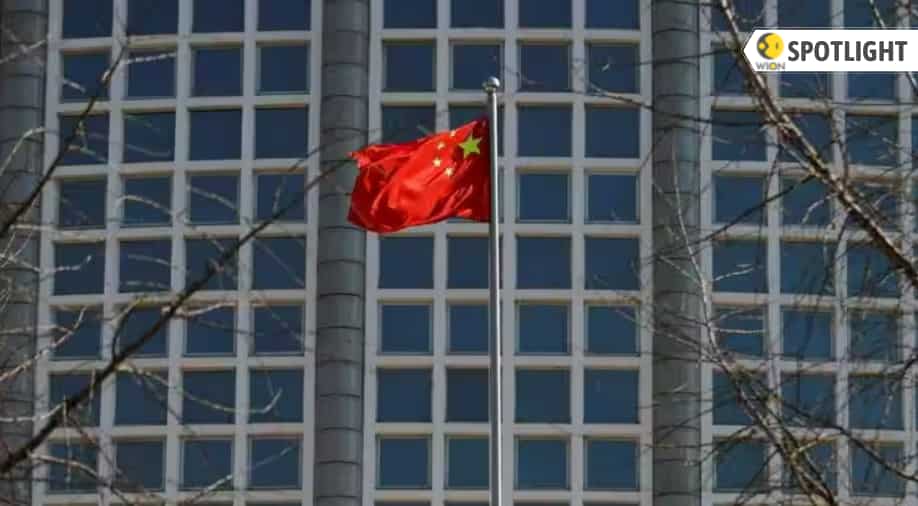
The tide of China’s so-called wolf-warrior diplomacy appears to be receding. As significant as the reversal of China’s policy on the containment of COVID-19, is President Xi Jinping’s policy of moving the combative diplomats away from the frontline. The relocation of these ‘wolf warriors’, as some have been demonised by the West, is a major policy shift on the foreign front by Chinese President Xi Jinping that is as consequential to the world as the ending of the zero-tolerance policy on Covid.
With these policy shifts, Beijing is out to win friends and influence people in the capitals of the developed world. China is now, demonstrably, projecting itself as a gentle and non-threatening power. Beijing is all too aware that the impact of the new policy for dealing with Covid has a bearing not only on China’s growth but also on global economic development in 2023; and, the advantage of any beneficial economic outcome cannot be capitalised upon unless it is matched by more sophisticated diplomacy.
It is not just a case of leading personalities of the wolf-warrior phase being moved out of the limelight and reassigned. Equally important is the conspicuous change in the style and language of Chinese diplomats in and towards the developed countries, be it the US and UK or Australia and New Zealand.

These shifts come close on the heels of Xi’s meeting with US President Joe Biden at the G20 summit in Bali. Predictably enough, the meeting between the world’s Big 2 set the tone for leaders of other developed countries to make nice with Xi with an eye on reviving stalled commerce and economic cooperation.
Prominent among those regarded as “wolf-warrior” diplomats is Zhao Lijian, who was the spokesman of China's foreign ministry since 2019. He has been reassigned as Deputy Director General of the ministry's Department of Boundary and Ocean Affairs. In his new job, he would be handling matters related to China’s land and ocean boundaries, which should be noted by New Delhi.
Zhao’s transfer comes at the same time as China’s ambassador to the US, Qin Gang being appointed Foreign Minister in the place of Wang Yi who has been moved up. This is more a change of personality as Qin is more adept at presenting China as a gentle power given to being persuasive and not coercive. Besides, Qin is a close confidant of Xi and more acceptable to the US as an interlocutor. Wang, who is the State Councilor and Member of the Communist Party’s Politburo, remains China’s highest-ranking diplomat.
&imwidth=180&imheight=135&format=webp&quality=medium)
India’s naval priorities: Ex-Navy Chief calls for third aircraft carrier, more warships and submarines
&imwidth=180&imheight=135&format=webp&quality=medium)
Netanyahu defies Trump, blocks Gaza military base for Board of Peace | Gravitas
&imwidth=180&imheight=135&format=webp&quality=medium)
Was Trump in danger at Alaska rally? Viral video shows Secret Service agents reacting
&imwidth=180&imheight=135&format=webp&quality=medium)
'Turn approver, resign, we'll forgive you': Rahul Gandhi claims receiving messages from CEC Gyanesh Kumar
&imwidth=180&imheight=135&format=webp&quality=medium)
Girl 'dead' for 8 hours wakes up at her own funeral, dad insists she wasn't breathing
&imwidth=180&imheight=135&format=webp&quality=medium)
Is America trying to ‘destabilise’ India or change its regime? How influence operations became a recurring theme in political rhetoric
&imwidth=180&imheight=135&format=webp&quality=medium)
Russian woman and Bihar boy's love story goes viral after she reaches India to marry him
&imwidth=180&imheight=135&format=webp&quality=medium)
'White supremacist' terror plot against Illinois Hindu temple foiled by jammed gun: Who is Alexandros Paporakis?
&imwidth=180&imheight=135&format=webp&quality=medium)
NASA captures strange structure with tentacle-like formation from space
&imwidth=180&imheight=135&format=webp&quality=medium)
‘My president, I mean my husband’: Trump's new press secretary Katie Zacharia's first briefing goes off the rails in 14 minutes
&imwidth=180&imheight=135&format=webp&quality=medium)
US considering use of ‘mother of all bombs’ in its war with Iran: Report
&imwidth=180&imheight=135&format=webp&quality=medium)
Researchers believe AI could cure cancer patients around the world
&imwidth=180&imheight=135&format=webp&quality=medium)
Aga Ruhullah, Iltija Mufti, Mehraj Malik condemn misconduct against woman KAS officer
&imwidth=180&imheight=135&format=webp&quality=medium)
Leap second could go by 2027. What it means, as timekeepers gather in Versailles
&imwidth=180&imheight=135&format=webp&quality=medium)
'Ukraine must get all it needs to protect civilians and infrastructure': Macron
&imwidth=180&imheight=135&format=webp&quality=medium)
Nine former FBI employees fired over investigation into Trump's classified records sue Kash Patel, DOJ over alleged unlawful dismissal
&imwidth=180&imheight=135&format=webp&quality=medium)
Turkey Floods: Heavy rains flood homes and submerge vehicles in Istanbul
&imwidth=180&imheight=135&format=webp&quality=medium)
Mumbai gears up for Marco Rubio’s visit as US Secretary of State prepares for India trip
&imwidth=180&imheight=135&format=webp&quality=medium)
‘False accusations’: Maduro, wife plead not guilty to new US torture charges
&imwidth=180&imheight=135&format=webp&quality=medium)
Australian woman charged for adding snail poison to lover's curry at work
&imwidth=180&imheight=135&format=webp&quality=medium)
Katie Zacharia, White House Press Secretary admits she never passed bar exam amid credentials controversy
&im=FitAndFill=(700,400)&imwidth=180&imheight=135&format=webp&quality=medium)
World's 7 most innovative countries in 2026 REVEALED: Did India make the list? | In Pics
&imwidth=180&imheight=135&format=webp&quality=medium)
Oregon school shooting: 16-year-old identified as suspect after at least four killed, including three children
&imwidth=180&imheight=135&format=webp&quality=medium)
US sanctions Cuban state-owned bank BICSA over alleged financial links to Iran
&imwidth=180&imheight=135&format=webp&quality=medium)
Trump's tariff strategy faces new test: India wants preferential access and tariff stability
&imwidth=180&imheight=135&format=webp&quality=medium)
Arijit Singh 9-city India stadium tour to start from January: Check venue and ticket prices
&imwidth=180&imheight=135&format=webp&quality=medium)
US midterms 2026: FBI investigates suspicious mailings containing 'unknown substance' sent to election offices
&imwidth=180&imheight=135&format=webp&quality=medium)
Central Park in Delhi shut on October 16, 17 amid CJP's protest call
&imwidth=180&imheight=135&format=webp&quality=medium)
Abhishek Sharma sets all-time record for most T20I sixes in a year
&imwidth=180&imheight=135&format=webp&quality=medium)
Saudi Arabia executes two Bangladeshi nationals over ‘immoral acts’ inside Mecca mosque
&imwidth=180&imheight=135&format=webp&quality=medium)
'Don't ever mess with nature!': Trump’s tiger attack post triggers social media backlash as victim's family issues heartbreaking tribute
&imwidth=180&imheight=135&format=webp&quality=medium)
Who is Abu Dhabi royal Mahrah Al Nahyan, found unconscious on London street with toddler after cocaine use
&imwidth=180&imheight=135&format=webp&quality=medium)
Ukraine running out of patriot missiles as Russian ballistic attacks intensify: Report
&im=FitAndFill=(700,400)&imwidth=180&imheight=135&format=webp&quality=medium)
Inside the Peshawar school tragedy: 34 dead, building's condition under scrutiny and owner arrested. Here's what all happened

Kashmir scholars oppose Waqf Board’s common 'khutbah' proposal, allege political interference in mosques
&imwidth=180&imheight=135&format=webp&quality=medium)
Ukraine blinded: Musk deflects blame on Trump, Putin sharpens attack | Gravitas
&imwidth=180&imheight=135&format=webp&quality=medium)
India to overtake Japan, become 4th-largest economy by 2027? What IMF’s latest projection reveals
&imwidth=180&imheight=135&format=webp&quality=medium)
Portland stabbing: Multiple people reportedly stabbed hours after deadly Bend school shooting
Even as US-led allies are preoccupied with decoding these moves, China’s ambassador to Australia, Xiao Qian, has attacked Japan and criticised the AUKUS security pact. While Xiao did not pull his punches in targeting Japan, he struck a conciliatory note while referring to the US, the UK and Australia.
The Chinese envoy said that it is “not very long, when you look at history, that Australia was under threat and being attacked and invaded” by Japan. “During the Second World War, Japan invaded Australia, bombed Darwin, killed Australians and treated Australian POWs in a way that is humanly unacceptable,” he said. “And the Japanese government has not apologised for that up to today”.
Doubtless, Japan has been a brutal militarist power and accused of enormous war crimes, especially in this part of the world. Between 1942 and 1943, Japan launched about 100 air raids on Australia, unleashed massive attacks on Darwin and Broome and invaded Australia-controlled New Guinea and Papua.
It is in this context that Xiao warned Australians against becoming too trusting of their former World War II adversary and painted Japan as a greater military threat than China.
However, for decades now, Japan and Australia have been security partners. They are together, along with India, in the US-led Quad, which is avowedly to check China’s rising power in the Asia-Pacific.
Xiao was more nuanced in his remarks on the AUKUS trinity. He said that “China’s not seeking to be an enemy of the United States, neither are we of the United Kingdom, nor are we of Australia so there’s no reason for the three countries to stand together to work on something that’s targeting China as a threat.”
Xiao’s attack on Japan provoked Tokyo’s top envoy to Canberra, Shingo Yamagami to describe China’s military activities around Taiwan as “shocking”, which the former perceives as an attempt to stir hostility between China and Australia.
Whether the change in policies, altered style and tone of diplomacy, along with China’s economy beating the current Covid surge to rebound and boost the global economy, succeed would be a critical test of President Xi’s leadership.
(Disclaimer: The views of the writer do not represent the views of WION or ZMCL. Nor does WION or ZMCL endorse the views of the writer.)