RBI's timely and decisive response to safeguard Indian economy from coronavirus impact

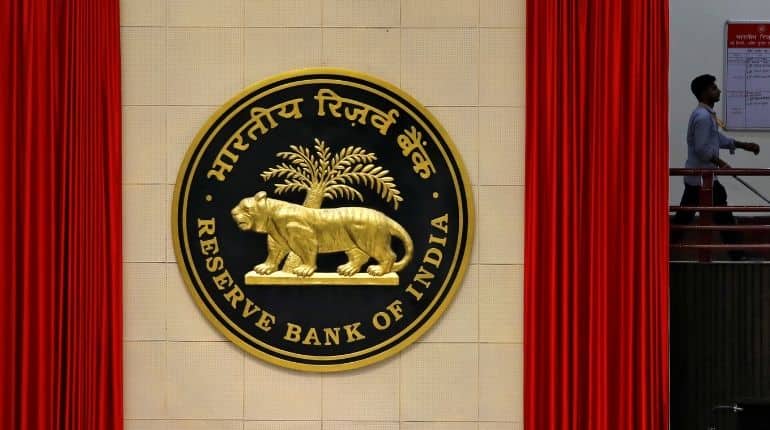
RBI
Merely after three months of Coronavirus outbreak, the pandemic has already started impacting economies all across the globe.
In order to contain the spread of COVID-19, Prime Minister Narendra Modi, on March 23, announced a 21-day nationwide lockdown. Pursuant thereto, Finance Minister Nirmala Sitharaman released a Rs 1.7 trillion package to curtail the impact of the said lockdown. In the context of the economy, the Governor of the Reserve Bank of India (RBI), Shaktikanta Das, had repeatedly assured that RBI holds enough capability to handle the emergency and shall utilise the same at the right time. Therefore, the RBI, on March 27, rolled out a long list of announcements in order to safeguard the economy from the vicious impact of the pandemic, including relaxation on instalments, lower interest rates and easier access to working capital to help the market function better without much financial pressure.
The RBI, as a major relief to retail borrowers, decided to defer the instalments on all term loans to businesses and individuals, including principal and interest, by a period of three months. However, each bank will take its own call so as to decide who can benefit from this measure. All commercial banks have been allowed to impose a moratorium of three months on paying instalments on term loans from March 1, 2020. The tenures will be extended accordingly. All lenders have also been permitted to defer interest payments on working capital loans by three months. It has been made clear that the accumulated interest shall be paid after expiry of the said period of three months. The Governor of the RBI clarified that the moratorium on term loan repayments and deferred interest payments on working capital will classify the borrowers as defaulters as NPA accounts and hence, there will be no adverse impact on the credit history thereof.

Apart from the relaxation provided to the customers as detailed above, the RBI, as an exceptional measure, also reduced the repo rate by 75 basis points or 0.75 per cent, which would mean that other banks can now borrow money from RBI at a much lower interest rate. This will also provide a boost to the industrial sector as industries will be able to get loans at cheaper interest rates, which would, in turn, result in commodities becoming cheaper, ultimately benefitting the end consumer. However, it is reiterated that each bank will have to decide how and when will it implement the lowered interest rates on the loans it offers.
The RBI further reduced the Cash Reserve Ratio of all banks by 100 basis points, taking it down to 3 per cent from the earlier 4 per cent with effect from March 28 for a period of one year. This reduction in the Cash Reserve Ratio would release Rs.1.37 lakh crores for banks in India. Furthermore, the RBI has decided that the banks can get durable liquidity up to Rs.1 lakh crore from the RBI for a three-year period. The RBI has also raised the borrowing limit of the Statutory Liquidity Ratio under the Marginal Standing Facility (“MSF”) to 3 per cent with immediate effect applicable up to March 30, intending to provide comfort to the banking system by allowing it to avail additional Rs.1.37 lakh crores of liquidity in times of stress at the MSF Rate so announced. More so, in these testing times, in order to discourage banks to park surplus funds, the RBI has reduced the reverse repo rate to 4 per cent.
However, it is made clear by the banks that the relaxation period of three months provided to the customers is not a waiver of the monthly instalments for three months, instead, it is a grace period for three months, to reduce to the burden and distress caused by the pandemic. Most banks have resolved to place the onus on the borrowers to inform the bank that they wish to take benefit of the three-month breathing period. However, once a borrower avails this facility, interest will continue to accrue on the principal outstanding for the entire period of the moratorium at rate agreed upon by the parties and the loan tenure will get extended by the corresponding period accordingly. Therefore, it is abundantly clear that it is only a deferment option and not a concession or waiver given by the banks to the customers, since the interest would continue to accrue for the entire period of the moratorium.
In a bid to mitigate the impact of the outbreak of the pandemic on businesses, industries and individuals, the RBI has tried to ensure that viable businesses and industries are not driven out of the market owing to financial distress. RBI has provided the much-needed rate cuts and tried to inject more liquidity in the economy to encourage each bank to lower its interest rates. Ideally, with such measures taken by the RBI, there must be a decline in the interest rates on loans offered by various banks, bringing down the overall cost of the loan of the customer. However, it remains to been seen how banks implement the aforementioned rate cuts on the loans they offer. None of these steps might prove to be effective if the banks are not ready to pass on this relaxation to the customers. However, with proper coordination and sensitivity of the banking industry, these steps are intended to reduce the burden on businesses, industries, individuals etc. and will give a huge boost to the economic activities with a view to safeguard our economy from the impact of the pandemic.
&imwidth=180&imheight=135&format=webp&quality=medium)
Rahul Gandhi's plea against Election Commission delayed as Supreme Court registry flags 14 ‘defects’
&im=FitAndFill=(700,400)&imwidth=180&imheight=135&format=webp&quality=medium)
Navratri 2026: 9 days, 9 forms of Goddess Durga and 9 colours- Check the complete list
&imwidth=180&imheight=135&format=webp&quality=medium)
Korean peninsula tensions escalate as North Korea launches multiple ballistic missiles, PACOM says 'no threat to US personnel'
&imwidth=180&imheight=135&format=webp&quality=medium)
Trump weighs firing Kimberly Guilfoyle as US ambassador to Greece amid misconduct allegations: Report
&imwidth=180&imheight=135&format=webp&quality=medium)
Anti-SIR protest in Mumbai: Protestors wear black masks & ribbons in Mumbai
&imwidth=180&imheight=135&format=webp&quality=medium)
UK PM Andy Birnham renews claims of Russian meddling in Brexit vote
&imwidth=180&imheight=135&format=webp&quality=medium)
BCCI rejects venue shift reports, India vs Sri Lanka 1st ODI to remain in Delhi
&imwidth=180&imheight=135&format=webp&quality=medium)
'Absolutely disgusting': Australia slams US plan to livestream Nidal Hasan's execution; Mike Johnson raises concerns, warns of terrorist propaganda
&imwidth=180&imheight=135&format=webp&quality=medium)
1,500 drones illuminate Mumbai sky as Cordelia Cruises unveils second ship, Cordelia Sky
&imwidth=180&imheight=135&format=webp&quality=medium)
Houthis warns US of 'painful response' if Washington joins Saudi war in Yemen as airlines suspend flights to Saudi Arabia
&imwidth=180&imheight=135&format=webp&quality=medium)
Congress demands action against chief election commissioner
&imwidth=180&imheight=135&format=webp&quality=medium)
Robot gropes girl, makes thrusting movements in bizarre crime in Germany
&imwidth=180&imheight=135&format=webp&quality=medium)
'Turn approver, resign, we'll forgive you': Rahul Gandhi claims receiving messages from CEC Gyanesh Kumar
&imwidth=180&imheight=135&format=webp&quality=medium)
'I will not be silenced': Ilhan Omar alleges political intimidation after federal officers search her Washington home
&imwidth=180&imheight=135&format=webp&quality=medium)
Pakistan's government blames PTI for rise of terrorism in Khyber Pakhtunkhwa
&imwidth=180&imheight=135&format=webp&quality=medium)
‘This is just the start’: Maaya Rajeshwaran on historic ITF title, confidence boost and future goals
&imwidth=180&imheight=135&format=webp&quality=medium)
I.N.D.I.A. Bloc lists 10 requests to Supreme Court
&im=FitAndFill=(700,400)&imwidth=180&imheight=135&format=webp&quality=medium)
IMF World Economic Outlook: 10 economies to watch for growth in FY27 and FY28 - Where does India stand?
&im=FitAndFill=(700,400)&imwidth=180&imheight=135&format=webp&quality=medium)
How does a robot decide what to do next?
&imwidth=180&imheight=135&format=webp&quality=medium)
Is the AI chip boom already over? Global semiconductor stocks slide as investors question unbridled spending
&imwidth=180&imheight=135&format=webp&quality=medium)
L Murugan resigns as Union Minister, expresses wish to return to grassroots
&imwidth=180&imheight=135&format=webp&quality=medium)
Trump says he 'may' meet North Korean leader Kim Jong Un during upcoming Asia trip
&imwidth=180&imheight=135&format=webp&quality=medium)
'Ouch!!! That must hurt': Kangana Ranaut hails Kamal Haasan's sharp reply to Elon Musk over Starlink row
&imwidth=180&imheight=135&format=webp&quality=medium)
Sidhu Moose Wala’s younger brother wins hearts by recreating late singer’s signature move at Toronto Hologram Show
&imwidth=180&imheight=135&format=webp&quality=medium)
Girl 'dead' for 8 hours wakes up at her own funeral, dad insists she wasn't breathing
&imwidth=180&imheight=135&format=webp&quality=medium)
UK school ditches technology, shifts from screen to pen and paper for learning
&imwidth=180&imheight=135&format=webp&quality=medium)
Opposition’s 10 demands in Supreme Court petition range from stay on SIR to audit of voter rolls
&imwidth=180&imheight=135&format=webp&quality=medium)
'I am thoroughly unamused': Judge slams Trump administration after 400 trees cut at Washington golf course
&im=FitAndFill=(700,400)&imwidth=180&imheight=135&format=webp&quality=medium)
New OTT releases this week (October 12-18, 2026): Sacrifice, Koffee with Karan S9, Roadies Rebirth- 6 titles coming on Netflix, JioHotstar and more
&imwidth=180&imheight=135&format=webp&quality=medium)
China’s gold rush puts billion in focus
&imwidth=180&imheight=135&format=webp&quality=medium)
India's Ajit Doval, Iran's Mohsen Rezaei hold talks amid escalating West Asia tensions, discuss 'issues of mutual interest'
&imwidth=180&imheight=135&format=webp&quality=medium)
New Cold War: Why is China buying more gold? Explained
&imwidth=180&imheight=135&format=webp&quality=medium)
Anupam Kher joins Ranbir Kapoor's Ramayana as Jatayu, new poster unveiled
&imwidth=180&imheight=135&format=webp&quality=medium)
'Almost certainly': UK Prime Minister Andy Burnham says Iran's IRGC behind RAF Fairford threat
&imwidth=180&imheight=135&format=webp&quality=medium)
Elon Musk pumps $276 million into Republican campaigns ahead of US midterm elections
(Disclaimer: The opinions expressed above are the personal views of the author and do not reflect the views of ZMCL)