'Why no FIR?': VP Dhankhar questions delay in action against Justice Varma, notes 'rule of law not optional'

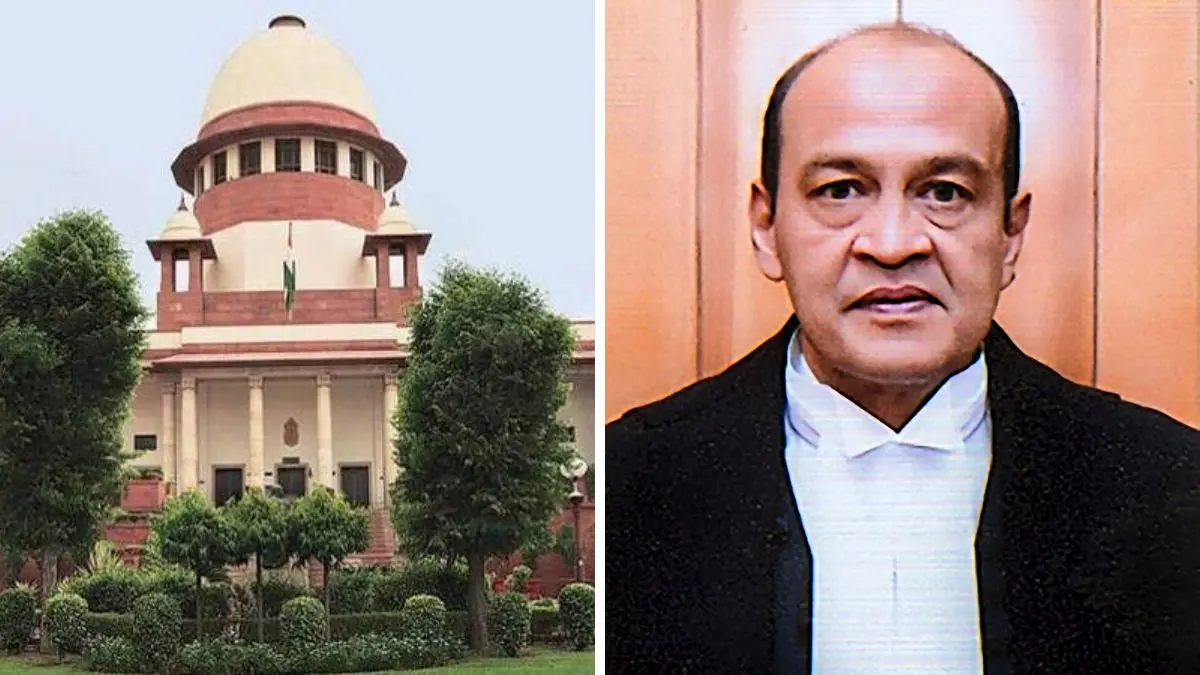
Vice President Jagdeep Dhankhar emphasises the critical need for upholding the rule of law, questioning the delay in filing an FIR against Justice Yashwant Varma.
India: Vice President Jagdeep Dhankar on Thursday (Apr 17) emphasised the importance of rule of law as he pointed out that a FIR is yet to be filed against Justice Yashwant Varma — the Delhi HC judge from whose home piles of cash were found last month.
On March 14, "four to five semi-burnt sacks of Indian currency notes" were discovered in Yashwant Varma's Lutyens home following a fire incident.
The VP noted that corruption charges against judges are often stayed on grounds of judiciary's independence, and said that the independence was not some kind of "impregnable cover against probes."
Dhankar slams Supreme Court
Addressing the sixth batch of Rajya Sabha interns at the Vice-President's Enclave, Dhankar launched a no-holds-barred attack on the Supreme Court.
Trending Stories
&im=FitAndFill=(700,400))
)
)
)
)
)
)
)
)
)
)
)
)
)
)
&im=FitAndFill=(700,400))
)
)
)
)
)
)
)
)
)
)
)
)
)
&im=FitAndFill=(700,400))
"In a democratic nation, the purity of its criminal justice system defines its direction…for a criminal investigation, the initiation has to be by an FIR, First Information Report. It is the law of the land that every cognizable offence is required to be reported to the police, and failure to do so, failure to report a cognizable offence, is a crime; therefore, you all will be wondering why there has been no FIR," said the Vice President.
"The answer is simple. An FIR in this country can be registered against anyone, any Constitutional functionary, including the one before you. One has only to activate the rule of law. No permission is required. But if it is a judge, their category, an FIR cannot be registered straightaway. It has to be approved by the concerned judiciary, but that is not given in the Constitution," he added.
The VP said that every India was concerned about the "immunity" judges hold.
"The Constitution of India has accorded immunity from prosecution only to the Honourable President and the Honourable Governors," he noted.
"The Constitution of India has accorded immunity from prosecution only to the Honourable President and the Honourable Governors," questioned Dhankar.
(With inputs from agencies)

