Why is PM Modi in Uzbekistan before the SCO Summit? Key reasons explained

&imwidth=600&imheight=450&format=webp&quality=medium "Why is PM Modi in Uzbekistan before the SCO Summit? Key reasons explained")
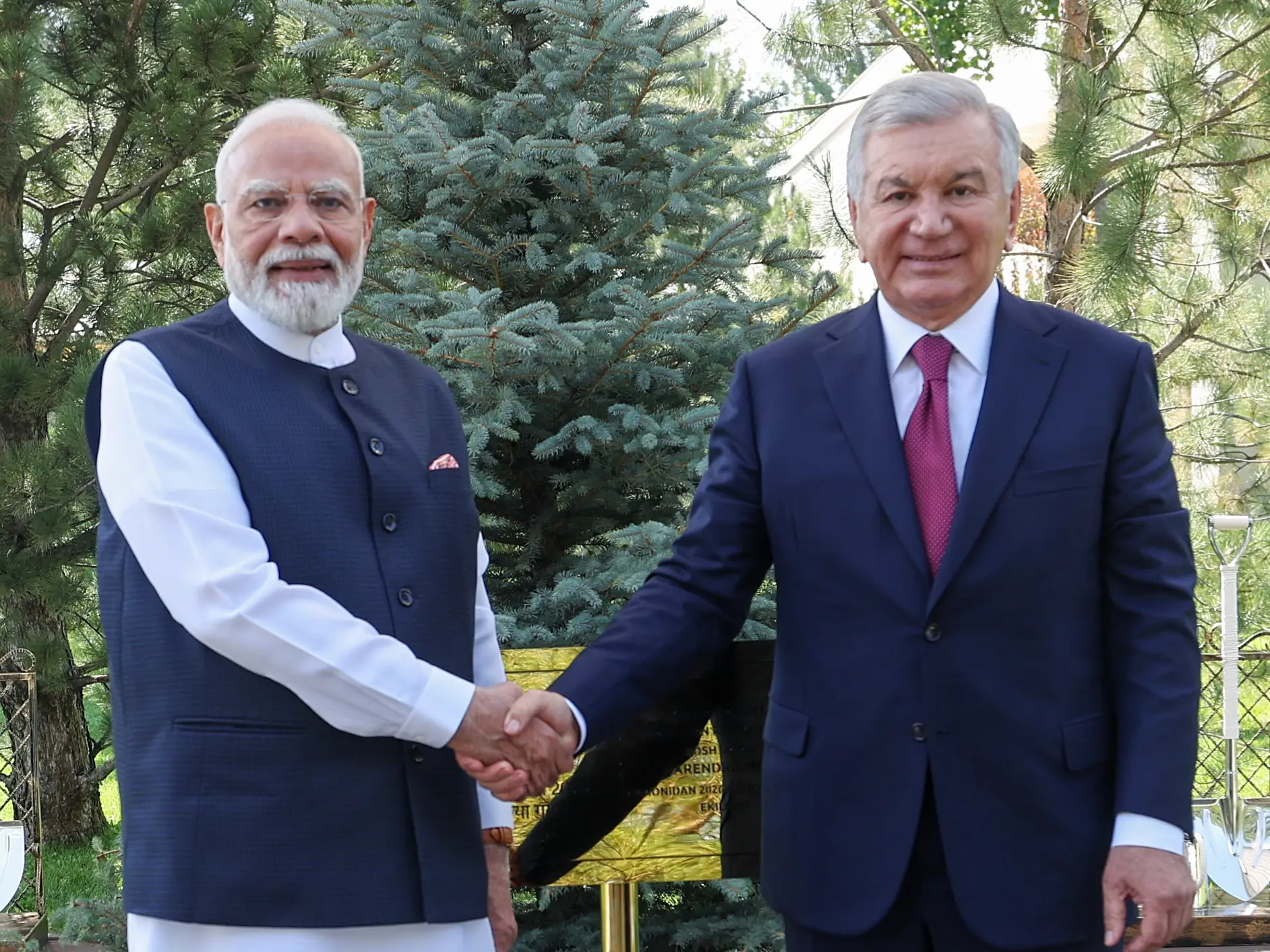
Modi and Uzbekistan President Shavkat Mirziyoyev shake hands in Tashkent on Sunday. Photograph: (ANI)
India's engagement with the Central Asian countries includes security cooperation after the rise of the Taliban in Afghanistan, countering China’s influence, connectivity plans including the International North South Transit Corridor, energy needs, old cultural links and future trade.
Prime Minister Narendra Modi begins his four-day visit to Uzbekistan and the Kyrgyz Republic starting from August 29 to September 1, 2026. His four-day trip focused on strengthening India’s strategic partnerships in Central Asia, expanding economic and security cooperation, and advancing regional peace and stability.
He will visit Uzbekistan from August 29 to 30 on a bilateral visit and later will join the Kyrgyz Republic for the 26th Shanghai Cooperation Organisation (SCO) Summit from August 31 to September 1. After framing the “Connect Central Asia” policy, India started its focused engagement with these five countries, which include Kazakhstan, the Kyrgyz Republic, Uzbekistan, Tajikistan and Turkmenistan
Why Central Asia matters for India?
Central Asia has always been considered the backyard of Russia as nearly 20-30 per cent of its population speaks Russian. In addition, the region is widely considered to be extremely rich in mineral and natural resources. In terms of resources, Kazakhstan holds one of the largest uranium reserves in the world, along with coal, lead, zinc, gold, and iron ore. The Kyrgyz Republic is rich in gold and hydro-power potential, while Turkmenistan possesses vast natural gas reserves. Tajikistan also has significant hydro-power capacity, and Uzbekistan is endowed with gold, uranium, and natural gas resources.
Other than minerals, India's engagement with the Central Asian countries also includes security cooperation after the rise of the Taliban in Afghanistan, countering China’s influence, connectivity plans including the International North South Transit Corridor, energy needs (Kazakhstan has uranium reserves and Turkmenistan is part of the proposed Turkmenistan-Afghanistan-Pakistan-Iran gas pipeline), old cultural links and future trade.
Also read: Order of 'Oliy Darajali Dustlik': PM Modi conferred with Uzbekistan's highest state of honour
Trending Stories
&imwidth=280&imheight=210&format=webp&quality=medium)
&imwidth=280&imheight=210&format=webp&quality=medium)
&imwidth=280&imheight=210&format=webp&quality=medium)
&imwidth=280&imheight=210&format=webp&quality=medium)
&imwidth=280&imheight=210&format=webp&quality=medium)
&imwidth=280&imheight=210&format=webp&quality=medium)
&imwidth=280&imheight=210&format=webp&quality=medium)
&imwidth=280&imheight=210&format=webp&quality=medium)
&imwidth=280&imheight=210&format=webp&quality=medium)
&imwidth=280&imheight=210&format=webp&quality=medium)
&imwidth=280&imheight=210&format=webp&quality=medium)
&imwidth=280&imheight=210&format=webp&quality=medium)
&imwidth=280&imheight=210&format=webp&quality=medium)
&imwidth=280&imheight=210&format=webp&quality=medium)
&imwidth=280&imheight=210&format=webp&quality=medium)
&imwidth=280&imheight=210&format=webp&quality=medium)
&imwidth=280&imheight=210&format=webp&quality=medium)
&imwidth=280&imheight=210&format=webp&quality=medium)
&imwidth=280&imheight=210&format=webp&quality=medium)
&imwidth=280&imheight=210&format=webp&quality=medium)
&im=FitAndFill=(700,400)&imwidth=280&imheight=210&format=webp&quality=medium)
&imwidth=280&imheight=210&format=webp&quality=medium)
&imwidth=280&imheight=210&format=webp&quality=medium)
&imwidth=280&imheight=210&format=webp&quality=medium)
&im=FitAndFill=(700,400)&imwidth=280&imheight=210&format=webp&quality=medium)
&imwidth=280&imheight=210&format=webp&quality=medium)
&imwidth=280&imheight=210&format=webp&quality=medium)
&imwidth=280&imheight=210&format=webp&quality=medium)
&imwidth=280&imheight=210&format=webp&quality=medium)
&imwidth=280&imheight=210&format=webp&quality=medium)
&imwidth=280&imheight=210&format=webp&quality=medium)
&imwidth=280&imheight=210&format=webp&quality=medium)
&imwidth=280&imheight=210&format=webp&quality=medium)
&imwidth=280&imheight=210&format=webp&quality=medium)
&imwidth=280&imheight=210&format=webp&quality=medium)
&imwidth=280&imheight=210&format=webp&quality=medium)
In addition, after China's major investments in the region with its Belt and Road initiative, India is attempting to avoid the post-Soviet space that could be captured by the Chinese. Therefore, India wants to connect the International North-South Corridor with the Chabahar port in Iran in order to access this resource-rich region.
In a separate development, the Russia-Ukraine conflict might cause some local churn in Central Asian countries, as reports suggest that some Russians with the money and the skills, are moving to these Central Asian countries for the time being. With this inflow of skills, these regions may benefit along with funding into their local economies, but it may create some tension within the countries.
Cultural links
There has been a deep cultural and civilisational connection between India and Uzbekistan for centuries. The only Buddhist monastery known in Central Asia is in Kara Tepa, Termez, Uzbekistan. This was an important centre in the Kushana era, when the Buddhist influence had spread further to Central Asia.
There are close to 3,000 shared words in Hindi and Uzbek. There are similarities in cuisine, like ghee-sariyok, samosa-samsa, naan-non and pulao-pilaf. India is also among the top 10 trading partners of Uzbekistan. The bilateral trade in 2025-26 stood close to $1 billion.

