Why are Indians being forced to buy E20 petrol? Government finally answers | WION Decodes

&imwidth=600&imheight=450&format=webp&quality=medium "Why are Indians being forced to buy E20 petrol? Government finally answers | WION Decodes")
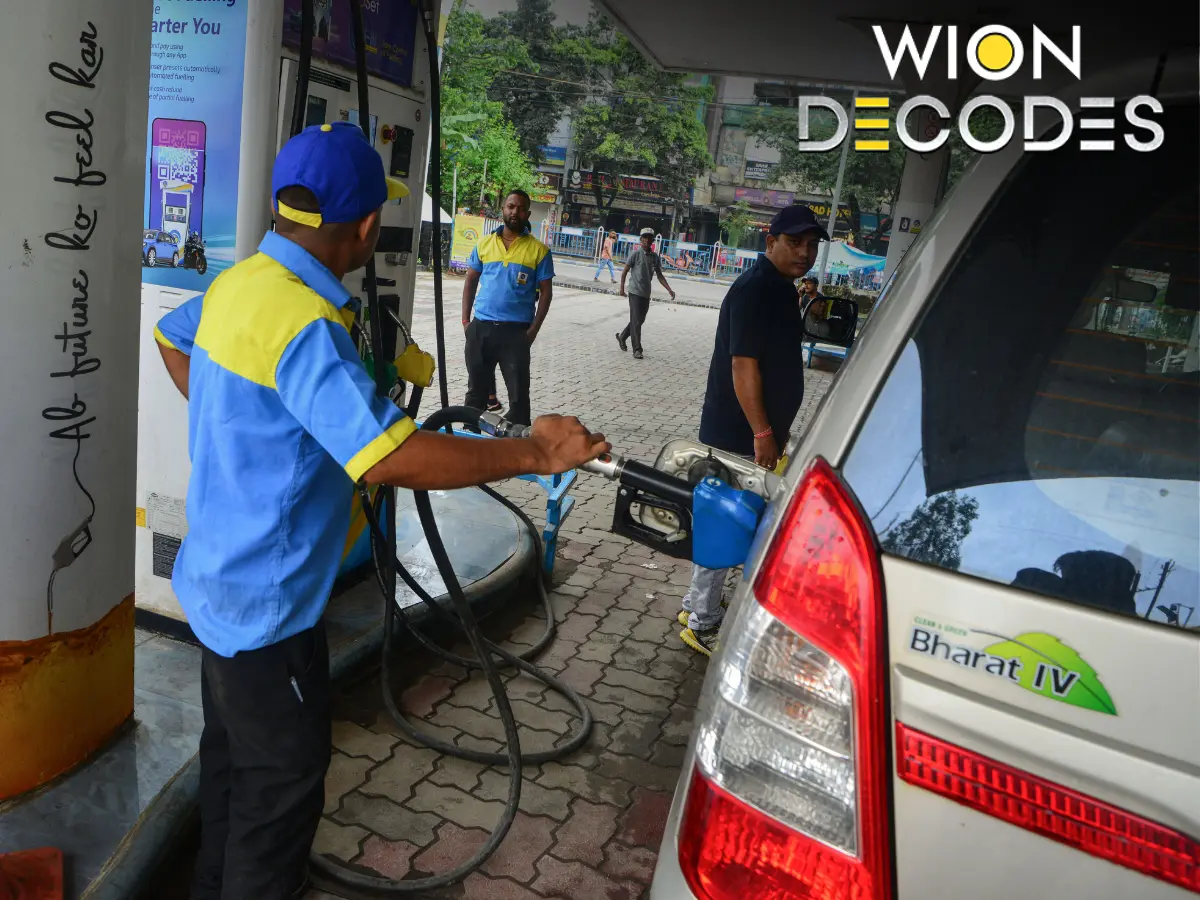
A worker fills petrol in a car at a fuel station Photograph: (ANI)
Why can't Indian motorists simply choose between normal petrol, E10 and E20 at fuel stations? As criticism of ethanol-blended fuel grows, the Centre has finally explained why consumers aren't being given that choice. Scroll down to find out what the government said.
As concerns about E20 fuel damaging car engines, affecting mileage and more continue to strengthen, one question many consumers have been asking: Why can't we choose which petrol to fill our car with - normal, E10 and E20?. Now the government has finally answered.
Defending its decision to roll out E20 fuel without giving consumers a choice between normal petrol, E10 and E20 at the pump, the Centre said that India’s fuel delivery system is simply not built to handle multiple nationwide petrol streams at once. Notably, at fuel pumps in India, vehicle owners get the choice to choose between multiple variants, including normal and premium petrol like XP95 and Speed fuel. Then, why can't consumers similarly make their own choice between normal petrol, E10 and E20? Here's what the Government of India said.
Why not just sell all three fuels separately?
Responding to the growing debate, the Ministry of Petroleum and Natural Gas said the transition to E20 was planned after consultations with automobile manufacturers, testing agencies and other stakeholders. The decision, it said, was based on technical checks covering vehicle compatibility, engine performance, emissions, and fuel efficiency.
According to the ministry, a choice is where the problem begins. It noted that India has more than one lakh retail fuel outlets, backed by a vast chain of refineries, terminals, depots and pipelines. The Ministry insisted that running separate supply lines for normal petrol, E10 and E20 across that network would sharply increase costs, complicate storage and inventory management, and reduce operational efficiency.
Trending Stories
)
)
)
)
)
)
)
)
)
)
)
)
)
)
)
)
)
)
&im=FitAndFill=(700,400))
)
)
)
&im=FitAndFill=(700,400))
)
&im=FitAndFill=(700,400))
&im=FitAndFill=(700,400))
)
The ministry also pushed back against comparisons with premium petrol. Those products, it said, are niche fuels sold in limited quantities with special additives. They do not require the kind of separate nationwide supply chain that different petrol blends would.
But what about older vehicles?
Concerns have also grown among owners of older cars and two-wheelers that were originally marked as E10-compatible, not E20-compatible.
On that point, the ministry said vehicle manufacturers were involved in the consultation process before the higher ethanol blend was introduced. It argued that if the companies had not been satisfied with the results of testing, they would not have supported the rollout or continued to honour warranties.
"Had automobile manufacturers not been fully satisfied with the results, they would never have stood behind the product or honoured vehicle warranties," the ministry said.
It added that "virtually every manufacturer today" is now honouring warranties for vehicles, old and new, because they were part of the consultation.
What has field experience shown?
The ministry cited data from the ground to support its case. It said Maruti Suzuki serviced 2.84 crore vehicles in FY 2025-26, including 1.5 crore older vehicles not originally certified for E20, without reporting major E20-related problems such as corrosion, abnormal wear or component damage. Hero MotoCorp, it added, has reported similar experience.
The ministry acknowledged that some vehicles may see a 3 to 5 per cent drop in fuel economy with E20. But it said mileage is only one part of the picture.
According to the ministry, E20 also offers higher octane, better combustion, smoother acceleration, cleaner engine operation and lower lifecycle carbon emissions. Customers, however, continue to protest the forced implementation. On Social media, countless videos by Indians continue to question and slam the move to E20, with many presenting proof of how the ethanol-blended fuel has damaged their expensive vehicles.

