

&imwidth=800&imheight=600&format=webp&quality=medium "Why are Indian firms picking, paying SpaceX over ISRO to launch satellites?")
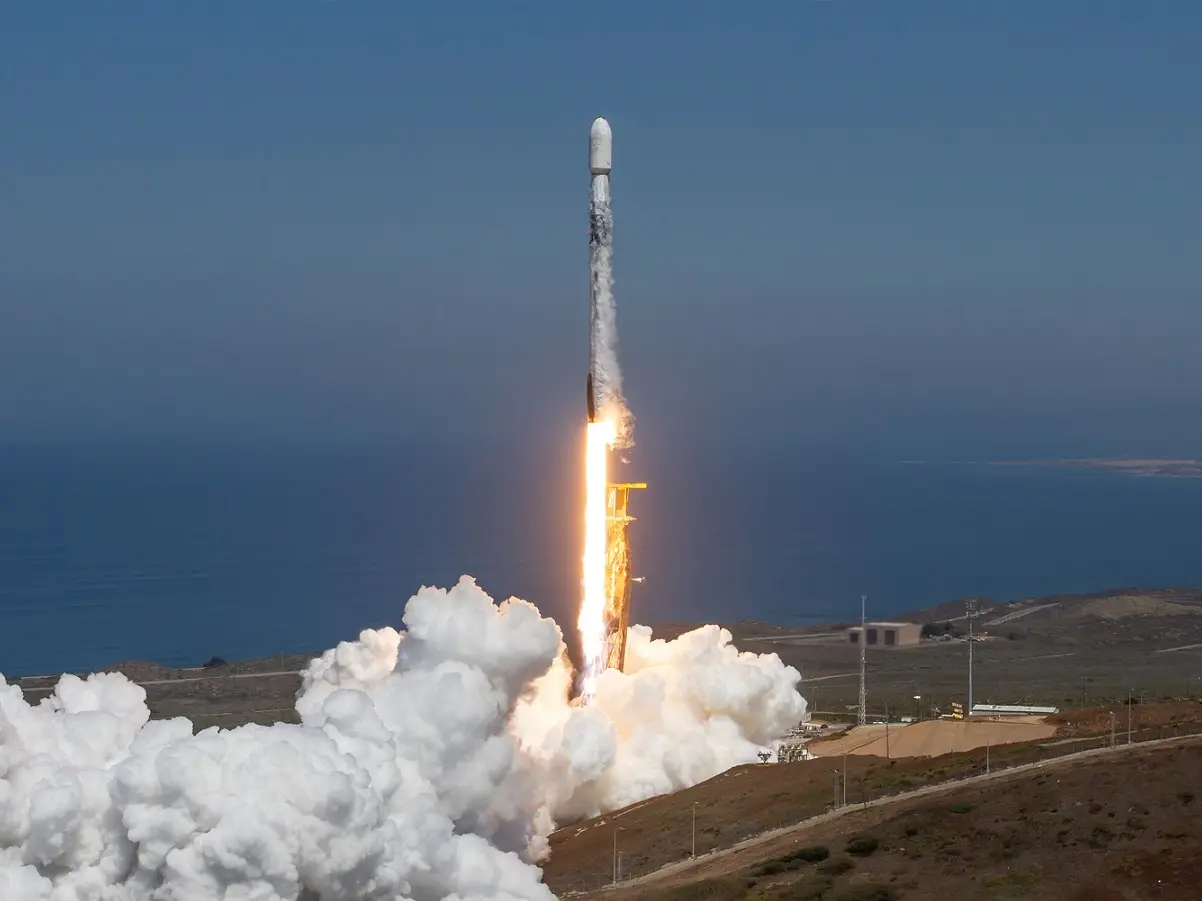
Indian space tech firms Bengaluru-based Pixxel and Hyderabad-based Dhruva Space have placed a total of four satellites in space via a commercial launch contract with Elon Musk’s SpaceX, the world leader in rocketry. In simple terms, the Indian firms paid for slots on America’s Falcon 9 rocket, which ferried them to space, more like a ride share to space.
The launch of these four Indian-origin satellites, among others, was carried out by SpaceX shortly after midnight hour Indian time, Wednesday, 27th August.
What type of satellites did the Indian firms launch?
According to Dhruva Space, their LEAP-1 satellite marks the company’s first commercial mission, featuring advanced AI and hyperspectral payloads from Australia-based Akula Tech and Esper Satellites. These payloads have been hosted on Dhruva’s indigenously developed P-30 satellite structure.
According to Pixxel, they launched three Firefly hyperspectral Earth-imaging satellites on this SpaceX mission. Pixxel already has three Firefly satellites in space and with this latest launch, their fleet has grown to six.
In simple terms, hyperspectral Earth-imaging captures pictures of our home planet using sensors that collect information far beyond what can be seen by human eyes or conventional cameras. Instead of the standard Red, Green, Blue, hyperspectral imaging captures hundreds of colours (wavelengths). This high amount of detail can help identify plants, minerals, water quality, etc. This data can be used to determine crop health, mapping cities, spotting oil spills etc.
Trending Stories
&imwidth=180&imheight=135&format=webp&quality=medium)
'Hell of a beautiful a**': Trump compliments Nicki Minaj as rapper joins him in Michigan rally
&imwidth=180&imheight=135&format=webp&quality=medium)
'Lousy president': Trump hits back at Obama over 'cheesecake factory' White House jibe
&imwidth=180&imheight=135&format=webp&quality=medium)
Student-led movement ousts Serbia's longtime leader as protests rage across Europe | GRAVITAS
&imwidth=180&imheight=135&format=webp&quality=medium)
Cameroon unveils school-based migration clubs to support young people’s migration choices
&imwidth=180&imheight=135&format=webp&quality=medium)
Jordan strikes 'terrorist organisations' in Syria after deadly church attack as Damascus shuts main border crossing
&imwidth=180&imheight=135&format=webp&quality=medium)
Microsoft offers voluntary exit packages to 60,000 employees in India, US, UK and Canada
&imwidth=180&imheight=135&format=webp&quality=medium)
Amber alert issued for 6-year-old boy abducted from US' California
&imwidth=180&imheight=135&format=webp&quality=medium)
Harry Kane favourite to win 2026 Ballon d’Or ahead of Lamine Yamal and Kylian Mbappé
&imwidth=180&imheight=135&format=webp&quality=medium)
Maurene Comey, daughter of ex-FBI director James Comey, was unlawfully fired as federal prosecutor, judge rules
&imwidth=180&imheight=135&format=webp&quality=medium)
‘That is a miss’: Ravi Ashwin questions Sooryavanshi’s demotion to No. 3 in 2nd T20I vs NZ
&imwidth=180&imheight=135&format=webp&quality=medium)
'Skinwalker' sightings in Utah from 2010 detailed in new UFO Files
&imwidth=180&imheight=135&format=webp&quality=medium)
Pakistan airline PIA unveils new crew uniforms, faces online criticism
&im=FitAndFill=(700,400)&imwidth=180&imheight=135&format=webp&quality=medium)
New OTT releases this week (October 26-November 1, 2026): Baththa, Akka, The One About Matthew Perry- 7 titles coming on Netflix, Prime Video and more
&imwidth=180&imheight=135&format=webp&quality=medium)
Elon Musk’s Grok releases first AI-generated Odyssey episode, months after promising ‘historically accurate’ full-length film
&imwidth=180&imheight=135&format=webp&quality=medium)
US Midterms 2026: Last leg polls and forecasts indicate Democratic momentum, but Senate control remains uncertain
&imwidth=180&imheight=135&format=webp&quality=medium)
'Already tired of his 9-to-5': Baby born with a moustache becomes internet sensation, video goes viral | Watch
&imwidth=180&imheight=135&format=webp&quality=medium)
Zimbabwe slips four places to 14th out of 29 in Africa’s Digital Rights and Inclusion ranking
&imwidth=180&imheight=135&format=webp&quality=medium)
US Midterms 2026: ‘Parasite’ and other insults turn some Republican-leaning Indian Americans towards Democrats
&imwidth=180&imheight=135&format=webp&quality=medium)
Maldives opposition leader demands transparency on Muizzu Govt's Pakistan defence, security deals
&imwidth=180&imheight=135&format=webp&quality=medium)
'I'll organise the Opposition': Bolsonaro vows to challenge Lula government after defeat, Trump calls vote 'rigged'
&imwidth=180&imheight=135&format=webp&quality=medium)
At least five shot dead in Guwahati hotel over suspected property dispute, police launch investigation
&imwidth=180&imheight=135&format=webp&quality=medium)
Uttarakhand innovator Ravi Tamta builds flying car without any formal engineering degree
&imwidth=180&imheight=135&format=webp&quality=medium)
Trump offers $1 million before US midterms. What is he asking Americans to report?
&imwidth=180&imheight=135&format=webp&quality=medium)
'I've done my work sincerely': AR Rahman on facing backlash over Ramayana soundtrack
&imwidth=180&imheight=135&format=webp&quality=medium)
‘All 3 SIR orders unanimous,’ EC tells SC, denies unilateral decision-making by CEC Gyanesh Kumar
&imwidth=180&imheight=135&format=webp&quality=medium)
Boys, aged 10 and 12, rape 9-year-old in UP’s Hathras, lure her with berries
&imwidth=180&imheight=135&format=webp&quality=medium)
Houthi drones, missiles turn Saudi troop gathering into killing field | Gravitas
&imwidth=180&imheight=135&format=webp&quality=medium)
Equities or gold: How Kwala Intel approaches the investment dilemma
&imwidth=180&imheight=135&format=webp&quality=medium)
Israel elections 2026: How the country is gearing up for a crucial vote
&imwidth=180&imheight=135&format=webp&quality=medium)
Meta’s AI bet is getting more expensive: What its $95 billion share plan means
&imwidth=180&imheight=135&format=webp&quality=medium)
Trump’s oil and gas holdings surge to $81.6 million amid Iran war as Americans face rising fuel costs
&imwidth=180&imheight=135&format=webp&quality=medium)
'He is a red flag': Ex-India strength and conditioning coach on Rohit's fitness regime
Why did Indian firms choose Musk’s SpaceX instead of India’s ISRO?
While the firms themselves haven’t revealed why they chose to pay and fly SpaceX, it is widely acknowledged that cost, reliability, launch frequency, rocket availability, and other commercial reasons are stacked up in SpaceX’s favour. SpaceX is a global leader in the space launch business and has completed 134 launches of various kinds in 2024. At the time of writing, SpaceX has launched its workhorse Falcon 9 more than 100 times in 2025.
In comparison, ISRO has been performing five to seven launches in recent years. Therefore, a customer (Indian or foreigner) who wishes to fly his satellite to space would prefer to fly at the next available rocket, than to wait for an ISRO rocket. Notably, ISRO has not flown a single commercial mission it 2025. While ISRO did announce that it would launch American private firm’s BlueBird satellite this year, that launch has been pushed to January-March 2026, as per ISRO Chief Dr. V. Narayanan.
While, ISRO did launch the NASA-ISRO NISAR satellite in July, that was a scientific collaboration and not a business venture. NASA and ISRO bore the costs of their respective part of the NISAR mission.
In the era of SpaceX, Indian rockets are not cost-competitive
It is claimed that Indian rockets and space missions are cheaper than Hollywood films. However, these direct numerical comparisons are neither scientific nor rooted in reality. In the world of commercial rocketry, the real metric is cost-per-kilogramme to orbit. In simple terms, per-kg cost on larger rockets is cheaper than per-kg cost on smaller rockets. This is broadly similar to why a train ticket costs far lesser than undertaking the same journey via car. The larger the rocket, the more it can carry, therefore the per-kg cost reduces.
While ISRO’'s commercial arm NSIL does not officially reveal its per-kg cost, it is well established in the market that ISRO’s rockets are not cost competitive in a world dominated by Elon Musk’'s SpaceX. Industry estimates have clearly shown that the per-kg cost on SpaceX’s massive Falcon-series of re-usable rockets are less than half of the per-kg cost charged by India. Naturally, satellite firms would choose the cheaper option offered by SpaceX.
ISRO’s workhorse PSLV rocket failed in 2025, but we still don’t know why
In May 2025, ISRO launched the PSLV-C61 rocket carrying an advanced Indian Earth-imaging satellite EOS-09. In a rare occurrence, ISRO's workhorse PSLV rocket failed mid-flight, which led to the loss of rocket and the satellite.
As a taxpayer-funded space agency, ISRO has had the culture of publicly releasing its Failure Analysis Committee(FAC) reports following mission failures. When the strategic satellite GISAT-1 failed in the year 2021, ISRO had publicly released an FAC report.
However, ISRO has not made the PSLV-C61 FAC report public. Space industry veterans say that the FAC reports not being publicly shared affects the image of the space agency, as several foreign entities entrust ISRO to launch their satellites and expect a high level of accountability and transparency from the launching agency.
ISRO’s sluggish rate of launches and related concerns
In the eight months of 2025, ISRO has done only three launches from home soil. The only complete successful outcome in these three was the NASA-ISRO NISAR satellite that was launched in July.
Last year, the Indian government announced that there would be a total of 30 space launches from India in 15 months (between January 2024 and March 2025). In the said 15 months, only 7 launches were executed. This means that only 23% of the launch target is being met.
This affects Indi’'s reputation in the highly-competitive and lucrative launch market.
While India has executed three space launches in the eight months of 2025, US has executed 120 launches, China has executed 49, and Russia has executed 11. While India’s launch activity cannot directly be compared with that of global space powers, it must be noted that India’s launch pace is sluggish by even its own standards.
Simply put, global commercial space launch industry is quite like the airline industry- the ones that operate more flights get more bookings from customers, the ones that barely/rarely fly don’t get bookings. Therefore, only those who launch rockets frequently can attract customers.
In a recent video message during India's National Space Day on 23rd August, Prime Minister Narendra Modi acknowledged that there are barely five or six rocket launches from Indian soil in a year. He expressed his wish that the Indian private sector must come forward, develop capability to launch fifty rockets in a year by the year 2030. The Prime Minister, who directly oversees the Department of Space (ISRO’s parent body), envisioned that there must be a launch every week.
