

&imwidth=800&imheight=600&format=webp&quality=medium "West Bengal rolls out digital spot fines; ₹200 for littering, banned plastic, public urination")
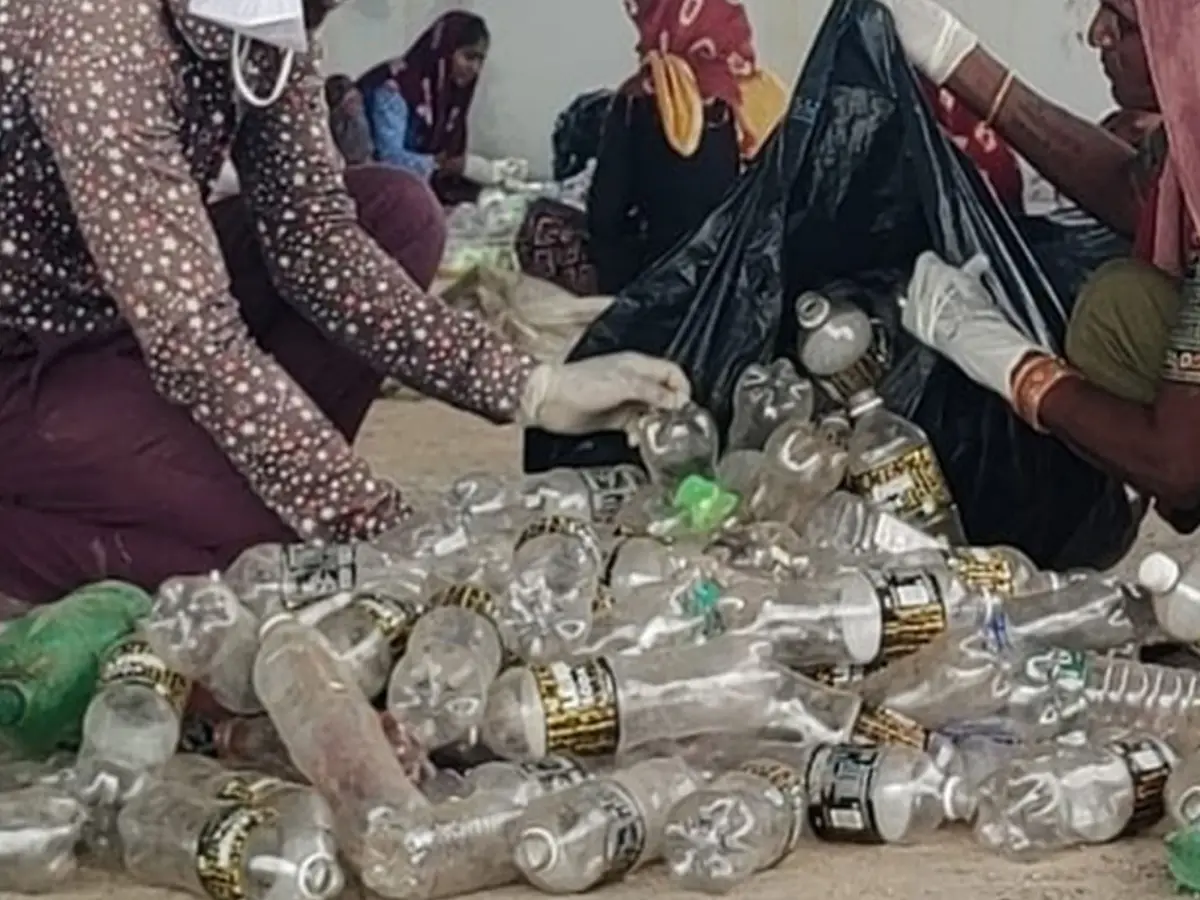
The West Bengal government has introduced a digital spot-fine system across municipalities from September 1, imposing penalties for littering, illegal dumping, use or carrying of banned plastic bags, public urination and defecation, and spitting in public places. According to a government notification issued by the Urban Development and Municipal Affairs Department, public urination or defecation and littering will attract a ₹200 fine, while spitting in public places will invite a ₹100 penalty.
The government has clarified that the initiative is not aimed at revenue generation, but at increasing public awareness and bringing about a long-term change in civic behaviour to create a cleaner and more responsible society. Under the system, municipal employees will be trained to undertake awareness campaigns and encourage citizens to follow civic rules. They will also inform people that repeated violations could result in fines being imposed as per the prescribed rates.
The notification states that the digital spot-fine mechanism will be transparent, cashless and accountable. Authorised municipal personnel will record violations at the spot, with geo-tagged photographs used where necessary as evidence. Digital challans will be generated and fines collected through QR codes or online payment, following which citizens will receive a digital receipt.
Initially, fines will be collected digitally or online. However, cash collection may be permitted in specific circumstances, subject to the prescribed rules. The government has also directed municipalities to consider local requirements and arrange community bins and other waste-collection infrastructure where necessary.
Also Read: Bengal CM pushes Behala airport revival
Trending Stories
&imwidth=180&imheight=135&format=webp&quality=medium)
Group's fibre-optic drones pose new challenge for Israel
&imwidth=180&imheight=135&format=webp&quality=medium)
Oregon school shooting: 16-year-old shooter identified, used shotgun bought by mother; Trump praises bystander who shot gunman as 'great hero'
&imwidth=180&imheight=135&format=webp&quality=medium)
Trump invokes national interest to waive new Russia sanctions, tariffs; India gets relief from 100% tariff threat
&imwidth=180&imheight=135&format=webp&quality=medium)
US midterms 2026: Dan Sullivan’s ‘gotcha’ attempt backfires against Mary Peltola in fiery Alaska Senate debate
&imwidth=180&imheight=135&format=webp&quality=medium)
After ODIs, T20Is and Tests, cricket set to introduce a new format: All you need to know
&imwidth=180&imheight=135&format=webp&quality=medium)
India’s naval priorities: Ex-Navy Chief calls for third aircraft carrier, more warships and submarines
&im=FitAndFill=(700,400)&imwidth=180&imheight=135&format=webp&quality=medium)
Salman Khan-Karisma Kapoor reunion at Koffee with Karan season 9 sparks nostalgia: A look at their most loved films
&imwidth=180&imheight=135&format=webp&quality=medium)
Did Trump just fire Katie Zacharia as his new press secretary? Here’s what he said
&imwidth=180&imheight=135&format=webp&quality=medium)
CJP's Tiranga march: People hit streets of Delhi again, reiterate call for Gyanesh Kumar's resignation
&imwidth=180&imheight=135&format=webp&quality=medium)
'We are not sitting in ivory towers, we are aware': SC issues notice to Rahul Gandhi, Akhilesh Yadav
&imwidth=180&imheight=135&format=webp&quality=medium)
India's Gen Z rebellion: Can the 'Lehra Do Tiranga' movement reshape the political order? | The Verdict
&imwidth=180&imheight=135&format=webp&quality=medium)
Israel examines Russia's Shahed-type drones sent by Ukraine to combat Iran | Gravitas
&imwidth=180&imheight=135&format=webp&quality=medium)
Iran rejects Saudi allegations of backing Houthi attacks, renews mediation offer
&imwidth=180&imheight=135&format=webp&quality=medium)
A secret code, a midnight escape and 300 deaths: The Russian officer who turned on Putin
&imwidth=180&imheight=135&format=webp&quality=medium)
IND-W vs ZIM-W, 1st T20I: Deepti Sharma, Niki Prasad shine as India beat Zimbabwe by four wickets
&imwidth=180&imheight=135&format=webp&quality=medium)
US budget deficit nears $2 trn as tariff refunds rise; debt crosses $40 trn

Not Khan but Pal: Why did Imran Khan choose his mother's surname over his father's? Family tree explained
&imwidth=180&imheight=135&format=webp&quality=medium)
‘Pee-wee Herman’: Trump mocks Jon Ossoff’s appearance at Georgia rally, repeats false claim about El-Sayed
&im=FitAndFill=(700,400)&imwidth=180&imheight=135&format=webp&quality=medium)
Inside Tesla's Roadster: 10 features of Elon Musk's 'flying car' that push the limits of electric vehicles | In Pics
&imwidth=180&imheight=135&format=webp&quality=medium)
US midterms 2026: Alexandria Ocasio-Cortez donates $1 million to Abdul El-Sayed’s as Michigan race heats up
&imwidth=180&imheight=135&format=webp&quality=medium)
Pakistan to head IMF, World Bank boards after 74 years amid persistent economic crisis
&imwidth=180&imheight=135&format=webp&quality=medium)
BCCI names India’s ODI squad for New Zealand tour, Gill and Iyer to share captaincy
&imwidth=180&imheight=135&format=webp&quality=medium)
‘My president, I mean my husband’: Trump's new press secretary Katie Zacharia's first briefing goes off the rails in 14 minutes
&im=FitAndFill=(700,400)&imwidth=180&imheight=135&format=webp&quality=medium)
Who left the White House podium the fastest? Press secretaries with the shortest stints
&imwidth=180&imheight=135&format=webp&quality=medium)
Ukraine drone strike disrupts 22 Russian airports, over 200 flights
&imwidth=180&imheight=135&format=webp&quality=medium)
Abhishek Sharma sets all-time record for most T20I sixes in a year
&im=FitAndFill=(700,400)&imwidth=180&imheight=135&format=webp&quality=medium)
New Friday OTT releases (October 16, 2026): DC, Sacrifice, Aasha- 6 new movies and TV shows coming on Netflix, Zee 5, Prime Video and more
&imwidth=180&imheight=135&format=webp&quality=medium)
China responds to Trump's Press Secretary Katie Zacharia after toilet remark: 'Visit China more often'
&imwidth=180&imheight=135&format=webp&quality=medium)
China tells Israel to stop West Bank settlements, calls Palestine issue ‘historic injustice’
&imwidth=180&imheight=135&format=webp&quality=medium)
Vijay Deverakonda and Rashmika Mandanna's Ranabaali X Review: Netizens call it history-rich but overstuffed
&imwidth=180&imheight=135&format=webp&quality=medium)
Delhi police places CJP's Abhijeet Dipke under preventive arrest over breach of peace, AISA Chief Neha Bora released
&imwidth=180&imheight=135&format=webp&quality=medium)
Here’s who is eyeing the White House press secretary role after Katie Zacharia’s exit
&imwidth=180&imheight=135&format=webp&quality=medium)
Ankita Bhandari murder case: Parents meet CBI, seek impartial investigation
&imwidth=180&imheight=135&format=webp&quality=medium)
Selma Blair’s team responds to flight incident, says actress ‘did not intend to harm anyone’
&imwidth=180&imheight=135&format=webp&quality=medium)
Gravitas | Iran threatens to hit key bridges in 7 countries if US resumes strikes
&imwidth=180&imheight=135&format=webp&quality=medium)
US midterms 2026: Ken Paxton may have Elon Musk to thank if he wins the Texas Senate race. Here's why
The system will cover violations including throwing waste in public places, illegal dumping, carrying or using banned plastic carry bags, spitting, and public urination or defecation. Enforcement will be carried out in accordance with the Solid Waste Management Rules, 2026, and directions of the Supreme Court and the National Green Tribunal.
The notification also says that the mobile number of a violator will be recorded when a fine is imposed. This will allow authorities to identify repeated offenders and take appropriate action against habitual violations. Citizens have been urged to use toilets, dispose of waste only at designated places, avoid spitting in public, refrain from using or carrying banned plastic bags, and avoid illegal dumping. The government has emphasised that the digital spot-fine system is being implemented with three broad objectives — a clean city, responsible citizens and clean municipal administration.
West Bengal's move is less a standalone policy than the latest entry in a rapidly expanding, cross-party civic-enforcement trend sweeping urban India.
Mumbai's BMC introduced fines up to ₹25,000 for 21 civic offences back in February 2026; Assam's BJP-run Guwahati Municipal Corporation rolled out its own spot-fine schedule in July; and Chandigarh hiked open-defecation fines to a steep ₹10,000 in May, explicitly citing Swachh Survekshan guidelines from the Ministry of Housing and Urban Affairs. What sets Bengal apart isn't the fine itself, but the delivery mechanism- a fully cashless, geo-tagged, QR-code-based digital challan system that Minister Agnimitra Paul described in terms of both technology and enforcement: "The conservancy workers will carry machines to collect spot fines through digital mode if anybody violates the order. We will also be taking help from the cops to keep vigilance." That pairing of hardware-in-hand enforcement with police backup marks a shift from paper-based challans toward a more traceable, harder-to-negotiate-with system- one likely to be watched closely by other states weighing similar upgrades.
