PM Modi receives Guardian of the Blue Horizon award by Seychelles, becomes 1st Indian PM to address National Assembly

&imwidth=600&imheight=450&format=webp&quality=medium "PM Modi receives Guardian of the Blue Horizon award by Seychelles, becomes 1st Indian PM to address National Assembly")
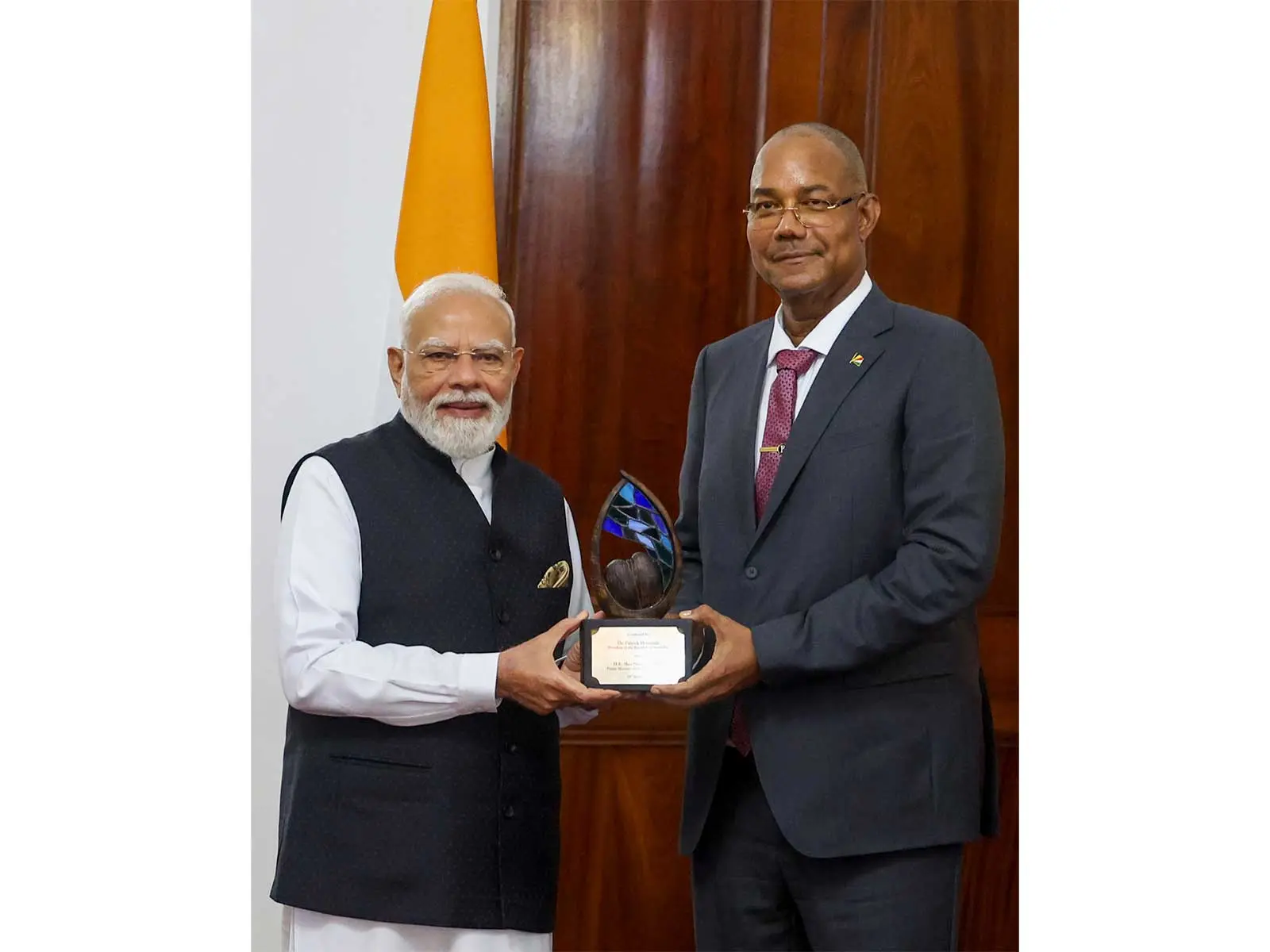
PM Modi receives the Guardian of the Blue Horizon award Photograph: (ANI)
Narendra Modi became the first Indian PM to address the Seychelles National Assembly, celebrating 50 years of independence, receiving an environmental award, and honouring centuries of deep people-to-people ties.
Narendra Modi became the first Indian Prime Minister to address the National Assembly of Seychelles on Sunday (June 28), describing the occasion as a “special honour”. He underlined the deep historical and people-to-people ties between the two Indian Ocean nations. The address also marked the 20th Parliament that Modi has addressed during his visits abroad.
Speaking to lawmakers in Victoria, the Indian PM thanked Seychelles for conferring the Guardian of the Blue Horizon award on him earlier in the day, saying the recognition would encourage everyone working towards environmental conservation.
“I thank President Herminie and the people of Seychelles for honouring me with the Guardian of the Blue Horizon award. This honour will encourage all those who are making sustained efforts towards environmental conservation,” PM Modi said.
The Indian PM conveyed the greetings of “1.4 billion people of India” and recalled that Seychelles was the first Indian Ocean nation he visited after taking office in 2015.
“The first country in the Indian Ocean region that I visited as Prime Minister was Seychelles in 2015. I came here because I believed Seychelles occupied a special place in India’s vision for the Indian Ocean. As I return here after a decade, that conviction is stronger than ever,” he said.
Trending Stories
&imwidth=280&imheight=210&format=webp&quality=medium)
&im=FitAndFill=(700,400)&imwidth=280&imheight=210&format=webp&quality=medium)
&imwidth=280&imheight=210&format=webp&quality=medium)
&imwidth=280&imheight=210&format=webp&quality=medium)
&imwidth=280&imheight=210&format=webp&quality=medium)
&imwidth=280&imheight=210&format=webp&quality=medium)
&imwidth=280&imheight=210&format=webp&quality=medium)
&imwidth=280&imheight=210&format=webp&quality=medium)
&imwidth=280&imheight=210&format=webp&quality=medium)
&imwidth=280&imheight=210&format=webp&quality=medium)
&imwidth=280&imheight=210&format=webp&quality=medium)
&imwidth=280&imheight=210&format=webp&quality=medium)
&imwidth=280&imheight=210&format=webp&quality=medium)
&imwidth=280&imheight=210&format=webp&quality=medium)
&imwidth=280&imheight=210&format=webp&quality=medium)
&imwidth=280&imheight=210&format=webp&quality=medium)
&imwidth=280&imheight=210&format=webp&quality=medium)
&imwidth=280&imheight=210&format=webp&quality=medium)
&imwidth=280&imheight=210&format=webp&quality=medium)
&imwidth=280&imheight=210&format=webp&quality=medium)
&imwidth=280&imheight=210&format=webp&quality=medium)
&imwidth=280&imheight=210&format=webp&quality=medium)
&imwidth=280&imheight=210&format=webp&quality=medium)
&imwidth=280&imheight=210&format=webp&quality=medium)
&imwidth=280&imheight=210&format=webp&quality=medium)
&imwidth=280&imheight=210&format=webp&quality=medium)
&imwidth=280&imheight=210&format=webp&quality=medium)
&im=FitAndFill=(700,400)&imwidth=280&imheight=210&format=webp&quality=medium)
&imwidth=280&imheight=210&format=webp&quality=medium)
&imwidth=280&imheight=210&format=webp&quality=medium)
&imwidth=280&imheight=210&format=webp&quality=medium)
&imwidth=280&imheight=210&format=webp&quality=medium)
&imwidth=280&imheight=210&format=webp&quality=medium)
&imwidth=280&imheight=210&format=webp&quality=medium)
&imwidth=280&imheight=210&format=webp&quality=medium)
&imwidth=280&imheight=210&format=webp&quality=medium)
&imwidth=280&imheight=210&format=webp&quality=medium)
PM Modi also congratulated Seychelles on its 50 years of independence, saying the bilateral relationship extends far beyond the establishment of diplomatic ties.
Tracing the shared history between the two countries, he said their friendship dates back to August 1770, when five Indians arrived aboard the ship Thélemaque at Ste Anne Island.
“Over time, their stories became part of the story of modern Seychelles. It reminds us that the bonds between us were not created by governments. They were built by people, nurtured by families, and sustained by generations,” he said.

