Piyush Goyal receives 345 fishermen repatriated from Iran at Chennai airport

&imwidth=600&imheight=450&format=webp&quality=medium "Piyush Goyal receives 345 fishermen repatriated from Iran at Chennai airport")
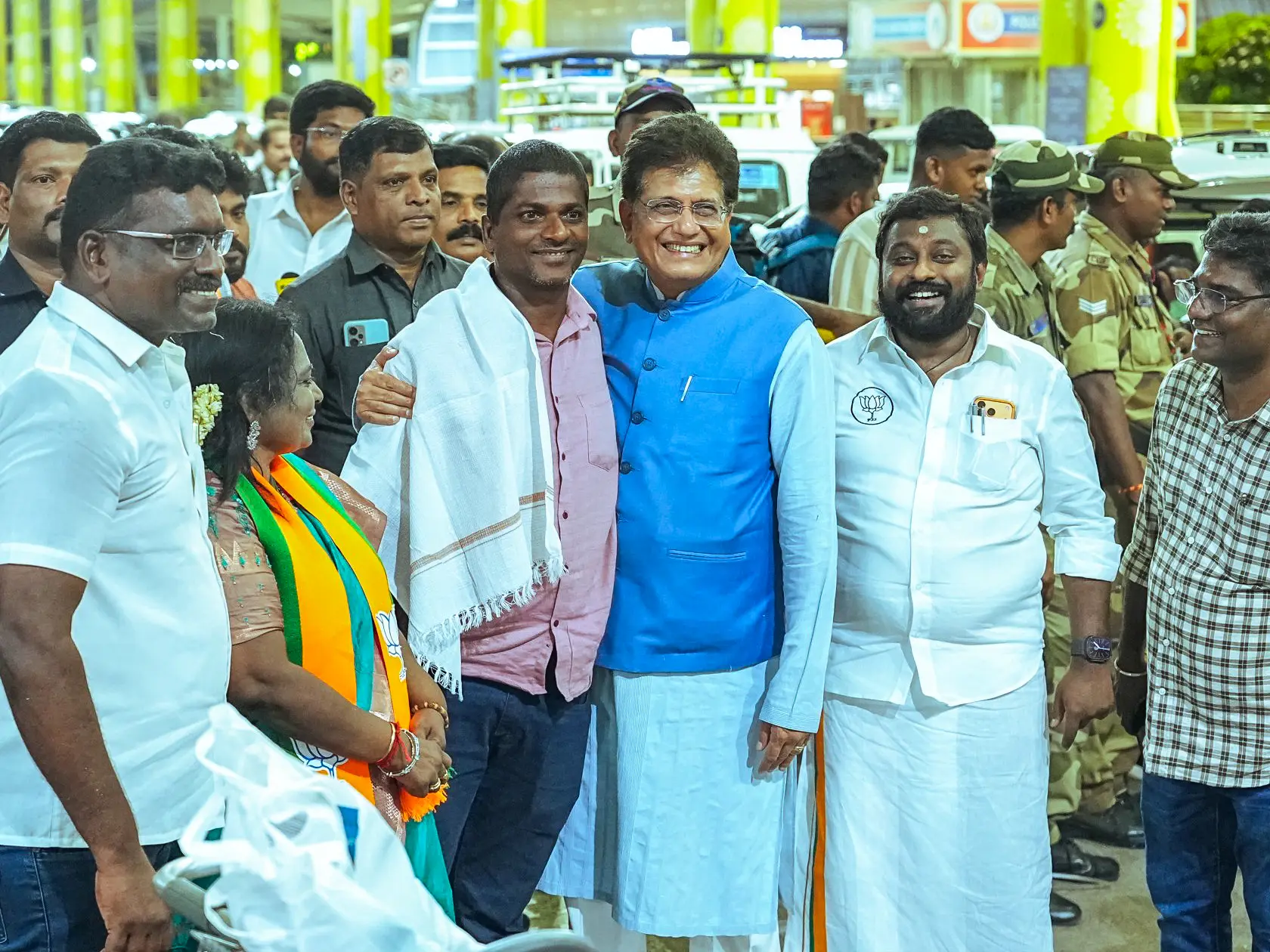
Union Minister Piyush Goyal welcomes the fishermen who stranded in Iran amid the West Asia conflict, at Chennai Airport, in Chennai on Saturday. Photograph: (ANI)
The group comprised an initial batch of 327 fishermen and a subsequent batch of 18, totalling 345, the majority of whom were from Tamil Nadu. They had been stuck in the war zone before being safely repatriated.
Union Commerce Minister Piyush Goyal on Saturday (April 4) welcomed Indian fishermen at Chennai international airport who arrived in Tamil Nadu after coordinated efforts by Indian authorities, especially the Ministry of External Affairs (MEA), to evacuate them from West Asian countries amid the ongoing conflict.
The group comprised an initial batch of 327 fishermen and a subsequent batch of 18, totalling 345, the majority of whom were from Tamil Nadu. They had been stuck in the war zone before being safely repatriated.
Speaking to reporters in Chennai, Goyal described the occasion as a "joyous day" for the families of the fishermen.
"Today is a joyous day where our brothers and sisters who were suffering in Iran are coming back home to their families, their motherland. We warmly welcome all our fishermen brothers and sisters... It was a difficult journey for them. They had to travel 20 hours to Armenia and other countries," Goyal said.
"The MEA officials worked day and night to bring them to Armenia. Today they are flying back from Armenia. We are very happy to receive them, welcome them back home," he added.
As of today, eight Indian ships have successfully crossed the Strait of Hormuz since the conflict in West Asia began on February 28, placing India among the countries with the highest number of vessels navigating the war-affected waterway.
Trending Stories
&imwidth=280&imheight=210&format=webp&quality=medium)
&imwidth=280&imheight=210&format=webp&quality=medium)
&imwidth=280&imheight=210&format=webp&quality=medium)
&imwidth=280&imheight=210&format=webp&quality=medium)
&imwidth=280&imheight=210&format=webp&quality=medium)
&imwidth=280&imheight=210&format=webp&quality=medium)
&im=FitAndFill=(700,400)&imwidth=280&imheight=210&format=webp&quality=medium)
&imwidth=280&imheight=210&format=webp&quality=medium)
&imwidth=280&imheight=210&format=webp&quality=medium)
&imwidth=280&imheight=210&format=webp&quality=medium)
&imwidth=280&imheight=210&format=webp&quality=medium)
&imwidth=280&imheight=210&format=webp&quality=medium)
&imwidth=280&imheight=210&format=webp&quality=medium)
&imwidth=280&imheight=210&format=webp&quality=medium)
&imwidth=280&imheight=210&format=webp&quality=medium)
&imwidth=280&imheight=210&format=webp&quality=medium)
&imwidth=280&imheight=210&format=webp&quality=medium)
&imwidth=280&imheight=210&format=webp&quality=medium)
&imwidth=280&imheight=210&format=webp&quality=medium)
&imwidth=280&imheight=210&format=webp&quality=medium)
&imwidth=280&imheight=210&format=webp&quality=medium)
&imwidth=280&imheight=210&format=webp&quality=medium)
&imwidth=280&imheight=210&format=webp&quality=medium)
&imwidth=280&imheight=210&format=webp&quality=medium)
&imwidth=280&imheight=210&format=webp&quality=medium)
&imwidth=280&imheight=210&format=webp&quality=medium)
&im=FitAndFill=(700,400)&imwidth=280&imheight=210&format=webp&quality=medium)
&imwidth=280&imheight=210&format=webp&quality=medium)
&imwidth=280&imheight=210&format=webp&quality=medium)
&imwidth=280&imheight=210&format=webp&quality=medium)
&imwidth=280&imheight=210&format=webp&quality=medium)
&imwidth=280&imheight=210&format=webp&quality=medium)
&imwidth=280&imheight=210&format=webp&quality=medium)
&imwidth=280&imheight=210&format=webp&quality=medium)
&imwidth=280&imheight=210&format=webp&quality=medium)
&imwidth=280&imheight=210&format=webp&quality=medium)
The eight Indian ships that have transited include LPG carriers Shivalik, Nanda Devi, Pine Gas, Jag Vasant, Green Sanvi, BW Tyr and BW Elm, as well as the crude oil tanker Jag Laadki. These vessels carried vital cargoes of liquefied petroleum gas (LPG) for cooking and other energy supplies destined for Indian ports such as Mundra, Kandla, Mumbai and New Mangalore. Earlier transits involved Shivalik and Nanda Devi, which delivered around 92,700 tonnes of LPG. They were followed by Jag Vasant and Pine Gas with another 92,600 tonnes, and later by BW Tyr and BW Elm carrying approximately 94,000 tonnes combined.
Iran has effectively halted shipping through the Strait of Hormuz since the start of the war on February 28, triggered by a US-Israeli bombing campaign against the Islamic Republic aimed at targeting its top leadership, including Supreme Leader Ali Khamenei, and other senior IRGC officials.
However, since late March, Iran has transitioned from a total blockade to a selective "Friendly Nation" transit policy. While the Strait remains strictly closed to US- and Israeli-linked vessels, Tehran has established a controlled corridor for countries it deems non-hostile.