

&imwidth=800&imheight=600&format=webp&quality=medium "Outcome important to professional forces, not losses: CDS on Operation Sindoor")
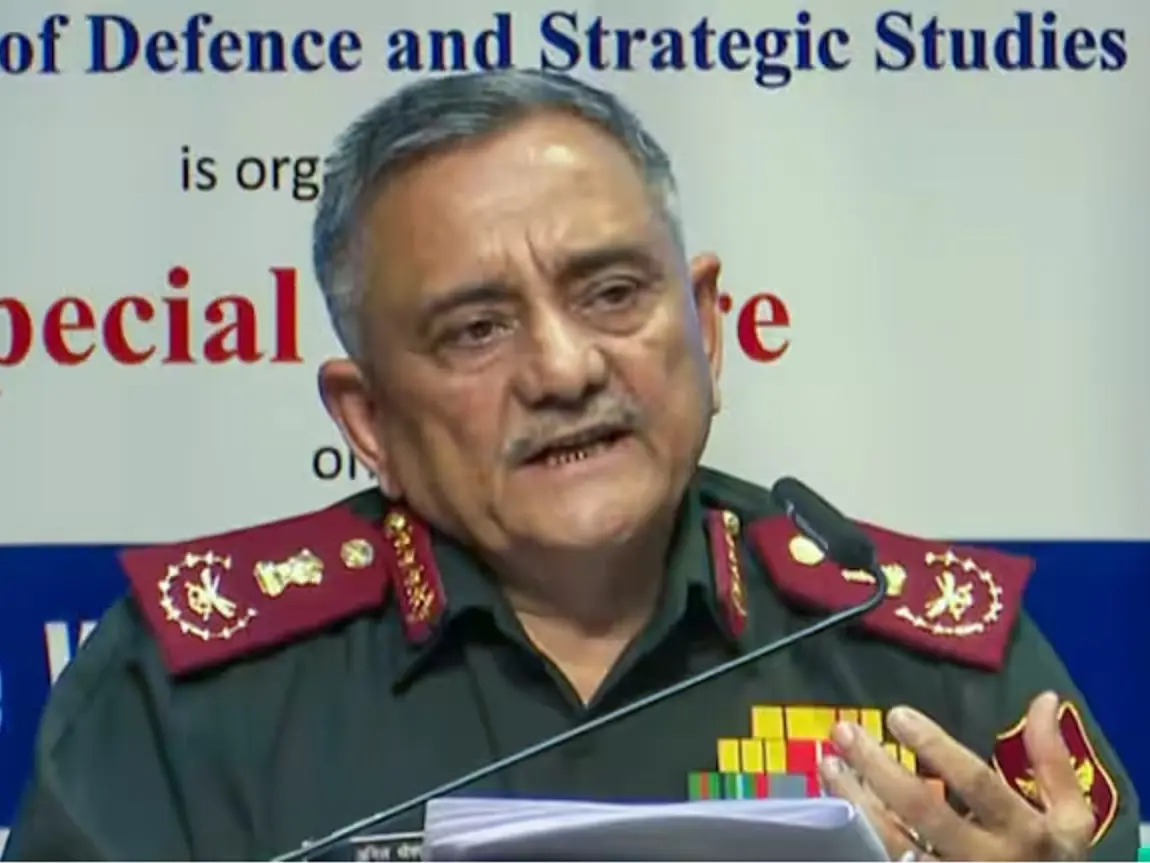
Chief of Defence Staff General Anil Chauhan said on Tuesday that targeted outcomes are more important for professional forces than losses suffered in a military conflict, while adding that there is always some risk in every military action.
Speaking during a special lecture on ‘Future Wars and Warfare’ organised by the Savitribai Phule University in Pune, CDS Chauhan said, “I think, professional forces are not affected by setbacks or losses; in a war, what is important is that the morale needs to remain high even if there are setbacks. Adaptability is an important constituent of a very professional force. You should be able to understand what went wrong, need to rectify your mistake and go again. You cannot sit down in fear.”
Days after his comments on India’s losses during Operation Sindoor stirred a debate, General Chauhan stressed that the armed forces must be able to recognise and rectify their mistakes, and cannot remain passive in the face of setbacks.
“When I was asked about losses on our side, I said these are not important. The results and how you act are important. It would not be very correct to talk about losses. Suppose you go in a cricket test match, and you win by an innings defeat, then there’s no question of how many wickets, how many balls and how many players,” he said.
The top military general, in an interview with Bloomberg in Singapore, admitted that an unspecified number of Indian fighter jets were downed in the initial stage of Operation Sindoor against Pakistan, but the armed forces quickly rectified their mistakes and struck again.
He, however, dismissed the Pakistan Prime Minister's claims that six Indian jets, including four Rafales, were shot down as “absolutely incorrect”.
Trending Stories
“What is important is that, not the jet being down, but why they were being down... Why they were down, what mistakes were made - that are important. Numbers are not important,” General Chauhan had said.
The remarks made on foreign soil gave fuel to the opposition, which targeted the government, saying it should have informed the political parties about the losses before the general revealed them abroad.
Congress leaders demanded a special parliamentary session to discuss India’s military action against Pakistan.
India launched Operation Sindoor against Pakistan on May 7, targeting terror camps, a fortnight after the Pahalgam terrorist attack that killed 26. Pakistan responded by sending a barrage of drones to Indian cities, prompting India to retaliate by targeting Pakistani army airbases.
“What happened in Pahalgam was profound cruelty towards the victims... because all were killed with headshots in front of their families and their children, and they were shot in the name of religion. This caused a huge revulsion... it revived memories because India has been the victim of a maximum number of terror acts... almost 20,000 people have been killed,” he added.
“What I can say is on May 7, in the initial stages, there were losses. There was an inherent amount of risk,” Gen Chauhan had said.
‘New Delhi not going to live under the shadow of terror and nuclear blackmail’
“Pakistan should not be able to hold India hostage to terrorist activities,” he said, adding that New Delhi is not going to live under the shadow of terror and nuclear blackmail.
“Both nations (India & Pakistan) had tried to build different kinds of capabilities, so obviously there was an inherent amount of risk in this. None of the capabilities that we had acquired had been into the battlefield. There is always an element of risk in it, but as they say, you cannot succeed if you don’t take that type of risk,” Chauhan said.
On the ceasefire, the CDS said Pakistan was forced to pick up the phone and call India as it was “losing things faster”.
“As far as the Pakistani side is concerned, I can make two guesses. One, that they were losing things faster at a very long distance, and they thought that if this continued for some more time, they were likely to lose more, and hence they picked up the telephone,” he said.

