Lok Sabha elections: History of national elections and party-wise winners since independence

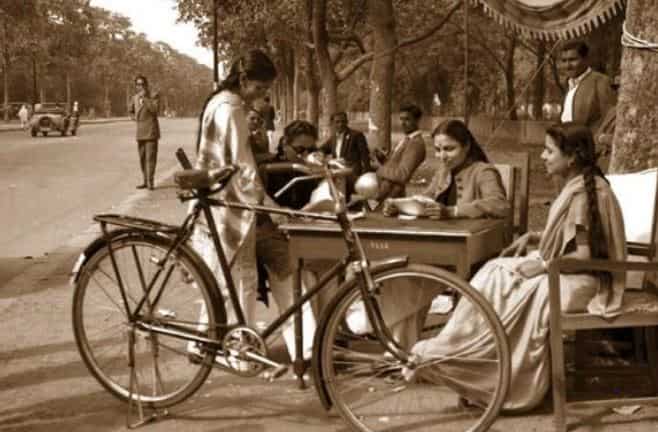
History of Lok Sabha elections in India
India is just weeks away from conducting the largest elections on the face of the Earth. Around 970 million voters are expected to cast their votes in the upcoming general elections, a 6 per cent increase from the 2019 elections. People will vote to send their elected representatives to Lok Sabha, the lower house of the Indian Parliament.
Here we look at the history of national elections since the time of Independence.
First Lok Sabha Election (1952): In Independent India's inaugural election, around 17.3 crore (173 million) people across 26 states participated to elect representatives on 489 seats. The Congress won a thumping majority with 364 seats, garnering 45 per cent of total votes. Notably, the CPI and Socialist Party secured 16 and 12 seats respectively, while the Bharatiya Jan Sangh managed just 3. Pandit Jawaharlal Nehru became the first elected prime minister of India.
Second Lok Sabha Election (1957): The Indian National Congress once again emerged victorious, claiming 371 out of 494 seats across 17 states and Union Territories. Its vote share increased to 48 per cent. Other parties such as CPI, Praja Socialist Party, and BJS secured 27, 19, and 4 seats respectively. Nehru retained the prime ministerial position.

Third Lok Sabha Election (1962): Despite winning 361 out of 494 seats, the Indian National Congress witnessed a decrease in its vote share from 48 per cent to 45 per cent compared to the previous election. Notably, other parties like CPI, Jan Sangh, Swatantra Party, and PSP secured double-digit seats.
Fourth Lok Sabha Election (1967): Under Indira Gandhi's leadership, the Indian National Congress secured 283 seats out of 520 constituencies, and its vote share further decreased to approximately 41 per cent.
Fifth Lok Sabha Election (1971): The Indira Gandhi-led Congress clinched 352 seats out of 518, while the faction under Morarji Desai secured only 16 seats. Indira Gandhi assumed office as prime minister for the third time.
&imwidth=180&imheight=135&format=webp&quality=medium)
Maurene Comey, daughter of ex-FBI director James Comey, was unlawfully fired as federal prosecutor, judge rules
&imwidth=180&imheight=135&format=webp&quality=medium)
Meta’s AI bet is getting more expensive: What its $95 billion share plan means
&imwidth=180&imheight=135&format=webp&quality=medium)
'I've done my work sincerely': AR Rahman on facing backlash over Ramayana soundtrack
&imwidth=180&imheight=135&format=webp&quality=medium)
Hijack scare unfolds on United flight over suspicious text message. Here is what happened
&imwidth=180&imheight=135&format=webp&quality=medium)
'Already tired of his 9-to-5': Baby born with a moustache becomes internet sensation, video goes viral | Watch
&imwidth=180&imheight=135&format=webp&quality=medium)
Trick or Treat -Anthropic's IPO sales pitch is the perfect Halloween scare for AI enthusiasts
&imwidth=180&imheight=135&format=webp&quality=medium)
'Hell of a beautiful a**': Trump compliments Nicki Minaj as rapper joins him in Michigan rally
&imwidth=180&imheight=135&format=webp&quality=medium)
Democrats allege 'desperate efforts to cover up' Trump's involvement in Jeffrey Epstein sex crimes, release 50-page report
&imwidth=180&imheight=135&format=webp&quality=medium)
US Midterms 2026: Last leg polls and forecasts indicate Democratic momentum, but Senate control remains uncertain
&imwidth=180&imheight=135&format=webp&quality=medium)
WATCH | Virat Kohli returns to training ahead of New Zealand ODI series
&imwidth=180&imheight=135&format=webp&quality=medium)
Chris Brown given suspended eight-month jail term for London nightclub attack
&imwidth=180&imheight=135&format=webp&quality=medium)
'She is a beautiful woman': Trump mocks Mexican President Sheinbaum, mimics her voice at US Midterms rally
&im=FitAndFill=(700,400)&imwidth=180&imheight=135&format=webp&quality=medium)
New OTT releases this week (October 26-November 1, 2026): Baththa, Akka, The One About Matthew Perry- 7 titles coming on Netflix, Prime Video and more
&imwidth=180&imheight=135&format=webp&quality=medium)
Elon Musk’s Grok releases first AI-generated Odyssey episode, months after promising ‘historically accurate’ full-length film
&imwidth=180&imheight=135&format=webp&quality=medium)
US midterms 2026: Democrat Annie Andrews gains bipartisan backing against Trump's pick Darline Graham in South Carolina Senate race
&imwidth=180&imheight=135&format=webp&quality=medium)
One dead, six injured in Elizabeth, New Jersey mass shooting; suspect flees
&imwidth=180&imheight=135&format=webp&quality=medium)
'He is a red flag': Ex-India strength and conditioning coach on Rohit's fitness regime
&imwidth=180&imheight=135&format=webp&quality=medium)
'Shove that ballroom up your a**': Trump heckled at Mississippi rally over White House ballroom renovations | WATCH
&imwidth=180&imheight=135&format=webp&quality=medium)
Microsoft offers voluntary exit packages to 60,000 employees in India, US, UK and Canada
&imwidth=180&imheight=135&format=webp&quality=medium)
Trump accused of 'brutal' rape by ex-Miss Switzerland; Beatrice Keul alleges 'Don's best friend' Epstein facilitated assault in 1993
&imwidth=180&imheight=135&format=webp&quality=medium)
Jordan strikes 'terrorist organisations' in Syria after deadly church attack as Damascus shuts main border crossing
&imwidth=180&imheight=135&format=webp&quality=medium)
Pakistan airline PIA unveils new crew uniforms, faces online criticism
&imwidth=180&imheight=135&format=webp&quality=medium)
'Lousy president': Trump hits back at Obama over 'cheesecake factory' White House jibe
&imwidth=180&imheight=135&format=webp&quality=medium)
'Hire the robot, fire the human': Bill Gates's words hint at a bleak future
&imwidth=180&imheight=135&format=webp&quality=medium)
Maldives opposition leader demands transparency on Muizzu Govt's Pakistan defence, security deals
&imwidth=180&imheight=135&format=webp&quality=medium)
Trump’s oil and gas holdings surge to $81.6 million amid Iran war as Americans face rising fuel costs
&imwidth=180&imheight=135&format=webp&quality=medium)
Mohra re-release in 4K: Akshay Kumar, Raveena Tandon’s film to clash with Ranbir Kapoor’s Ramayana
&imwidth=180&imheight=135&format=webp&quality=medium)
Zimbabwe slips four places to 14th out of 29 in Africa’s Digital Rights and Inclusion ranking
&imwidth=180&imheight=135&format=webp&quality=medium)
Police called after 3-year-old scores 10 goals in 12 minutes at Florida youth soccer game
&imwidth=180&imheight=135&format=webp&quality=medium)
‘That is a miss’: Ravi Ashwin questions Sooryavanshi’s demotion to No. 3 in 2nd T20I vs NZ
&imwidth=180&imheight=135&format=webp&quality=medium)
Uttarakhand innovator Ravi Tamta builds flying car without any formal engineering degree
Sixth Lok Sabha Election (1977): Bharatiya Lok Dal or Janata Dal achieved victory, defeating Congress for the first time. Formed in late 1974 through a coalition of seven parties including the Swatantra Party and the Socialist Party, BLD emerged as the winner.
Seventh Lok Sabha Election (1980): Congress returned to power, securing 353 out of 529 seats, while the Janata Party managed to win only 32 seats.
Eighth Lok Sabha Election (1984): Following Indira Gandhi's assassination, anti-Sikh riots erupted in 1984, leading to a sympathetic landslide win for the Congress which secured 414 out of 514 seats. Rajiv Gandhi, her son, assumed office as prime minister.
Ninth Lok Sabha Election (1989): Amidst the Bofors scandal and escalating terrorism, Congress faced a credibility crisis. The elections held in two phases resulted in a hung house, with Congress winning 197 seats, Janata Dal 143, and BJP 85.
10th Lok Sabha Election (1991): Congress emerged as the single largest party with 244 seats, while the BJP won 120 and Janata Dal came third with 59 seats. PV Narasimha Rao of Congress became the prime minister.
11th Lok Sabha Election (1996): BJP secured 161 seats, Congress 140, and Janata Dal 46 out of 543 constituencies. Regional parties gained prominence, securing 129 seats.
12th Lok Sabha Election (1998): BJP emerged as the single largest party with 182 seats, followed by Congress with 141. BJP formed the NDA with other regional parties.
13th Lok Sabha Election (1999): Amidst the Kargil war, BJP secured 182 seats, with Congress winning 114 seats. Regional parties performed well, securing 158 seats. Atal Bihari Vajpayee became prime minister for the third time.
14th Lok Sabha Election (2004): Despite BJP's efforts, Congress, under Sonia Gandhi's leadership, secured a comfortable majority of more than 335 seats out of 543, with support from BSP, SP, MDMK, and the Left front.
15th Lok Sabha Election (2009): Congress-led UPA initiated reforms like Right to Information and National Rural Employment Guarantee Scheme. Congress won 206 seats, BJP secured 116, while regional parties won 146 seats. Manmohan Singh became prime minister for the second time.
16th Lok Sabha Election (2014): BJP won 282 seats, while Congress recorded its worst performance with just 44 seats.
17th Lok Sabha Election (2019): Riding on the 'Modi wave', BJP secured 303 seats, with 350 in the NDA, while Congress managed only 52 seats. Narendra Modi became the third person in India's history to secure single-party majority twice in a row, after Jawaharlal Nehru and Indira Gandhi.