Is seizure and redistribution of private property possible? Indian SC weighs in

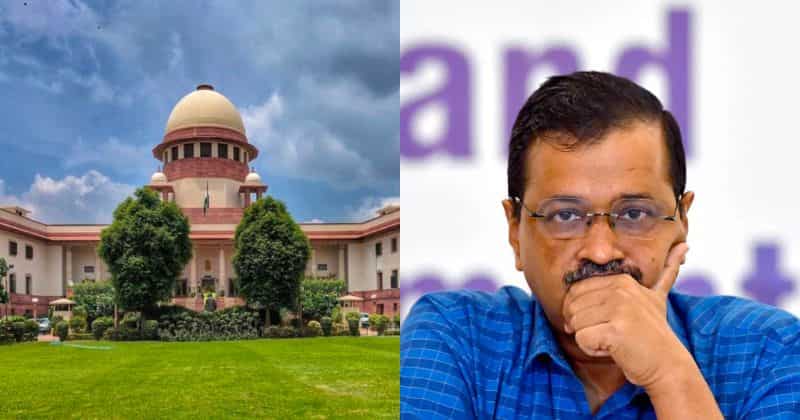
File photo of the Indian Supreme Court.
The Indian Supreme Court said on Wednesday (Apr 24) that it would be dangerous to say that the private property of an individual cannot be regardedas material resources of the community and taken over by state authorities to subserve the "common good".
This observation was made by a Supreme Court bench headed by Chief Justice of India (CJI)DY Chandrachudexaminingwhether privately owned resources canbe considered"material resources of thecommunity".

The counsel for parties, includingthe Property Owners Association (POA) of Mumbai, then made vehement submissions thatstate authorities cannot take over private properties under the garb of constitutional schemes of Articles 39 (b) and 31 C of the Constitution.
A report by the news agency PTI said that the bench was considering the vexed legal questionarising from the petitions on whether private properties can beconsidered"material resources of the community" under Article 39 (b).
What is Article 39 (b)?
&imwidth=180&imheight=135&format=webp&quality=medium)
Pakistan to head IMF, World Bank boards after 74 years amid persistent economic crisis
&imwidth=180&imheight=135&format=webp&quality=medium)
Group's fibre-optic drones pose new challenge for Israel
&imwidth=180&imheight=135&format=webp&quality=medium)
CJP's Tiranga march: People hit streets of Delhi again, reiterate call for Gyanesh Kumar's resignation
&imwidth=180&imheight=135&format=webp&quality=medium)
US midterms 2026: Ken Paxton may have Elon Musk to thank if he wins the Texas Senate race. Here's why
&imwidth=180&imheight=135&format=webp&quality=medium)
AI decodes Napoleon-era secret letter unsolved for more than 200 years. What was hidden in the ciphers?
&imwidth=180&imheight=135&format=webp&quality=medium)
Ankita Bhandari murder case: Parents meet CBI, seek impartial investigation
&imwidth=180&imheight=135&format=webp&quality=medium)
US budget deficit nears $2 trn as tariff refunds rise; debt crosses $40 trn
&imwidth=180&imheight=135&format=webp&quality=medium)
Gravitas | Iran threatens to hit key bridges in 7 countries if US resumes strikes
&imwidth=180&imheight=135&format=webp&quality=medium)
Ukraine drone strike disrupts 22 Russian airports, over 200 flights

Not Khan but Pal: Why did Imran Khan choose his mother's surname over his father's? Family tree explained
&imwidth=180&imheight=135&format=webp&quality=medium)
Iranian woman, 23, handed death sentence for ‘blasphemy’ in social media post; appeals for help
&imwidth=180&imheight=135&format=webp&quality=medium)
A secret code, a midnight escape and 300 deaths: The Russian officer who turned on Putin
&imwidth=180&imheight=135&format=webp&quality=medium)
'Turns out the future does have flying cars': Musk's Tesla unveils 'flying' sports car with SpaceX technology | Watch
&imwidth=180&imheight=135&format=webp&quality=medium)
Oregon school shooting: 16-year-old shooter identified, used shotgun bought by mother; Trump praises bystander who shot gunman as 'great hero'
&imwidth=180&imheight=135&format=webp&quality=medium)
After ODIs, T20Is and Tests, cricket set to introduce a new format: All you need to know
&imwidth=180&imheight=135&format=webp&quality=medium)
China tells Israel to stop West Bank settlements, calls Palestine issue ‘historic injustice’
&imwidth=180&imheight=135&format=webp&quality=medium)
‘My president, I mean my husband’: Trump's new press secretary Katie Zacharia's first briefing goes off the rails in 14 minutes
&imwidth=180&imheight=135&format=webp&quality=medium)
China responds to Trump's Press Secretary Katie Zacharia after toilet remark: 'Visit China more often'
&im=FitAndFill=(700,400)&imwidth=180&imheight=135&format=webp&quality=medium)
Who left the White House podium the fastest? Press secretaries with the shortest stints
&imwidth=180&imheight=135&format=webp&quality=medium)
Vijay Deverakonda and Rashmika Mandanna's Ranabaali X Review: Netizens call it history-rich but overstuffed
&imwidth=180&imheight=135&format=webp&quality=medium)
Israel examines Russia's Shahed-type drones sent by Ukraine to combat Iran | Gravitas
&imwidth=180&imheight=135&format=webp&quality=medium)
US midterms 2026: Alexandria Ocasio-Cortez donates $1 million to Abdul El-Sayed’s as Michigan race heats up
&imwidth=180&imheight=135&format=webp&quality=medium)
Here’s who is eyeing the White House press secretary role after Katie Zacharia’s exit
&imwidth=180&imheight=135&format=webp&quality=medium)
BCCI names India’s ODI squad for New Zealand tour, Gill and Iyer to share captaincy
&imwidth=180&imheight=135&format=webp&quality=medium)
Abhishek Sharma sets all-time record for most T20I sixes in a year
&imwidth=180&imheight=135&format=webp&quality=medium)
'I don’t trust anybody', says Trump when asked about Netanyahu
&im=FitAndFill=(700,400)&imwidth=180&imheight=135&format=webp&quality=medium)
Inside Tesla's Roadster: 10 features of Elon Musk's 'flying car' that push the limits of electric vehicles | In Pics
&imwidth=180&imheight=135&format=webp&quality=medium)
India’s naval priorities: Ex-Navy Chief calls for third aircraft carrier, more warships and submarines
&im=FitAndFill=(700,400)&imwidth=180&imheight=135&format=webp&quality=medium)
New Friday OTT releases (October 16, 2026): DC, Sacrifice, Aasha- 6 new movies and TV shows coming on Netflix, Zee 5, Prime Video and more
&imwidth=180&imheight=135&format=webp&quality=medium)
India's Gen Z rebellion: Can the 'Lehra Do Tiranga' movement reshape the political order? | The Verdict

US ends automatic work permit extensions; Indian workers lose 540-day safety net: What it means
&im=FitAndFill=(700,400)&imwidth=180&imheight=135&format=webp&quality=medium)
Salman Khan-Karisma Kapoor reunion at Koffee with Karan season 9 sparks nostalgia: A look at their most loved films
&imwidth=180&imheight=135&format=webp&quality=medium)
Did Trump just fire Katie Zacharia as his new press secretary? Here’s what he said
&imwidth=180&imheight=135&format=webp&quality=medium)
Iran rejects Saudi allegations of backing Houthi attacks, renews mediation offer
Article 39 (b) of the Constitutionmakes it obligatory forthe Stateto create policy towards securing "that the ownership and control of the material resources of the community are so distributed as best to subserve the common good."
A total of 16 petitionsincludingthe lead petition filed by the Mumbai-basedPOAwere heardby the bench.
What did the bench say?
On Wednesday, the Supreme Court bench saidthat itmight be a little extreme to suggest that material resources of the community only meant "public resources and we do not have their origin in the private property of an individual."
"Take simple things like mines and even private forests. For instance, for us to say that the governmental policy will not apply to the private forests under Article 39 (b)...therefore keep the hands off. It will beextremely dangerousas a proposition," the bench added.
The bench highlighted that the Constitutionwas intendedto bring about social transformationandwe cannot say that Article 39 (b) has no application once the propertyis privately held.
Also watch | Indian Supreme Court links right against climate change to Article 21 & 14
It further said thatwhether the Maharashtralaw,empowering authorities to take over dilapidatedbuildings,was valid or not was a completely different issue and would be decided independently.
Meanwhile, CJI Chandrachud said, "You must understand that Article 39 (b) has been crafted in a certain way in the Constitution because the Constitutionwas intendedto bring about a social transformation. We shouldn'tthereforegothat far to say that the moment private property is private property, Article 39 (b) will have no application."
(With inputs from agencies)

