

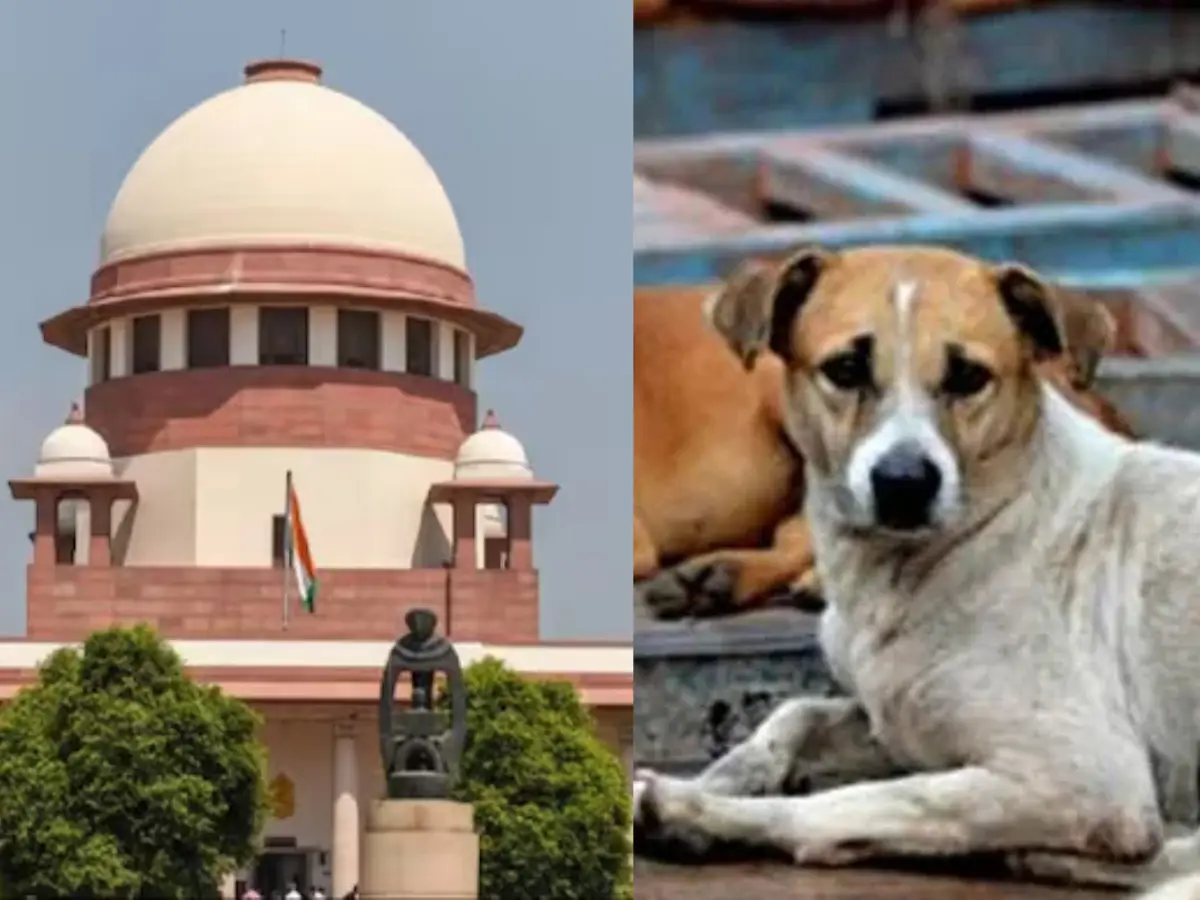
&imwidth=800&imheight=600&format=webp&quality=medium "Indian Supreme Court vs Stray Dogs: The order sounds good but can it survive reality?")
On August 11 the Supreme Court of India issued a sweeping order: within eight weeks, every stray dog in Delhi and the national capital region (NCR) including Noida, Gurugram, and Ghaziabad must be rounded up, vaccinated, sterilised, and housed in shelters—never to return to the streets. CCTV monitoring, helplines, and penalties for obstruction were also ordered. The order sounded decisive, even humane. But in practice, it could prove to be an administrative nightmare.
Stray dog order: The challenge
The numbers alone should give something to think about. Delhi’s stray dog population is estimated at around one million. That’s more than the population of some cities. Yet Delhi-NCR has nowhere near the shelter infrastructure needed to house even a fraction of them. Most municipal shelters are already overcrowded, underfunded, and often lack basic veterinary care. Building, staffing, and maintaining enough facilities to accommodate this number—while ensuring food, sanitation, and medical care—would require a logistical effort on par with hosting the Commonwealth Games, but in just two months.
The order also sits awkwardly against the Animal Birth Control (ABC) Rules, 2023, which form the backbone of India’s humane stray management policy. These rules require that strays be vaccinated, sterilised, and then released back into their original territories—an approach backed by years of scientific research and endorsed by the World Health Organization. Removing dogs permanently disrupts territorial stability, which can lead to new, unvaccinated animals moving in and the cycle beginning anew.
Public Safety and stray dogs
The Supreme Court’s reasoning is rooted in rising public safety concerns. According to media reports, Delhi sees nearly 2,000 stray dog bite cases a day, and rabies remains a fatal threat. No one can deny the urgency. But urgency does not automatically make an untested method the right one. The Netherlands and Bhutan reduced stray dog numbers through mass sterilisation, vaccination drives, and strict pet ownership laws—not mass removal.
Trending Stories
&imwidth=180&imheight=135&format=webp&quality=medium)
'Gyanu must go': CJP's Saurav Das, Ashutosh Ranka after release, despite Jantar Mantar protest undertaking
&imwidth=180&imheight=135&format=webp&quality=medium)
Trump ordered to answer questions under oath in BBC defamation lawsuit by December 11
&imwidth=180&imheight=135&format=webp&quality=medium)
ENG vs SL: Harry Brook’s 202 goes in vain as Sri Lanka pull off second-highest ODI chase
&imwidth=180&imheight=135&format=webp&quality=medium)
Viral video shows cross falling on Colombia priest, no official confirmation | WATCH
&imwidth=180&imheight=135&format=webp&quality=medium)
Pakistan signs another defence pact even as Makkah Alliance shows no teeth. This time, it's with Qatar, Indonesia, Turkey
&imwidth=180&imheight=135&format=webp&quality=medium)
Trump called Musk to lift Starlink restrictions affecting Ukraine's military operation: Report
&imwidth=180&imheight=135&format=webp&quality=medium)
Saudi Arabia targeted yacht carrying 14 Indians in Red Sea, rescue underway, Houthis claim
&imwidth=180&imheight=135&format=webp&quality=medium)
'Vivek should keep it up': Trump defends Ramaswamy's controversial campaign ad targeting Amy Acton
&imwidth=180&imheight=135&format=webp&quality=medium)
Putin says Russia is ready to resume Ukraine-US peace talks but rejects 'short ceasefire' amid deadly attacks
&imwidth=180&imheight=135&format=webp&quality=medium)
'It's a crime not to see this scene': Tehran puts Trump 'behind bars'
&imwidth=180&imheight=135&format=webp&quality=medium)
China's dancing robot turns violent bodyguard, lifts cars and fights intruders - Watch
&imwidth=180&imheight=135&format=webp&quality=medium)
From Agni-V to Project Kusha: How are India’s indigenous missile systems and defence shield reshaping modern warfare
&imwidth=180&imheight=135&format=webp&quality=medium)
France reports first human case of livestock virus Shamonda, patient dies; what we know so far
&imwidth=180&imheight=135&format=webp&quality=medium)
'That was great, who threw that punch?': Trump asks as protester punched at rally
&imwidth=180&imheight=135&format=webp&quality=medium)
'This is despicable': Amy Acton hits back at Vivek Ramaswamy over Ohio campaign ad featuring her estranged mother
&imwidth=180&imheight=135&format=webp&quality=medium)
Watch: India rejects ‘imprecise and unsupported’ references in UN migrant rights report
&imwidth=180&imheight=135&format=webp&quality=medium)
US midterms 2026: US Supreme Court allows New Hampshire to restrict student IDs for voting
&imwidth=180&imheight=135&format=webp&quality=medium)
Netanyahu dials PM Modi, invites him and Capt Smit Machchhar to light torch on Israel’s Independence Day
&imwidth=180&imheight=135&format=webp&quality=medium)
Ilhan Omar breaks silence over alleged marriage to her brother; Trump thinks it's 'really good answer'
&imwidth=180&imheight=135&format=webp&quality=medium)
US midterms 2026: Elon Musk’s political spending hits $445 million as Republicans battle to retain Senate control
&imwidth=180&imheight=135&format=webp&quality=medium)
Christa Pike's failed execution: Tennessee team struggled to insert IV lines, lawyer says
&imwidth=180&imheight=135&format=webp&quality=medium)
What is the ‘heat ray’ weapon? Pete Hegseth reportedly authorises DHS to test it at US-Mexico border
&imwidth=180&imheight=135&format=webp&quality=medium)
A secret code, a midnight escape and 300 deaths: The Russian officer who turned on Putin
&imwidth=180&imheight=135&format=webp&quality=medium)
Two BrahMos missiles on Tejas, triple the range and 100% indigenisation, says former BrahMos CEO
&imwidth=180&imheight=135&format=webp&quality=medium)
GRAVITAS | Putin fires nuclear-capable hypersonic missiles, Zelensky ready to surrender 25% territory
&imwidth=180&imheight=135&format=webp&quality=medium)
Iran to invade neighbours soon, Israeli jets in action, American troops ready to strike any moment
&imwidth=180&imheight=135&format=webp&quality=medium)
ENG vs SL: Harry Brook breaks Shubman Gill’s record for fastest ODI double century
&im=FitAndFill=(700,400)&imwidth=180&imheight=135&format=webp&quality=medium)
Serbia elections: Nearly 150,000 people take to streets in massive rally against Aleksandar Vucic | In pics
&imwidth=180&imheight=135&format=webp&quality=medium)
Finance influencer dies by suicide in Chennai; father accuses tech CEO, who denies charge
&imwidth=180&imheight=135&format=webp&quality=medium)
One man, 8 months of work, and a river dirty again: Why Bittu Tabahi may quit
&imwidth=180&imheight=135&format=webp&quality=medium)
WATCH: Trump demands Ilhan Omar removal from Congress for 'using fake name to be sworn in'. So what is her real name?
&imwidth=180&imheight=135&format=webp&quality=medium)
US to get 850 F-35 stealth fighter jets under 10-year Pentagon-Lockheed deal
Urban ecology is delicate. Stray dogs, for all the nuisance they can cause, also help control the rodent population. Remove them suddenly and you risk an explosive growth of rats, which carry their own public health risks. Past experiments in mass culling or removal in Indian cities have shown that dog populations often rebound within a few years if the root causes—poor waste management, unregulated breeding, and lack of community education—are not addressed.
So how to fix the stray dog problem in Delhi-NCR?
The real failure is not the ABC framework—it’s the chronic underfunding, patchy implementation, and lack of political will to enforce it. Goa’s Mission Rabies programme proved that even in India, large-scale vaccination and sterilisation campaigns can work if given sustained resources and community involvement. A dog-free Delhi achieved by relocating a million animals to already-strained facilities is not just unlikely—it risks being both inhumane and counterproductive.
The Supreme Court’s order is a bold attempt to address a genuine problem, but such boldness without feasibility could end up being wishful thinking. Without massive investment, planning, and alignment with existing legal frameworks, this plan risks collapsing under its own ambition. India doesn’t need quick fixes that look good in headlines. It needs consistent, humane, and science-backed action that treats public safety and animal welfare as two sides of the same coin.
If we chase a solution that sounds good on paper but can’t survive reality, the only thing we’ll remove from the streets is trust.

