India’s GCCs are moving beyond cost centres: Can they become the testing ground for AI-native businesses?

&imwidth=600&imheight=450&format=webp&quality=medium "India’s GCCs are moving beyond cost centres: Can they become the testing ground for AI-native businesses?")
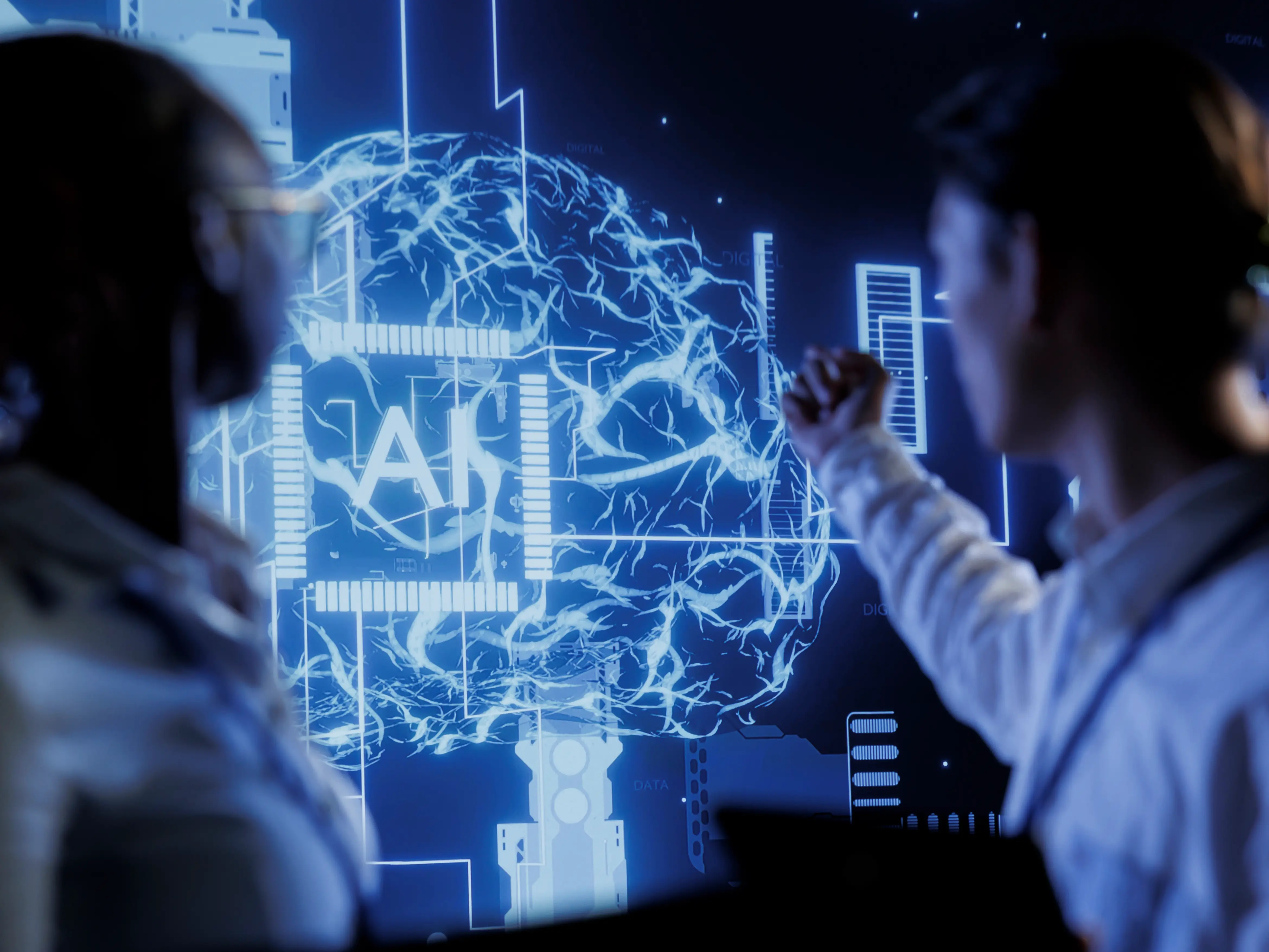
Representative image. Photograph: (Magnific)
It has also been seen that multiple organisations have deployed copilots, chatbots and isolated proofs of concept without redesigning the workflows, data foundations, controls and decision rights around them.
India's Global Capability Centres (GCCs) are making remarkable shifts in the country's businesses, moving decisively beyond cost-saving back offices to becoming strategic hubs that shape global enterprise decisions. India has hosted more than 2,100 GCCs by early 2026, employing over 2.3 million professionals and generating revenues crossing $70 billion annually.
NASSCOM also projected that the ecosystem is set to reach $105 billion and 2.8 million employees by 2030. As per the recent industry landscape report, it has been discovered that 92 per cent of GCC leaders now say their centres deliver value far beyond cost savings, functioning instead as "Global Offices" that own end-to-end product lifecycles and drive enterprise AI roadmaps. The technical focus has deepened too, with over 70 per cent of GCCs now running AI-native workflows, going ahead with pilot projects to enterprise-grade deployment.
Enterprise architecture and operating models.
With the introduction of generative AI in workflows, enterprises continue pouring resources worldwide. It has also been seen that multiple organisations have deployed copilots, chatbots and isolated proofs of concept without redesigning the workflows, data foundations, controls and decision rights around them.
Also read: WION Exclusive: How can energy productivity power India’s next phase of industrial growth
Reacting to the development, Dr Ashish Chandra, Founder & CEO of GFF AI, stated that the problem isn't a shortage of AI capability; it's a lack of readiness in enterprise architecture and operating models.
Trending Stories
&imwidth=280&imheight=210&format=webp&quality=medium)
&imwidth=280&imheight=210&format=webp&quality=medium)
&imwidth=280&imheight=210&format=webp&quality=medium)
&imwidth=280&imheight=210&format=webp&quality=medium)
&imwidth=280&imheight=210&format=webp&quality=medium)
&imwidth=280&imheight=210&format=webp&quality=medium)
&imwidth=280&imheight=210&format=webp&quality=medium)
&im=FitAndFill=(700,400)&imwidth=280&imheight=210&format=webp&quality=medium)
&imwidth=280&imheight=210&format=webp&quality=medium)
&imwidth=280&imheight=210&format=webp&quality=medium)
&imwidth=280&imheight=210&format=webp&quality=medium)
&imwidth=280&imheight=210&format=webp&quality=medium)
&imwidth=280&imheight=210&format=webp&quality=medium)
&imwidth=280&imheight=210&format=webp&quality=medium)
&imwidth=280&imheight=210&format=webp&quality=medium)
&imwidth=280&imheight=210&format=webp&quality=medium)
&imwidth=280&imheight=210&format=webp&quality=medium)
&imwidth=280&imheight=210&format=webp&quality=medium)
&imwidth=280&imheight=210&format=webp&quality=medium)
&im=FitAndFill=(700,400)&imwidth=280&imheight=210&format=webp&quality=medium)
&imwidth=280&imheight=210&format=webp&quality=medium)
&imwidth=280&imheight=210&format=webp&quality=medium)
&imwidth=280&imheight=210&format=webp&quality=medium)
&im=FitAndFill=(700,400)&imwidth=280&imheight=210&format=webp&quality=medium)
&imwidth=280&imheight=210&format=webp&quality=medium)
&imwidth=280&imheight=210&format=webp&quality=medium)
&imwidth=280&imheight=210&format=webp&quality=medium)
&imwidth=280&imheight=210&format=webp&quality=medium)
&imwidth=280&imheight=210&format=webp&quality=medium)
&imwidth=280&imheight=210&format=webp&quality=medium)
&imwidth=280&imheight=210&format=webp&quality=medium)
&imwidth=280&imheight=210&format=webp&quality=medium)
&imwidth=280&imheight=210&format=webp&quality=medium)
1. After years of experimentation with generative AI, many enterprises are still struggling to translate AI investments into measurable business outcomes. What are the biggest gaps preventing organisations from moving beyond pilots and achieving meaningful transformation?
Dr Ashish Chandra: The biggest gap is not AI capability; it is enterprise architecture and operating-model readiness. Many organisations have deployed copilots, chatbots and isolated proofs of concept without redesigning the workflows, data foundations, controls and decision rights around them. As a result, AI remains an additional technology layer rather than becoming part of how the enterprise operates. Moving from pilots to measurable outcomes requires organisations to start with business KPIs, engineer AI into end-to-end workflows, establish strong governance and continuously measure value. The real transition is from experimenting with AI to operationalising intelligence at enterprise scale.
2. The enterprise AI conversation appears to be shifting from simply adopting tools such as copilots and chatbots to fundamentally redesigning workflows, decision-making and business operations. What is driving this shift, and what does an AI-native organisation actually look like?
Dr Ashish Chandra: An AI-native organisation is not one where every employee has a copilot. It is one where intelligence is embedded into the operating fabric of the business. Workflows can sense events, interpret context, recommend or execute actions and continuously learn, while humans retain appropriate oversight and accountability. We are moving from AI assisting individual tasks towards AI orchestrating complete business processes across functions and systems. This shift is being driven by agentic AI, stronger enterprise data foundations and pressure to demonstrate tangible ROI. The fundamental question is changing from “Where can we use AI?” to “How should this business operate when intelligence is pervasive?”
3. Industry experts increasingly argue that the next AI challenge is less about building better models and more about integrating intelligence into data, workflows, governance and everyday decision-making. How should businesses rethink their technology and operating models to make this transition?
Dr Ashish Chandra: Enterprises need to stop treating AI as another application layer and start designing an intelligence architecture. That means connecting enterprise data, knowledge, workflows, AI models and agents through governed orchestration layers. Technologies such as knowledge graphs, enterprise memory, APIs, event-driven architectures and agentic systems will increasingly connect intelligence to operational decisions. Equally important is the operating model: organisations need clear human-machine decision rights, AI product ownership, evaluation frameworks and continuous governance. The competitive advantage will increasingly come not from owning the best model, but from engineering the best system around models and embedding intelligence into thousands of everyday decisions.
4. India is emerging as a major global hub for Global Capability Centres (GCCs), with many moving from traditional delivery functions to innovation and technology hubs. How can GCCs become catalysts for enterprise-wide AI transformation and potentially serve as testing grounds for AI-native business models?
Dr Ashish Chandra: India’s GCC opportunity is much larger than becoming the world’s AI engineering centre. GCCs can become controlled environments where global enterprises redesign how work itself is performed. They combine deep business-process knowledge, technology talent, enterprise data access and global operating context—an unusually powerful foundation for AI experimentation at scale. Instead of receiving processes designed elsewhere, leading GCCs should own AI product engineering, agentic workflow redesign, governance and measurable business outcomes. Successful models can then be industrialised globally. This would move Indian GCCs from execution centres to enterprise intelligence hubs—places where the next generation of global operating models is designed, tested and scaled.
5. As enterprises move towards what is increasingly being described as ‘enterprise intelligence’, which capabilities should business leaders prioritise today — from data and AI talent to technology infrastructure, governance and organisational change — to remain competitive over the next five years?
Dr Ashish Chandra: Leaders should build five capabilities simultaneously: trusted data foundations, AI engineering talent, composable technology architecture, responsible AI governance and organisational change capacity. But another capability is becoming equally important—enterprise memory: the ability for AI systems to understand institutional knowledge, context, relationships and previous decisions rather than repeatedly starting from zero. Organisations will also need robust evaluation, cybersecurity, observability and human-in-the-loop controls as autonomous agents become operational. Over the next five years, competitive differentiation will increasingly depend on how effectively organisations convert their accumulated data, knowledge and workflows into governed, reusable intelligence that improves decisions continuously across the enterprise.
6. GFF AI has introduced the concept of Enterprise Intelligence Engineering to address the gap between AI experimentation and enterprise-wide transformation. What inspired this approach, how does it differ from conventional AI adoption, and what is your long-term vision for helping organisations become truly AI-native?
Dr Ashish Chandra: GFF AI was founded around a simple observation: enterprises do not have an AI shortage; they have an industrialisation gap. Enterprise Intelligence Engineering addresses that gap by treating AI transformation as an engineering discipline rather than a collection of pilots. We connect data, enterprise memory, knowledge graphs, agents, workflows, governance and human decision-making into deployable intelligence systems. Our approach progresses from experimentation to repeatable engineering and ultimately enterprise-scale operation—what we describe as Garage to Foundry to Factory. Our long-term vision is to help organisations evolve from businesses that use AI into enterprises where governed intelligence becomes part of their operating architecture.

